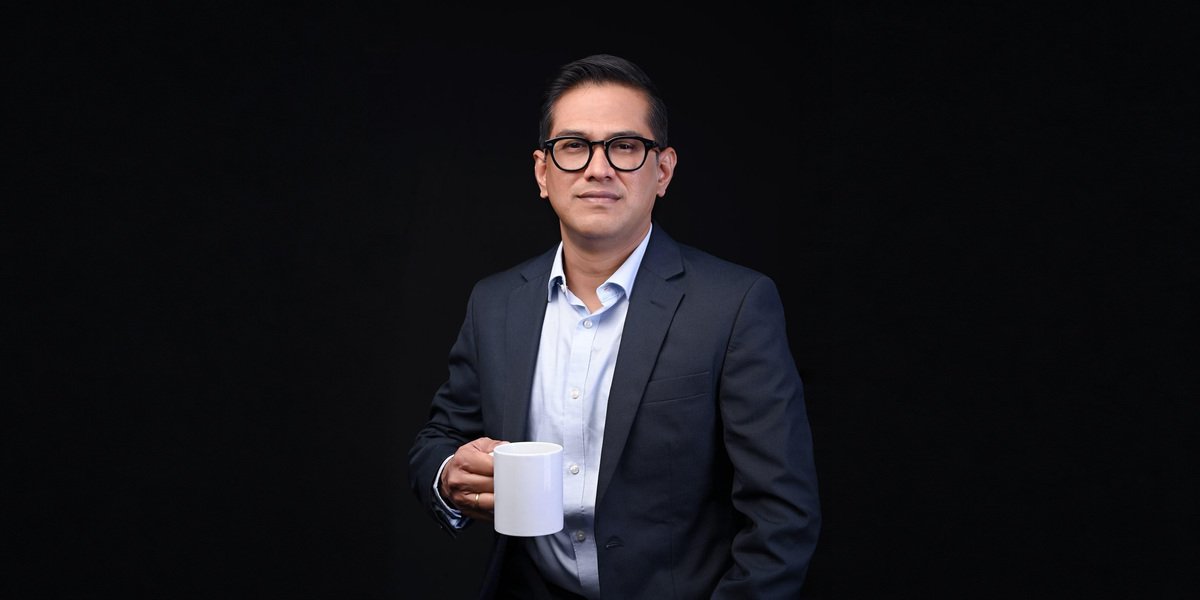

By: Jay Kt
After more than two decades across financial services, business transformation, and leadership, Rajput’s journey is increasingly defined by how experience is being transformed into ideas, books, classrooms and conversations.
When a Career Becomes More Than a Career
There comes a point in a long professional journey when experience begins to mean something different.
Early in a career, experience helps people become better at their jobs, take on larger responsibilities and navigate complexity. But eventually, another possibility emerges: experience can stop being merely something a professional has and become something that can be transferred.
For Dr. Sushant Rajput, that transition has unfolded across more than two decades in the corporate world.
His career spanned capital markets operations, solutioning and global business development and business transformation, including roles across Deutsche Bank, Société Générale, Cognizant, HCL Technologies, and currently at eClerx Services Ltd.
Yet the more interesting part of his journey today may lie beyond designations.
Experiences that once shaped decisions in building new businesses have found their way into books, classrooms, mentoring conversations, research and TEDx stages. Professional experience gradually became observations about people, ambition, failure, leadership and the beliefs that shape human behavior.
Rajput describes the idea connecting these worlds as “Observational Wisdom”, it is the belief that people do not always need more advice; sometimes, they need help noticing what they have stopped noticing.
Perhaps experience matures when it stops being merely evidence of where someone has been and becomes something which others can learn from.
The Career That Created the Questions
Long before writing and teaching became visible parts of his identity, Rajput’s learning ground was the corporate world.
His journey began with Computer Science, followed by an MBA in Marketing. Technology taught him to think in systems, while business taught him that systems ultimately succeed or fail through people.
His career subsequently moved through investment banking operations, transition and transformation management, business development, pre-sales and solutioning, environments where problems rarely arrived with straightforward answers.
Across his corporate journey, he observed that organizations could redesign processes, implement technologies and transform operating models relatively quickly. Human behavior rarely changes at the same speed.
Gradually, the questions moved beyond “How do we solve this business problem?” Why do people respond differently to similar circumstances? Why do some continue learning after success while others become prisoners of what once made them successful?
These were no longer simply business questions. They were questions about people, and that’s when experience became observation
There is a subtle difference between having an experience and learning to observe it.
A difficult conversation can reveal more about leadership than a management textbook. Authority can reveal character. Failure can expose beliefs that success conveniently hides. And sometimes, assumptions people defend most strongly are ideas they inherited and rarely examined.
These patterns gradually formed what Rajput calls Observational Wisdom.
At its heart is a simple proposition: “People do not always need more advice. Sometimes, they need help noticing what they have stopped noticing”
For Rajput, observation is different from judgement. Judgement is often eager to conclude, while Observation is willing to remain with the question a little longer.
It also led to another realization: experience alone does not necessarily create wisdom. What matters is whether it is examined, whether assumptions are questioned, patterns noticed and lessons allowed to evolve.
From Observation to Books, Classrooms and Research
If observation provided the questions, writing became one way of exploring them.
Rajput’s author journey began with I Wish Someone Told Me This Before My First Job, drawing from lessons that often become clear only after entering professional life. Mindful Momentum explored procrastination and overthinking, while Courage Within took ideas of grit, character and values to younger readers.
His forthcoming Borrowed Beliefs: The Invisible Scripts That Shape Our Lives goes deeper, exploring how beliefs absorbed from families, cultures, workplaces and social expectations can shape choices before they are consciously examined.
Rather than asking people to reject what they inherit, Rajput is approaching it by respecting it, questioning it, and consciously choosing what deserves to remain.
Progression reflects an evolution, i.e., from navigating the workplace to understanding the mind to examining character and the beliefs beneath human behavior.
In classrooms and mentoring conversations, these questions unfold in real time. Working with management students and young professionals has allowed him to observe the transition between academic knowledge and workplace reality.
It has reinforced his belief that:
“Good mentorship should not make someone need your answers for longer. It should help them become confident enough to find better answers themselves”
Teaching, he believes, works both ways. Professional experience can help students, while their questions challenge assumptions that experience can turn into certainty. That instinct eventually extended into research.
For Rajput: Practice creates questions, while Observation reveals patterns. Research challenges assumptions, Education shares understanding and writing gives it reach.
What may appear as different pursuits are ultimately different ways of turning learning into something useful beyond oneself.
Success, Recognition, and a Different Definition of Impact
As Rajput’s work expanded beyond the corporate world, its impact began finding recognition internationally.
His books have reached Amazon bestseller lists and received literary honors, including the British Literary Award and International Kalam Award. His contributions across leadership, education, mentorship and human development have brought further recognition, including recognition for exceptional leadership at the University of Oxford, alongside honors for education and social impact.
Across multiple TEDx stages, Rajput has spoken about challenging convention, turning ideas into action and curiosity in uncertain futures. His perspectives on leadership, artificial intelligence, employability and human capability have appeared across Indian and international media, including Forbes India, Yahoo Finance, Business Today, Outlook Business, Business Upturn, USA Wire and New York Tech Media.
The intersection of education and leadership also led to an invitation to address a gathering at the United Nations Conference Centre on empowering young leaders to shape sustainable futures.
Yet Rajput is careful about allowing recognition to become identity, because he says that “an award tells you that someone noticed what you did. What matters more is what you choose to do with that recognition”
For him, visibility creates reach but reach also creates responsibility, to remain credible and ensure that the ideas being shared remain useful.
A literary honor matters, but so does a message from a reader who found an idea when it was needed. A TEDx stage matters, but so does a student who begins approaching uncertainty differently.
Recognition may tell us how far a journey has travelled. Impact is revealed by what that journey leaves behind in others.
The Next Chapter: Making Experience Useful
Rajput’s next chapter appears increasingly centered on one question: how can accumulated experience become useful beyond the person who accumulated it?
Artificial intelligence is making information easier to access, and many tasks are increasingly possible to automate. Rajput believes this places greater value on qualities harder to automate, which is judgement, curiosity, self-awareness, empathy and the ability to question assumptions.
Perhaps the next chapter, then, is less about defining another professional identity and more about continuing at the intersection of industry, education, research and human development. After more than two decades in professional life, expertise could become a reason for certainty. Technologies will change. Industries will evolve. Skills valuable today may become ordinary tomorrow. What may endure is the ability to keep learning, examine one’s beliefs and remain open to what experience still must teach.
The corporate leader does not have to disappear for the educator to emerge. The author does not need to compete with the researcher. Each can make the other more useful.
For someone whose career began by learning how systems work, the more enduring curiosity today appears to be understanding how people work and how what one person learns through experience might help another navigate theirs.
Because ultimately, intellectual capital is not defined simply by how much knowledge or experience someone accumulates. Its real value begins when what you have learned stops belonging only to you.