
In the modern digital economy, enterprise software is no longer a monolith; it is a sprawling, hyper-connected web of microservices. While this architecture enables rapid innovation, it has created a multi-million-dollar blind spot for Fortune 500 companies. When an e-commerce checkout fails or a banking transaction stalls, the request has likely traversed dozens of services. Diagnosing where and why it broke has historically been a slow, costly guessing game that drains engineering bandwidth and frustrates end users.
The breakthrough research paper, “From Observability to Causality: Detecting Production Failures in Microservices with Distributed Tracing,” provides a landmark solution to this exact crisis. By transforming passive data collection into actionable, causal intelligence, this work establishes a new gold standard for enterprise IT reliability, one that aims to salvage millions in otherwise lost revenue due to system downtime.
Outperforming Traditional Monitoring: A Paradigm Shift
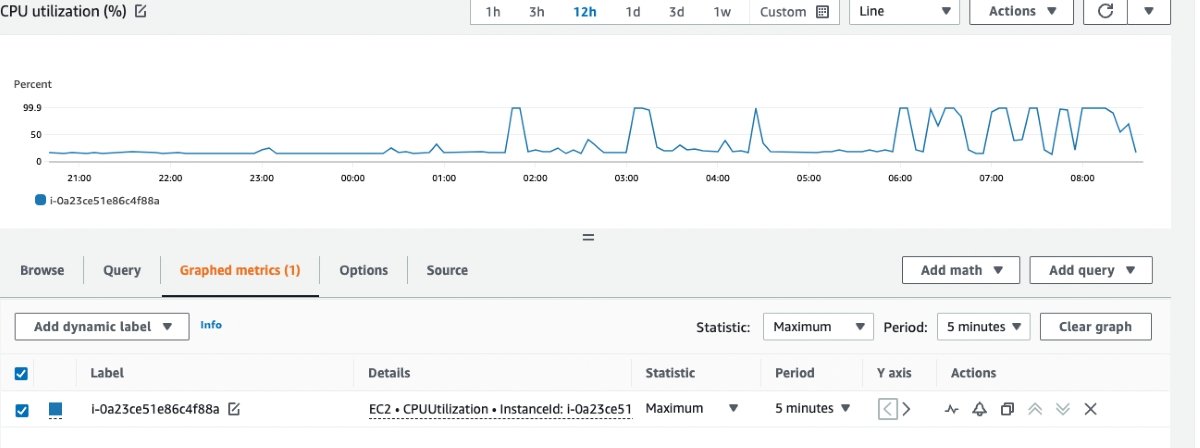
To understand the magnitude of this achievement, one must compare it to the traditional tools that still plague most IT departments. Historically, companies have relied on a fragmented triad of observability: isolated logs, basic traffic metrics, and disjointed alerts. When a systemic failure occurs, engineering teams are forced into “war rooms,” manually stitching together log files to find the needle in the haystack.
This paper renders that approach obsolete. Instead of fragmented data, the proposed architecture utilizes an OpenTelemetry-based distributed tracing system equipped with W3C-compliant context propagation. It creates a unified, end-to-end “causal graph” of every transaction. Where traditional tools merely tell you that a system is broken (metrics) and what broke (logs), this advanced infrastructure tells you why it broke and exactly where the failure originated. In the real-world case study presented, this causal reconstruction successfully exposed complex, hidden failure chains related to container lifecycles that traditional dashboards entirely missed without any prior hint or warning.
The “Workflow-Centric” Masterstroke: Fast-Tracking Business ROI
The most brilliant business innovation of this paper is not just the technology itself, but its deployment strategy. Historically, massive companies fail at implementing tracing because they attempt a “service-by-service” rollout across decentralized, siloed teams. This results in fragmented, useless data and stalled initiatives.
The authors completely upend this model by introducing a “workflow-centric” deployment strategy. Instead of asking every department to update their code simultaneously, organizations instrument specific, high-value business paths, such as the user login flow or the payment processing pipeline.
For the C-suite and enterprise investors, this is a revelation. It allows technical leadership to target latency-sensitive, revenue-generating workflows first. By bypassing cross-team bureaucracy, companies can achieve immediate, measurable operational value and a rapid reduction in Mean Time to Resolution (MTTR) with minimal upfront engineering overhead.
National Impact and the Enterprise Mandate
On a macroeconomic scale, the implications of this paper extend far beyond a single IT department. As the national digital infrastructure becomes increasingly reliant on cloud-native applications, systemic outages pose a genuine threat to economic productivity. By providing a scalable, vendor-neutral blueprint for flawless failure detection, this research contributes to a national standard for digital resilience. It fortifies the critical infrastructure of industries ranging from fintech and healthcare to logistics and retail.
Looking ahead, this framework is poised for massive adoption across the global enterprise landscape. For large-scale companies, migrating to this advanced distributed tracing pipeline will no longer be viewed as an optional IT upgrade, but as a mandatory insurance policy for their digital revenue streams. By successfully bridging the gap between deep technical telemetry and tangible business value, “From Observability to Causality” delivers a masterclass in how modern enterprises must safeguard their operations in the microservice era.