
A gala budget gets approved one line at a time, and the decor line usually gets the least scrutiny of any of them. It’s filed under atmosphere, nodded past, and never really discussed the way catering or venue costs are. Yet a gala decor budget is arguably doing more work during the event than most other line items on that sheet, shaping how the room feels from the moment guests walk in.
The Line Item Nobody Explains on a Gala Budget
Ask most event committees to justify their catering budget, and they can walk through it: cost per plate, headcount, service style. Ask the same committee to justify the decor line, and the answer tends to get vague fast, something closer to “it needs to look nice” than an actual rationale.
That gap isn’t really about decor being less important. It’s about decor rarely getting asked to prove itself the way other line items do. Nobody sits down and asks what a floral arrangement or a lighting plan is supposed to accomplish, even though the room built around them is where guests actually spend the evening. That gap compounds over time, too. A committee that never examines why the decor budget is what it is has no way to know whether a smaller version of the same spend would do the job, or whether a different approach would serve the room better.
What a Gala’s Atmosphere Is Actually Working to Do
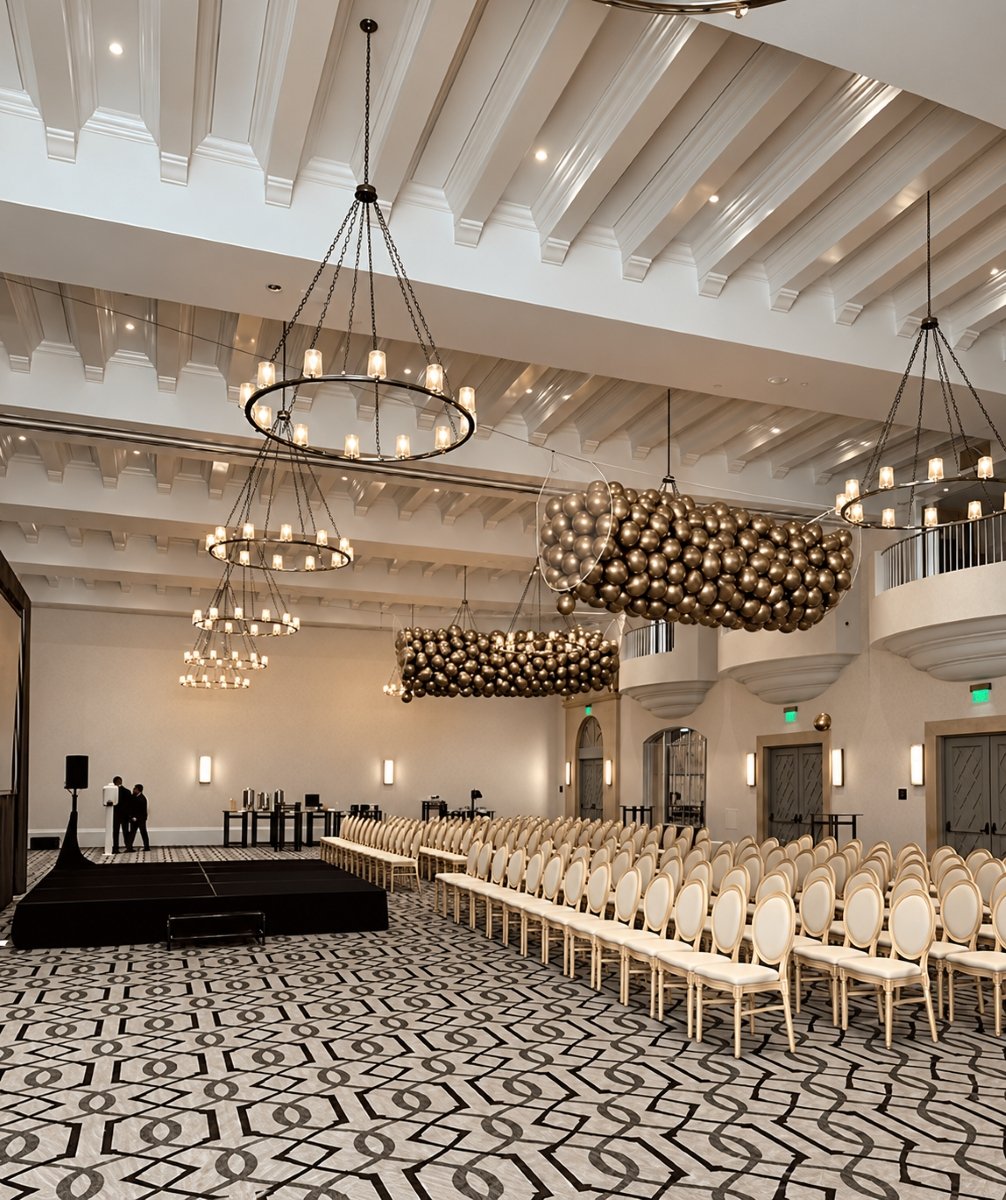
Donor engagement starts the moment someone walks into a room, well before any speech or ask happens. How a space looks and feels sets an emotional register for the whole evening, and that register carries into how receptive people are later on. Event professionals who work fundraising circuits routinely describe this as the difference between a room guests tolerate and a room guests remember afterward, the kind of impression that shapes whether someone looks forward to the next one.
Nonprofit fundraising guidance backs this up directly, with organizers advised to set a festive tone so folks immediately think “this is going to be fun!” because that early impression shapes how engaged guests stay for the rest of the night. A room that reads as flat or thrown-together doesn’t undo a good cause, but it does make the evening harder to lean into. A room that feels intentional gives guests less to push against.
Where a Structured Design Process Changes the Outcome
A nonprofit event vendor operating with an actual process looks different from someone simply hired to hang decorations the week of the event. The Balloon Guy LA runs its non-profit and gala work through a discovery and creative brief, a custom design phase, on-site installation, and live event support through teardown, treating the room as something to be designed around the evening’s purpose rather than filled in afterward. That distinction matters most in the planning stages, well before a single balloon arrives on-site, when the room’s purpose still has to be worked out rather than assumed.
Sean Edwards, Founder of The Balloon Guy, says the difference shows up long before installation day. “A lot of what people call decorating is really just filling space,” Edwards says. “What we’re actually doing is figuring out what the room needs to feel like for the specific people walking into it, then building toward that, not just picking things that look good on their own.”
What Nonprofit Event Committees Should Actually Ask a Vendor

An event production budget gets spent more wisely once a committee stops asking what something costs and starts asking what it’s actually designed to accomplish. Industry guidance for nonprofit event producers puts it directly: understanding which production elements have the highest emotional impact per dollar spent is the key to successful nonprofit event production, a filter that applies to decor as much as lighting or audio. That kind of question also tends to reveal whether a vendor has actually thought about the room’s purpose, or is simply filling a line item on a proposal.
Edwards says the strongest questions a committee can ask a decor vendor are about purpose, not price alone. “Ask what a piece is meant to do for the guest standing in front of it,” Edwards says. “If nobody can answer that, it’s probably decoration for its own sake, and that’s a different thing than what we’re trying to build.”
Why This Line Item Deserves a Second Look
A gala decor budget stops looking discretionary once it’s judged by what it’s actually buying: a room designed to hold guests’ attention and support the tone the evening needs, not a collection of items chosen because they photograph well. That’s a real function, even if it rarely gets treated as one on the budget sheet. It also changes how a committee reads a vendor’s proposal, since a quote broken down by intended impact looks different from one broken down by item count alone.
Edwards, whose studio holds NGLCC certification as an LGBT Business Enterprise, says that credential increasingly comes up in conversations with nonprofit and corporate giving teams vetting vendors, alongside the more basic question of what a room is designed to do for the people in it. For a committee weighing where dollars go, the practical shift is simple: ask what a line item is designed to accomplish before asking what it costs.
A decor line that gets that kind of scrutiny stops being an afterthought on the budget sheet and starts being treated the way it actually functions, as part of the evening itself.