
By: Deb Monfette
Leadership advice often focuses on visible skills like communication, confidence, executive presence, and decision-making.
Maryann Hesse believes that the factor most influencing leadership effectiveness is often the one people cannot see.
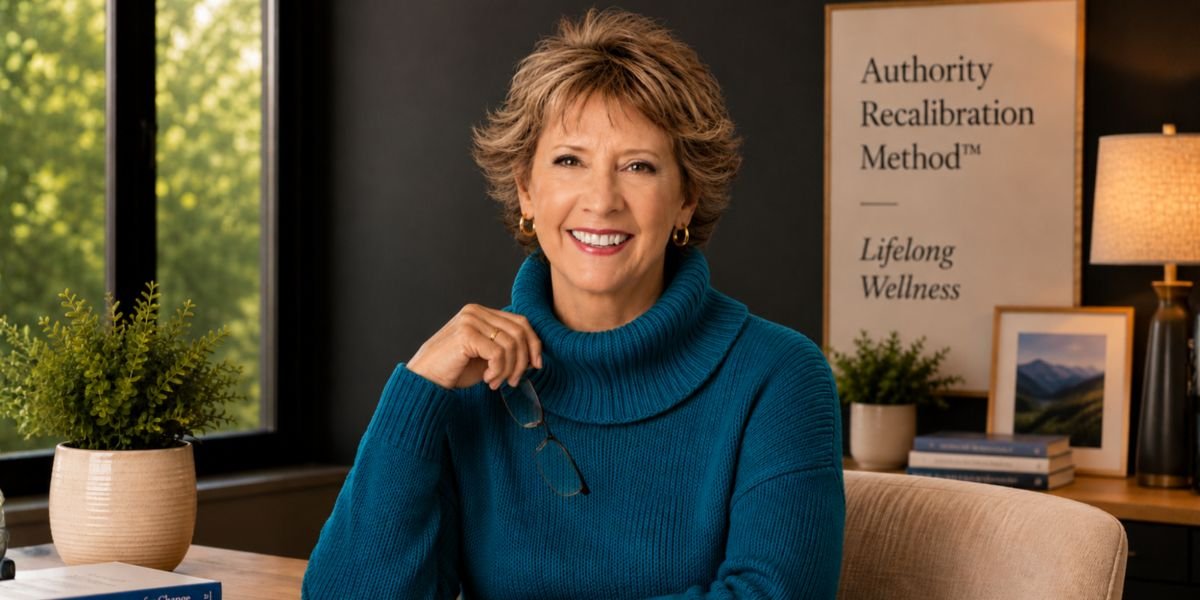
As an Embodied Authority Architect, speaker, and founder of Lifelong Wellness, Hesse has spent more than 30 years working with executives, entrepreneurs, and professional women. Throughout that work, she has observed that authority is not created by titles, credentials, or accomplishments alone. It is shaped by a leader’s relationship with herself.
That work was not built on theory. Hesse’s own path included rebuilding her professional life from the ground up, a process that drew her into nutrition, somatic healing, energy work, and subconscious release, and ultimately led her to identify the common thread running through every woman she worked with. Capability was rarely the issue. The missing piece was an unshakable sense of one’s own authority, not borrowed from credentials or approval, but sourced from within.
For Hesse, that relationship is not metaphorical. It is physiological. Her work is built on a foundational premise: the body knows before the mind does. When a woman is disconnected from her own authority, it shows, not just in her words, but in the way she holds herself, the way she enters a room, and the way she hesitates before speaking. Recalibration, in Hesse’s framework, happens at the subconscious, somatic, and cellular levels, not through mindset alone.
Hesse says, “Rarely do women have a capability problem. They have an internal stability problem.”
That insight became the foundation for Embodied Leadership™, her signature framework designed to help women strengthen self-trust, leadership presence, and personal authority through her proprietary Authority Recalibration Method™.
The Authority Recalibration Method™ addresses the patterns most leadership training never reaches, the internal reflexes that cause women to over-explain, seek permission, or perform confidence rather than embody it. The distinction matters: performed confidence can be read. Embodied authority is felt.
The Cost of Looking Outside Yourself
Many leadership models reward certainty, decisiveness, and confidence. Yet Hesse believes one of the greatest obstacles facing accomplished women is the habit of looking outside themselves for confirmation before taking action.
Whether it comes from seeking approval, avoiding criticism, or waiting for reassurance that a decision is right, external validation can quietly undermine leadership effectiveness.
According to Hesse, leaders become more influential when they trust their own judgment rather than constantly measuring themselves against outside expectations. Decisions happen faster. Communication becomes clearer. Boundaries become stronger.
The shift is often subtle, but its impact can be significant.
Hesse says, “When women stop performing for approval and start trusting themselves, they become more effective leaders, communicators, and decision-makers.”
Why It Matters in Modern Leadership
The demands placed on leaders today are different from those they faced a decade ago. Organizations are managing rapid change, uncertainty, workforce shifts, and growing pressure to build trust while delivering results.
In that environment, expertise alone is no longer enough.
Leaders are expected to communicate clearly, make difficult decisions, balance competing priorities, and maintain credibility under pressure. How they show up often influences outcomes as much as what they know.
Hesse believes this is where internal stability becomes a leadership advantage.
When leaders are grounded in their own authority, they are less likely to be derailed by outside opinions, workplace politics, or the need to constantly prove themselves. They can remain present during difficult conversations, make decisions with greater conviction, and lead from a place of clarity rather than reaction.
As organizations continue to place greater value on authenticity, emotional intelligence, and human-centered leadership, the ability to trust oneself may become one of the most important leadership skills of all.
The Difference People Can Feel
Leadership presence is often discussed but rarely defined.
Some describe it as confidence. Others associate it with charisma, communication style, or executive presence. Hesse believes it runs deeper than any individual skill.
Throughout her work, she has observed that people often respond to a leader before evaluating credentials, expertise, or accomplishments. They respond to certainty, consistency, and the sense that a leader trusts herself.
This is one reason two equally qualified women can have very different experiences in the workplace. One may naturally command attention, while another works harder to earn the same level of influence. The difference is not necessarily talent or intelligence.
Often, it is the degree to which a woman is connected to her own authority. The difference Hesse names is nervous-system stability, the degree to which a woman is regulated, grounded, and congruent rather than performing the version of herself she believes will be accepted.
Many women spend years adapting themselves to outside expectations and, in the process, become disconnected from their own voice.
Hesse explains, “Women deserve to be seen, heard, and respected without abandoning themselves in the process.”
A central principle of her work is that leadership becomes more powerful when women stop editing themselves to fit external expectations and begin expressing themselves more fully.
“Women need to be fully expressed to be fulfilled.”
Hesse believes the body often recognizes this shift before the mind can explain it. As women develop greater self-trust, both they and those around them begin to notice the difference.
Rather than striving to be seen as leaders, they begin showing up as leaders. And that difference is something people can feel.
A Different Model of Authority
Hesse’s work helps women examine the internal patterns that influence how they communicate, make decisions, and hold authority in their professional lives.
Rather than teaching women to perform confidence, the work is designed to help them develop a stronger internal foundation for self-trust, influence, and leadership presence.
For Hesse, authority is not about control. It is not about becoming louder, harder, or more forceful. It is about becoming more congruent.
When a woman is aligned with her own authority, she no longer has to over-explain, over-prove, or wait for permission to take up space. Her leadership becomes less reactive and more grounded. Her communication becomes less about managing perception and more about expressing truth with clarity.
In a business culture that often emphasizes doing more, proving more, and achieving more, Hesse’s work offers a different perspective: influence begins within.
The Future of Leadership
As leadership continues to evolve, Hesse believes women are being called to lead from a deeper sense of self-trust and authority.
Through decades of leadership and transformational work, she helps women strengthen the internal foundation that supports clear communication, confident decision-making, and authentic influence.
One lesson has remained consistent throughout Hesse’s personal and professional journey: wisdom does not always come from doing more. Sometimes it comes from becoming still enough to recognize what is already there.
For Hesse, leadership is ultimately rooted in the same principle. The strongest leaders are not constantly searching outside themselves for certainty, approval, or permission. They develop the ability to trust their own voice, judgment, and authority.
Because lasting influence begins the moment a leader stops looking outward for validation and starts leading from within.
To learn more about Maryann Hesse and Embodied Leadership™, visit Maryann Hesse’s website or connect with her on LinkedIn.