
Nvidia announced on August 10 that it has signed memorandums of understanding with six of the world’s largest financial institutions to create compute financing platforms designed to mobilize over $500 billion in third-party capital for the construction of AI infrastructure globally, a deal that redefines the chipmaker’s role from hardware supplier to financial intermediary for the AI economy.
Key Takeaways
- Nvidia signed memorandums of understanding with Apollo Global Management, BlackRock, Blackstone, Brookfield Asset Management, Goldman Sachs, and KKR to establish independent compute financing platforms targeting over $500 billion in third-party capital.
- The financing structure treats Nvidia compute power as collateral for new debt, with capital deployed through private offerings and bonds issued by special-purpose entities.
- CEO Jensen Huang described the initiative as transforming Nvidia from a chip company into a builder of “a new class of productive, investable infrastructure: AI factories.”
- Goldman Sachs is the only bank in the six-firm coalition, positioning it to lead public debt offerings, while the five alternative asset managers will deploy long-duration institutional and insurance capital.
- The partnerships remain subject to execution of final agreements, with deals expected to reach market within months.
The Deal Turns GPU Compute Into a Collateralized Asset Class
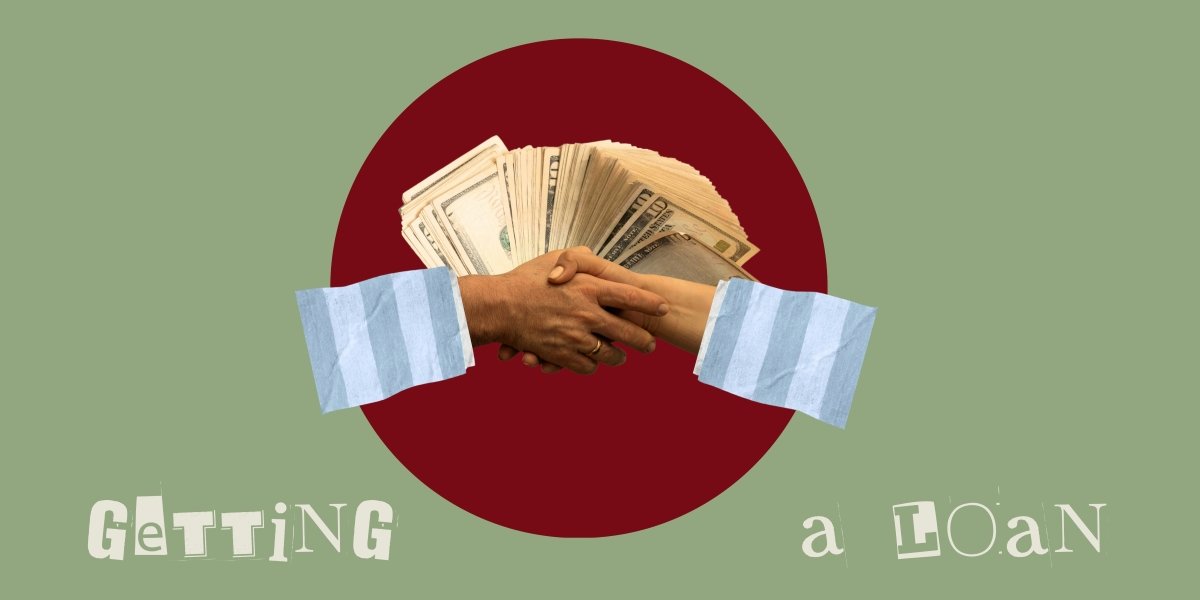
The structure announced by Nvidia represents a departure from how technology infrastructure has traditionally been financed. Rather than relying on tech companies’ own balance sheets or conventional corporate lending, the financing platforms will treat Nvidia’s GPU compute capacity as a form of productive collateral, similar to how commercial real estate, toll roads, or energy infrastructure are underwritten by institutional investors. Each of the six financial partners will create dedicated capital pools at scale, offering financing at competitive rates to Nvidia’s customers, which include frontier AI labs, cloud providers, enterprises, and sovereign governments building out data center capacity.
Nvidia framed its compute hardware as uniquely suited for this kind of financial product. The company’s CUDA software platform, which underpins the programming ecosystem across its GPU lineup, extends the useful economic life of its hardware and makes it transferable across different customers and workloads. That fungibility, combined with a global base of developers and commercial offtakers, is what gives lenders confidence that the underlying asset will hold value over the duration of the financing. The structure is designed to generate long-duration, usage-linked revenue streams for the capital providers, rather than one-time hardware purchase transactions.
Six Firms Represent Over $4 Trillion in Combined Assets Under Management
The coalition assembled by Nvidia represents a concentration of institutional capital that is without precedent in the technology sector. Apollo manages approximately $1.05 trillion in assets as of June 30, 2026. BlackRock is the world’s largest asset manager. Blackstone manages over $1.3 trillion across real estate, private equity, credit, and infrastructure strategies. Brookfield oversees more than $1 trillion globally, with deep exposure to physical infrastructure and energy. Goldman Sachs, the only traditional bank in the group, brings both its investment banking distribution network and its own asset management arm. KKR rounds out the coalition with its alternative asset management and capital markets capabilities.
Huang disclosed that Nvidia approached only six firms and that none declined. The company chose partners that could independently underwrite AI infrastructure at global scale, rather than forming a single syndicate. Each firm will operate its own financing platform, giving Nvidia’s customers multiple competing sources of capital rather than a single funding channel. Apollo President Jim Zelter described modern compute as a “scarce, mission-critical asset class” positioned to drive long-term economic growth. BlackRock Chairman and CEO Larry Fink connected the deal to job creation, noting that the AI buildout will require a skilled workforce to translate capital into functioning infrastructure.
The Initiative Follows a July Market Correction That Questioned AI Spending
The timing of the announcement carries strategic weight. In July 2026, global equity markets experienced a notable pullback as investors questioned whether Big Tech’s accelerating AI capital expenditures would generate commensurate returns. Combined AI-related spending by hyperscale cloud providers is projected to surpass $730 billion in 2026, and rating agencies including Moody’s have warned that the unprecedented pace of capital expenditure is beginning to compress free cash flow and push tech companies into heavier debt loads. By shifting a portion of the financing burden to institutional investors and alternative asset managers, Nvidia’s structure offers its customers a way to build AI infrastructure without concentrating all of the capital risk on their own balance sheets.
The $500 billion financing initiative also arrives in the context of Nvidia’s broader dealmaking in 2026. In July, the company expanded a partnership with South Korea’s SK Group valued at over $500 billion in projected business. Nvidia also made a substantial investment in Safe Superintelligence, the AI startup co-founded by former OpenAI chief scientist Ilya Sutskever. Earlier in the year, Nvidia and OpenAI announced a partnership to deploy at least 10 gigawatts of Nvidia systems, with Nvidia committing up to $100 billion in progressive investment as each gigawatt comes online. Taken together, these agreements position Nvidia at the intersection of hardware manufacturing, software ecosystems, and now capital markets, a combination no other semiconductor company has attempted at this scale.
Goldman Sachs Holds a Distinct Role as the Coalition’s Only Bank
Goldman Sachs occupies a structurally different position within the six-firm coalition. As the only traditional investment bank in the group, Goldman Sachs is positioned to lead public debt offerings and distribute credit products backed by Nvidia compute to a broader investor base. The five alternative asset managers, by contrast, will deploy capital primarily from their own institutional and insurance-linked pools, targeting longer-duration infrastructure investments. Goldman Sachs Chairman and CEO David Solomon described the opportunity as creating a new credit market backed by Nvidia compute, noting the firm’s confidence in Nvidia’s position at the center of the global AI buildout.
KKR co-CEOs Joe Bae and Scott Nuttall emphasized the operational dimension, noting that delivery, not ambition, is the more difficult challenge in scaling AI infrastructure. KKR is a founding investor in Helix Digital Infrastructure, a data center platform, and brings existing infrastructure execution experience to the partnership. Blackstone President and COO Jon Gray underscored the firm’s existing investment across the Nvidia ecosystem, while Brookfield CEO Bruce Flatt described compute as a core pillar of the firm’s AI infrastructure strategy, noting that demand for large-scale AI compute is growing as adoption scales across industries. All six partnerships remain subject to the execution of final agreements.
Disclaimer: This article is for informational purposes only and does not constitute financial advice or a recommendation to purchase any securities or investments.
FAQs
What Does Nvidia’s $500 Billion AI Financing Deal Actually Do?
The deal creates six independent financing platforms, each operated by a major financial institution, that will provide capital to Nvidia’s customers for building AI data centers and acquiring Nvidia hardware. The financing treats GPU compute power as collateral, similar to how infrastructure assets like energy facilities or commercial real estate are used to secure lending.
Is Nvidia Lending Money Directly to Its Customers?
No. Nvidia is not acting as a lender. The six financial partners, Apollo, BlackRock, Blackstone, Brookfield, Goldman Sachs, and KKR, will independently underwrite and deploy the capital through their own platforms. Nvidia’s role is to connect its customer base with institutional financing at scale.
When Will the Financing Be Available?
The memorandums of understanding were announced on August 10, 2026, but the partnerships remain subject to the execution of final agreements. Deals are expected to reach market within months, though specific timelines have not been disclosed.