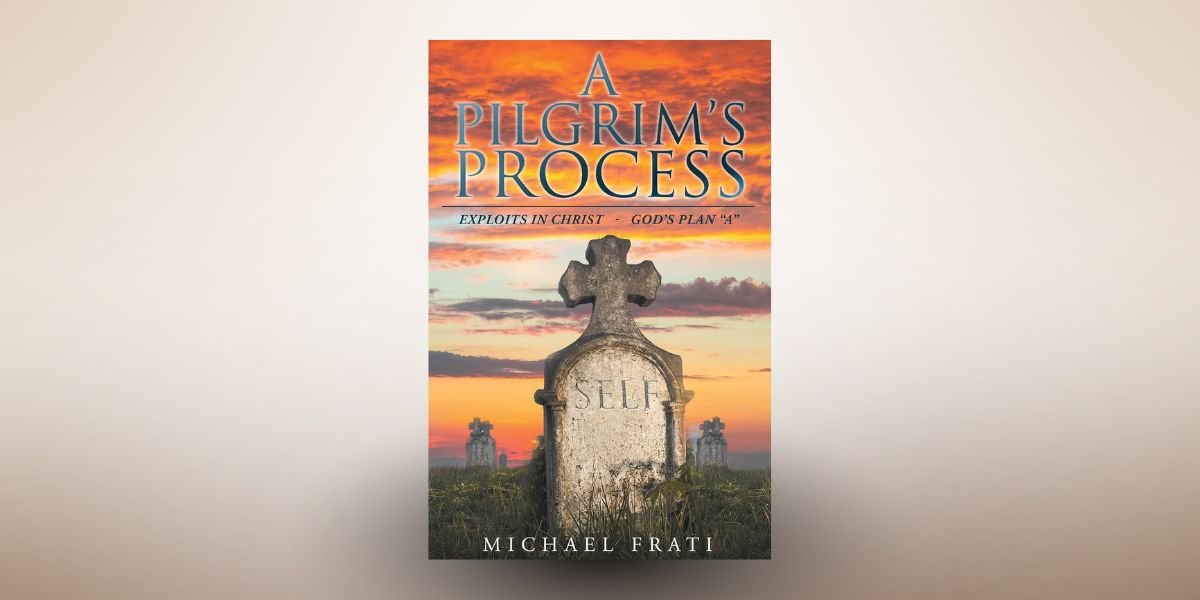

Michael Frati’s A Pilgrim’s Process is the kind of book that refuses to be skimmed and only requires a finger as a bookmark. Readers often find themselves slowing down, re-reading passages, and sitting in silence after certain stories land. It carries a rare combination of warmth, conviction, and lived experience that makes it feel less like a traditional Christian teaching book and more like a testimony unfolding in real time.
This book of teachings and corresponding testimonies is written specifically for the Christian who hungers for a life that actually reflects what it means to follow Christ. It speaks directly to those who desire not just inspiration, but transformation rooted in obedience and daily surrender.
Frati builds the entire foundation of the book around a clear and uncompromising truth drawn from his own life: every decision presents a choice between God’s way, what he calls “Plan A,” and our own way, “Plan B.”
Through his failures, struggles, and triumphs, he demonstrates how consistently that choice appears in every season of life. Plan A represents alignment with God’s will. Plan B represents human independence. And while Plan B may appear reasonable in the moment, Frati makes it clear through story after story that it often leads to frustration, mediocrity, or spiritual stagnation.
What makes his message powerful is not just the idea itself, but the fact that it is not theoretical. It is lived.
Frati writes as someone who has wrestled with both paths. His stories are not polished hypothetical theories but honest reflections of real decisions, real consequences, and real encounters with God’s grace. That honesty gives the book its emotional weight and makes it feel deeply relatable to readers working through their own faith journeys.
One of the central truths Frati returns to throughout the book is the idea of covenant. When a person becomes a Christian, he explains, they enter into an irrevocable covenant with Christ. From that moment forward, God does not abandon or withdraw from the believer, even when they resist or stray. Instead, He continues to guide, teach, and draw them back toward His Plan A purpose.
Frati emphasizes that God does not give up on people. If growth in faith stalls, it is rarely because God has withdrawn, but because individuals often stop responding in faith. Yet even in those moments, he stresses, it is never too late to return, reset, and step back into what God originally intended.
A central theme of the book is the concept of dying to self. Frati presents this not as a distant theological phrase but as the practical key to living a meaningful Christian life. He writes about dying to personal ambition, control, and independence so that Christ can fully take shape in a person’s life.
In this way, he echoes the apostle Paul’s declaration: “It is no longer I who live, but Christ who lives in me.” For Frati, this is not poetic language. It is the goal of every believer’s journey.
He is candid about the reality that this process is not always easy. At times, dying to self can feel difficult, uncomfortable, and even painful. At other times, it becomes surprisingly simple when a person chooses surrender over resistance. In either case, he insists, there are no shortcuts and no alternative routes. Growth happens through alignment with God’s plan, not deviation from it.
Frati repeatedly returns to a direct encouragement: pursue Plan A. Anything else, he argues, ultimately leads away from fulfillment and toward a diminished version of the life God intended.
Despite its strong message, the tone of the book remains encouraging rather than heavy-handed. Frati does not present himself as someone who has mastered perfection. Instead, he writes as someone who has walked through failure and found redemption on the other side. That lived experience gives his words credibility and makes his encouragement feel grounded rather than idealistic.
Readers are not only told what to believe; they are shown what it looks like to live through both success and failure and still find God faithful in every stage.
Ultimately, Frati’s message is one of hope and possibility. He writes with the conviction that every reader can change direction, regardless of where they are starting from. The book encourages believers to see themselves as living expressions of the Gospel, capable of reflecting God’s purpose in their daily lives.
There is a consistent sense of invitation throughout the pages. Frati does not merely inform; he calls readers forward. He reminds them that God has a vision for their lives and that where vision is given, provision follows.
By the time readers finish A Pilgrim’s Process, many find themselves reassessing their own choices, desires, and direction. The book leaves behind more than insights. It leaves behind a question that lingers: am I living Plan A, or settling for Plan B?
And in Frati’s own words, the reassurance remains simple and direct: it is possible to change course. It is possible to begin again. It is possible to live the life God intended.
“You can do this thing,” he writes. And coming from a life marked by both struggle and transformation, the words carry the weight of lived truth.
Frati manages to convey all this in the most entertaining way. A Pilgrim’s Process is a must-read. Available now on Amazon.