
By: Kristine Kennedy
Every few years, the conversation about what employees need changes. Remote work. Unlimited PTO. AI integration. Generational differences. Office design. Wellness programs. The list of things organizations have been told to focus on is long, ever-evolving, and frequently contradictory.
Kris Erickson has been in the room for most of those conversations. She spent three decades advising Fortune 500 companies, holding executive roles at Kenexa, IBM, and Gallup, and ultimately cofounding Workforce Science Associates. She has watched organizations spend enormous resources chasing whatever the current trend says matters most.
And she has watched the fundamentals stay exactly the same the whole time.
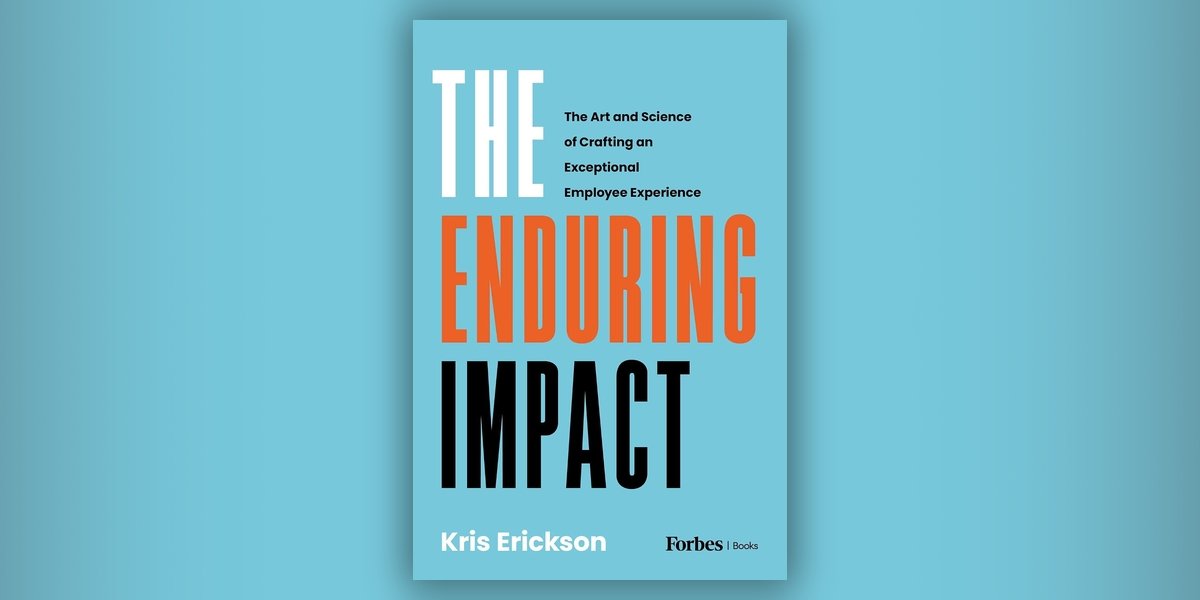
The Enduring Impact is her argument that the most important things leaders can do for their people have never changed, and that the obsession with what’s new has quietly cost organizations more than they realize.
Perks Are Easy To Copy. Culture Isn’t.
Kris draws a sharp line early in the book between what organizations have been investing in and what actually moves the needle. Perks are tangible, marketable, and easy to point to. They’re also easy to replicate. A competitor can match a flexible schedule or a food allowance within a quarter.
What they can’t replicate quickly is culture. And culture, in Kris’s framing, isn’t built by what employees receive. It’s built by what they experience. Every day. In every interaction with their manager, their peers, and the organization’s leadership.
The investment in perks, she argues, has sometimes actively distracted leaders from doing the harder and more consequential work of becoming better leaders. Employees remember how they were treated far longer than they remember whether the office had standing desks. The organizations that understand that are building something their competitors can’t easily copy.
People Are The Experience
One of the most striking ideas in the book comes from one of its endorsers, who observed that people don’t create the experience; they are the experience. Kris describes that reframe as changing everything about how a leader thinks about their practical decisions.
If people are the experience, then every leadership interaction matters. Every meeting. Every coaching conversation. Every difficult decision and how it’s communicated. Culture isn’t what’s written on a wall or embedded in an onboarding document. It’s what employees experience every single day in their interactions with the organization and the people who run it.
Once leaders understand that, the questions they ask change. Instead of asking what program to launch, they start asking what experience employees are having when they interact with their manager, their team, and the leadership above them. That’s a considerably more powerful question, and it leads to considerably more meaningful answers.
Trust Is Built In Small Moments
Kris is precise about how trust actually works inside organizations. It isn’t built through a single inspirational speech or a well-crafted all-hands meeting. It’s built through thousands of consistent moments, most of them small, many of them unnoticed by the leader who generates them, but none of them unnoticed by the employees who experience them.
The strongest organizations demonstrate competence, integrity, and genuine care. Their leaders communicate honestly even when the news is difficult. They follow through on commitments. They admit mistakes. They stay visible during uncertain periods rather than disappearing when things get hard.
Trust is usually lost in much smaller ways than leaders recognize. Inconsistent decisions. Poor communication of the reasoning behind choices. Promises that aren’t kept. The gap between what leaders say and what they do. Employees pay close attention to whether those things align. And the data Kris has spent decades accumulating shows that when they don’t, engagement deteriorates in ways that compensation packages and perk upgrades can’t reverse.
Why Fulfillment Outperforms Engagement Tactics
Kris draws a deliberate distinction between short-term engagement tactics and the longer-term goal of fulfillment. Engagement tactics produce spikes. Fulfillment compounds. Organizations that invest consistently in meaningful experiences don’t just have happier employees. They see stronger productivity, higher retention, better customer experiences, and stronger financial performance over time.
The challenge is making that case to leaders who are under quarterly pressure and short-term board expectations. Her answer is that fulfillment isn’t separate from business performance. It’s one of its strongest drivers. And the organizations that treat it that way are building something that outlasts any individual leader’s tenure, which is exactly the kind of legacy she believes leadership is ultimately about.
If you’re ready to stop chasing what’s new and start investing in what has always mattered, The Enduring Impact by Kris Erickson is available now on Amazon. Culture isn’t built by perks. It’s built by every interaction your people have with you.