

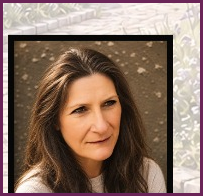
Some books begin with an idea. Walking Through Grief began with a calling. A few years ago, an unexpected opportunity at Judith Bintliff’s church invited her to step into adult grief-support work. What began as a chance to help soon felt deeply familiar, a role she had been preparing for through life, loss, faith, and compassion. For Bintliff, grief is not an abstract subject. Her writing reflects a belief that loss can be overwhelming, nonlinear, and deeply personal, and that people deserve a compassionate place to process it without being rushed.
A Calling Shaped by Loss
Bintliff’s understanding of grief was formed in part by profound personal loss. In the acknowledgments to her workbook, she honors the memory of her sister, whose death was traumatic, followed later by the deaths of her father and mother. Those experiences taught her the depth of sorrow, but also the possibility of hope that can exist alongside it. Rather than write from a position of easy answers, she approaches grief as someone who knows how disorienting, exhausting, and unpredictable it can feel.
Her work with grief support groups became a bridge between personal experience and service. Bintliff credits the people she has walked alongside in GriefShare groups for their courage, honesty, tears, laughter, and stories, noting that those experiences helped shape the workbook. She also acknowledges the GriefShare ministry as an important foundation for helping others through loss, as well as the church leaders and mentor who encouraged her to step into this work and eventually gave her the confidence to write.
From Support Group to Workbook
That evolution is visible throughout Walking Through Grief. The forthcoming book is structured as a thirteen-session, faith-based workbook that moves through questions and emotions many bereaved people face: wondering whether their reactions are normal, loneliness and sadness, self-care, fear, anger, regret, changes in the household and friendships, questions for God, feeling stuck, hope and resilience, and the search for purpose after loss.
The workbook is designed to be participatory rather than passive. Discussion, reflection, prayer, Scripture, journaling, videos, practical activities, and moments of quiet are woven together so that readers can name what they are feeling and consider what they need. Bintliff repeatedly emphasizes that grief is not a straight line. Difficult emotions can return without meaning that a person has failed or gone backward. In her framework, healing is not about forgetting the person who died; it is about learning to carry love, memories, sorrow, and hope together.
“Healing is not about getting over loss. It is about learning to live with love, memories, and hope.” – From Walking Through Grief
A Gentle, Faith-Centered Approach
There is a strong sense of community in Bintliff’s writing. The group guidelines emphasize safety, confidentiality, listening, respect, and sharing only when a person is ready. She encourages people to resist the pressure to grieve on someone else’s timeline and to understand that their experience may look very different from another person’s. The tone is steady rather than prescriptive. Grief is not presented as a problem to solve, but as a journey to walk gently.
Faith is central to that journey. Prayer, Scripture, and direct questions about God appear throughout the workbook, including space for doubt, anger, confusion, and trust. Bintliff does not separate spiritual life from emotional honesty. Instead, she creates room for both, repeatedly returning to the idea that a grieving person can bring the full weight of what they are feeling into prayer and still be met with compassion.
Beyond the grief-support work, Bintliff continues teaching and speaks with gratitude about a full family life shared with her two daughters and three grandchildren. That blend of service, teaching, faith, and family helps explain why her workbook feels less like a distant manual and more like a companion created from lived experience. The book’s visual language echoes the same message. Lavender flowers, pathways, benches, crosses, candles, and butterflies appear throughout the pages, reinforcing themes of remembrance, faith, rest, and gradual movement forward.
One Step at a Time
At the center of Bintliff’s approach is a simple phrase that becomes a refrain: one step at a time. It appears in the structure of the workbook, in the prayers, and in the closing words. The message is not that grief disappears on command. People change around it. They learn new ways to remember, to function, to hope, and eventually to imagine a future that still carries the love of the person they lost.
As Walking Through Grief moves toward publication, Judith Bintliff’s story gives the workbook its emotional foundation. It is the story of someone whose own encounters with loss became a source of empathy, whose church opened a door to service, and whose experience beside grieving adults inspired a resource meant to offer comfort, reflection, and faith. She does not promise a shortcut through sorrow. Instead, she offers companionship and the assurance that even the hardest journey can be taken one step, one day, and sometimes one breath at a time.