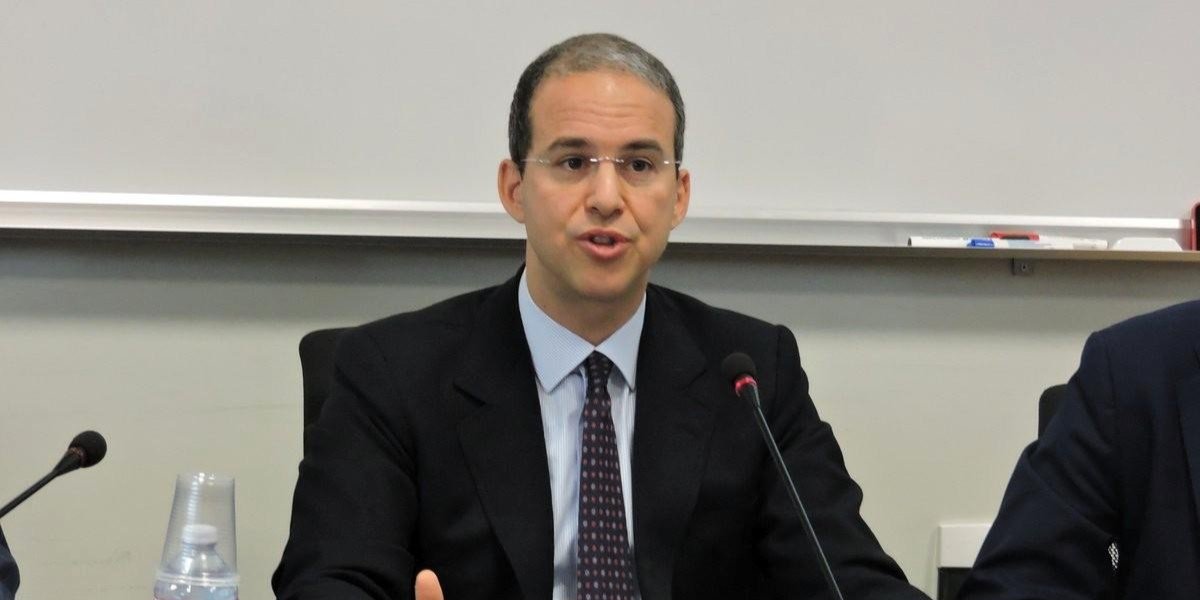

In Europe, the late 2000s saw a “rapid expansion of solar energy,” fueled by the promise of incentives and feed-in tariffs that spurred the development of clean energy. By 2010, the European Union represented “about 70 percent of the world’s installed photovoltaic capacity,” with Italy, Germany, and Spain among the top markets. However, despite the favorable regulatory environment, “most solar projects were still reliant on subsidies and bank financing, with minimal access to capital markets.” Institutional investors, such as pension funds and insurance companies, considered renewable energy “too risky and too alternative” for their portfolios.
Such a context influenced the initial growth of utility-scale solar in Southern Europe. The schemes tended to be small-scale, and the financing schemes were quite complex. Market confidence was largely dependent on regulatory stability. The Italian Conto Energia schemes, launched in the mid-2000s, fueled demand but made project economics dependent on political developments. As cumulative capacity increased, concerns arose about whether solar could thrive without incentives. Market players began seeking innovative financing solutions that would enable renewable resources to thrive on their own financial strengths.
It was against this background that Giuseppe La Loggia joined the renewable energy industry after practicing law. In 2008, he joined SunRay Renewable Energy, a solar development company in Europe supported by the private equity firm Denham Capital, which had committed around $200 million in equity to develop solar photovoltaic projects in Southern Europe. SunRay focused on developing large solar farms in Italy, Spain, France, and Greece, where solar irradiation and regulatory conditions were favorable at the time.
SunRay was acquired by SunPower Corporation in 2010 as a strategic step towards creating a vertically integrated business model, enabling SunPower to manufacture its highly efficient solar panels and deploy them in its own projects across Europe. Post-acquisition, La Loggia assumed his position as Head of Business Development and General Manager of SunPower Italy. He was responsible for developing and implementing a strategy for constructing their operating platform for Italy, as well as their teams from a technological and commercial perspective. During his tenure at SunPower Italy, the company developed over 300 megawatts of capacity. It was one of the leading players at the time.
This kind of growth required strong cross-functional coordination across land transactions, permits, engineering, procurement, and grid connections. Variations in regions in Italy further impacted project timeframes. It is essential to note that project timeframes were short due to tariff schedules. As such, project financing, project origination, and contractor execution had to be closely aligned. It is pertinent to state that market statistics for that time period indicated that Italy’s solar development added more than 9 gigawatts in 2011.
Financings of innovative projects also became a central element of this. In 2010, La Loggia served as Sole Director of Andromeda Finance S.r.l., the in-house special purpose project and structured financing vehicle of the SunPower Corporation Group, established to execute one of the most pioneering renewable-energy capital markets transactions in Europe, a project bond of approximately €260 million, backed by a diversified portfolio of utility-scale solar power plants in Italy.
The transaction represented one of the first publicly rated solar project bonds in the Italian market, successfully combining institutional capital markets funding with long-term renewable infrastructure assets. The operation marked a significant step forward in the evolution of non-recourse financing for renewables in Italy, demonstrating how capital markets could be mobilised to support large-scale energy transition projects beyond traditional bank lending.
The bond had a public rating and was listed; it was the first solar project bond of this type to gain access to public capital markets. Up until then, bank loans and private placements had financed renewable energy projects, but these had attracted only a limited number of institutional lenders.
The Andromeda bond brought together revenues from several operating assets to create a larger, more diverse base, appealing to a wide range of investors. Rating agencies weighed the portfolio on contracted cash flows under Italy’s incentive regime, along with the technical performance of the assets and residual operational risks. The bond found buyers across a wide range of investors, showing that renewable infrastructure could meet long-term capital providers’ expectations for risk and return. In 2010, Project Finance International awarded it the European Project Bond Deal of the Year.
At the time, project bonds in Europe were still a niche market beyond sectors such as transportation and public-private partnerships. According to the European Investment Bank, project bonds accounted for less than 5 percent of Europe’s total infrastructure financing in the late 2000s. Market participants took Andromeda as proof that renewable assets could be structured in line with mainstream investment structures, without relying on specialized green-finance vehicles.
The deal also provided a glimpse of how renewable portfolios could scale up. The ability to securitize and sell operating solar assets to public investors enables developers and sponsors to recycle capital sooner. That, in turn, accelerated the rollout of new projects without relying squarely on balance-sheet funding or extra equity. Analysts said at the time that this sort of structure could reduce the cost of capital for renewables, helping them compete more effectively with conventional power generation.
While subsidy schemes still underpinned project revenues, the financing model did not rely on government-backed guarantees beyond those provided by existing tariff contracts. This distinction was important for investor perception. It suggested that renewable infrastructure could gradually integrate into mainstream capital markets, much as toll roads or regulated utilities do. For institutional investors seeking long-duration assets with stable yields, solar portfolios began to appear as a possible fit within infrastructure allocations.
During his time at SunPower Italy, La Loggia continued to work across both origination, acquisition, development, and financing functions, reflecting a hybrid role that combined legal, commercial deal-making, and operational responsibilities. Colleagues and industry observers have pointed to this blend of skills as reflective of the period when companies needed executives who could manage development and regulatory risk, negotiate acquisitions and financing, and oversee the simultaneous delivery of the physical assets connected to the grid. This combination became increasingly relevant as competition intensified and margins tightened.
For Giuseppe La Loggia, the period at SunRay and SunPower was one in which operational growth and financial innovation progressed in parallel. The experience of establishing an operating platform, scaling capacity, and accessing capital markets provided a foundation for later roles in fund management and infrastructure investment. It also placed him at the intersection of investment origination and execution, coupled with financial structuring. This position would remain central in subsequent phases of his career.