
There is a question sitting underneath a lot of workplace conversations right now that most people haven’t fully articulated yet. If AI can do more and more of what used to differentiate professionals, what actually makes someone indispensable?
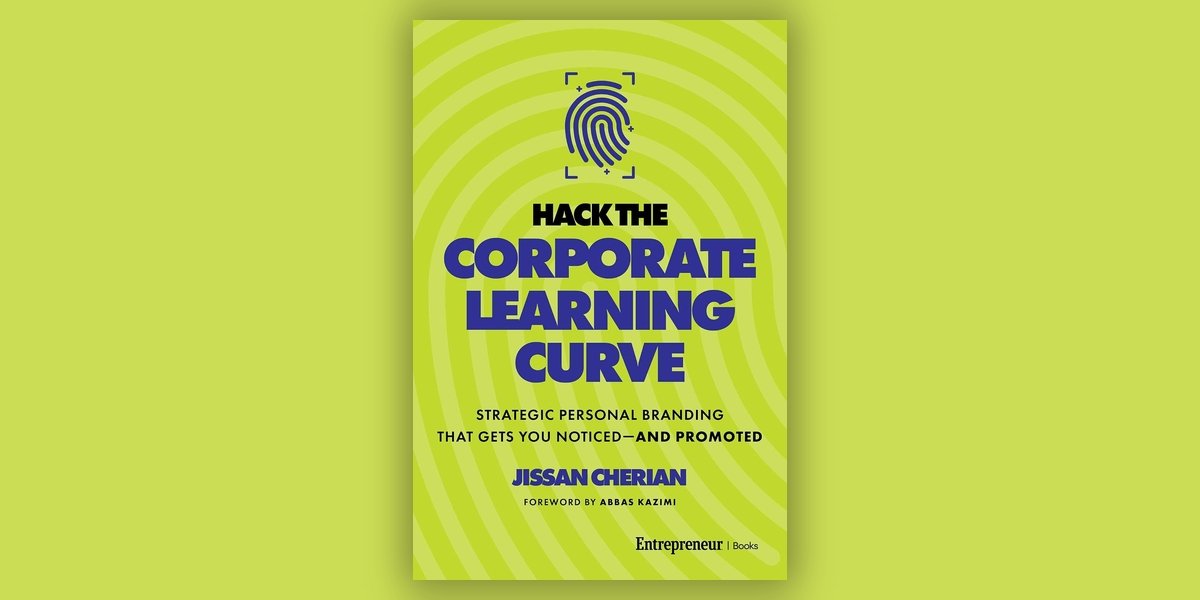
Jissan Cherian has thought about this carefully. He holds an Executive Certification in Artificial Intelligence from MIT and has spent decades working across Microsoft, Deloitte, GSK Consumer Healthcare, and Haleon. His book Hack the Corporate Learning Curve was already built around the argument that strategic personal branding matters more than most professionals realize. AI, he believes, has made that argument significantly more urgent.
What AI Actually Changes
The tasks that once set professionals apart, research, drafting presentations, analyzing information, can increasingly be accelerated through AI tools available to almost everyone. That democratization of capability raises a pointed question: if everyone has access to similar tools, what makes any individual indispensable?
The answer, Jissan argues, isn’t knowing more. It’s the judgment developed through experience. The relationships built over years of consistent behavior. The ability to influence others and be trusted to do so. The reputation for solving meaningful problems in ways that can’t be templated or automated.
Personal branding, in an AI-enabled workplace, isn’t a vanity project. It’s a survival strategy. AI can support the work. It can’t replace the trust someone has built, the perspective they’ve developed through lived experience, or the confidence others have in their leadership. The professionals who thrive won’t compete with AI. They’ll combine it with uniquely human strengths that no model can replicate.
Why Stories Beat Skills Lists
One of the most practical tools in Jissan’s framework is built around storytelling. He encourages readers to identify their natural strengths, validate them through lived experiences, and weave those experiences into the stories they tell about themselves in professional settings.
The reasoning is straightforward. A list of skills is forgettable. A story that demonstrates those skills is memorable. When someone can clearly articulate how they solved a difficult problem, navigated uncertainty, or led others through change, they’re not just describing their capabilities. They’re proving them. And in a world where AI can produce a skills list in seconds, the ability to tell a compelling, authentic story about what someone has actually done and who they’ve become is increasingly rare and increasingly valuable.
Jissan has watched careers change dramatically when professionals develop that ability. People begin to be recognized not just for what they do but for the value they consistently bring. That recognition is what creates a personal brand people remember when new opportunities arise, and what AI tools, however capable, cannot manufacture on someone’s behalf.
Authenticity Isn’t About Being Quiet
One of the tensions Jissan addresses directly is the apparent conflict between being genuinely authentic and being strategically visible. For professionals whose natural style is collaborative or understated rather than loud and declarative, the personal branding conversation can feel like an invitation to become someone they’re not.
His reframe is worth sitting with. Authenticity isn’t about being quiet. It’s about being consistent. A personal brand built around natural strengths, lived experiences, and genuine values doesn’t require anyone to become the loudest person in the room. It requires them to become the clearest. Some professionals build their brands through thoughtful questions. Others through exceptional collaboration, problem-solving, or the consistent quality of their work. The goal isn’t to fit a single mold. It’s to become intentional about making unique strengths visible in ways that feel genuine.
That distinction matters especially for professionals from underrepresented backgrounds, whose communication styles or identities may not match the traditional image of a visible, promotable professional. Jissan founded DVERSFY with a mission to develop the next generation of inclusive leaders, and that mission runs through every page of this book. The framework was built to level the playing field, not to ask anyone to change who they are.
The Internal Brand Nobody Builds
One of the more practically urgent observations in the book is about where most professionals focus their energy versus where the most important audience actually lives. Many professionals spend significant effort building an external presence on social media or at industry events while overlooking the people who have the greatest influence on their next promotion.
An internal brand is the reputation inside an organization, what colleagues, managers, and senior leaders say about someone when they’re not in the room. Building it means understanding enterprise priorities, developing relationships across functions, delivering results consistently, and making sure the work connects visibly to what matters most to the business.
The next opportunity, Jissan says, is often decided by people who already work with you every day. That audience deserves as much strategic attention as any external one. In the age of AI, where the external playing field is becoming more crowded and more automated, the internal brand may be the most important thing a professional can invest in.
If AI is making your technical skills less of a differentiator and you’re wondering what actually makes you indispensable, Hack the Corporate Learning Curve by Jissan Cherian is available now on Amazon. Your judgment, your relationships, and your story are what no model can replace.