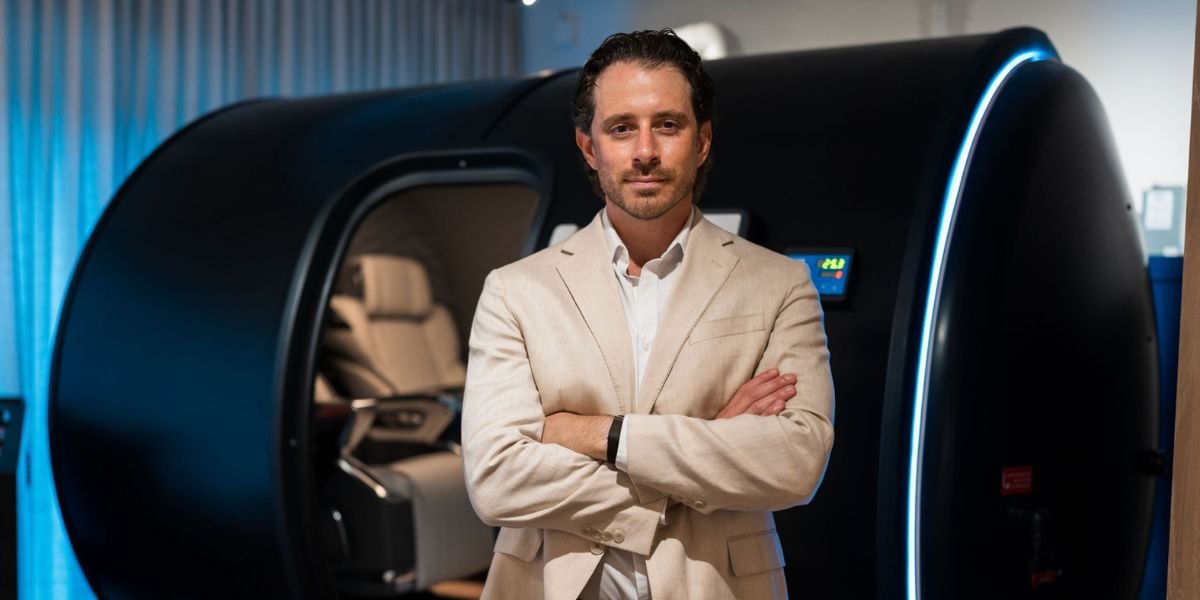

Most entrepreneurs launch companies after identifying a market opportunity. Jeff Kasper’s journey began with a different question: How do great products become great businesses?
As a mechanical engineer, Jeff spent nearly a decade working in manufacturing engineering, design engineering, project management, and product development. He loved solving technical challenges and building products that performed reliably. But over time, he realized there was one critical piece of the puzzle he didn’t understand.
“If I invented something tomorrow,” he recalls, “I wouldn’t know how to take it to market.”
That realization sparked a life-changing decision. At 30 years old, Jeff left behind a successful engineering career, packed everything he owned into his car, and drove to California with no job, no roadmap, and no guarantees. Rather than pursuing another engineering role, he immersed himself in Silicon Valley’s startup ecosystem, determined to learn what separates successful businesses from great ideas that never gain traction.
His decision would ultimately lead him to found Elevated Longevity, a company helping shape the future of preventative wellness.
Engineering a New Career
Jeff credits much of his career pivot to a lesson he learned after reading Malcolm Gladwell’s Outliers. The concept of dedicating 10,000 hours to mastering a skill challenged him to think differently about his future.
Instead of asking what job he wanted next, he asked himself a much bigger question: What is worth dedicating the next decade of my life to?
The answer wasn’t becoming a better engineer. It was learning entrepreneurship.
He immersed himself in startup accelerators, founder communities, networking events, and business development, studying sales, customer discovery, venture-backed startups, and growth strategy. While his technical background gave him the ability to build products, Silicon Valley taught him how to build companies.
That combination of engineering discipline and entrepreneurial thinking would later shape how Elevated Longevity works with its clients.
Seeing an Opportunity Others Missed
Jeff’s introduction to the longevity industry came through cryotherapy, but he quickly realized the opportunity extended far beyond any single technology.
As he worked with wellness businesses, physicians, and recovery centers, he noticed a recurring challenge. Clients were forced to coordinate multiple manufacturers, compare conflicting recommendations, and make significant investments without having an experienced, independent advisor guiding the process.
Everyone was selling equipment.
Very few were helping clients design successful wellness businesses.
Recognizing that gap, Jeff founded Elevated Longevity to serve as an independent consulting partner that helps clients make sense of a fast-changing longevity industry.
Today, the company works with physicians, wellness clinics, luxury developers, hospitality groups, recovery centers, and private clients to design comprehensive wellness environments. From strategy and facility planning to technology selection, procurement, installation, and long-term support, Elevated Longevity manages the entire process.
Rather than promoting a single manufacturer, the company takes an objective, consultative approach that puts each client’s goals first.
The Rise of Preventative Wellness
As healthcare continues shifting toward prevention instead of treatment, demand for longevity technologies has accelerated across multiple industries.
Luxury residential communities are incorporating wellness amenities into new developments. Hotels and hospitality brands are investing in recovery-focused experiences. Physicians are expanding into preventative health services, while fitness and recovery centers continue introducing advanced technologies designed to support healthier aging and improved performance.
With so many options entering the market, sorting through them has become increasingly complex.
Jeff believes that’s exactly where Elevated Longevity creates value.
“Our mission is to help people live healthier, stronger, and longer lives by making world-class longevity technology more accessible and easier to implement,” he says.
By helping clients make informed decisions and avoid costly mistakes, Elevated Longevity supports the planning of wellness spaces built to serve their operators over the long term.
Engineering the Future of Longevity
Although Jeff no longer works as a mechanical engineer, he believes engineering still defines how he approaches every project.
Systems thinking.
Process optimization.
Strategic planning.
Problem-solving.
These principles guide the way Elevated Longevity evaluates technologies, designs facilities, and supports clients throughout every stage of development.
“I never really left engineering,” Jeff says. “Today, I engineer businesses, customer experiences, and longevity ecosystems instead of mechanical systems.”
That mindset has helped position Elevated Longevity as more than a technology provider. The company serves as a strategic partner for organizations looking to create thoughtfully designed wellness environments that are both operationally effective and built for long-term success.
As the longevity industry continues to evolve, Jeff hopes Elevated Longevity will become one of its most trusted names, not simply because of the technologies it helps implement, but because of the confidence, clarity, and expertise it brings to every project.
Every clinic, wellness center, recovery facility, and residential wellness space the company helps create has the potential to improve thousands of lives over time. For Jeff, that’s the true measure of success.
To learn more about the company’s consultative approach to designing wellness environments, visit Elevated Longevity.