
State agencies have documented the problem. Federal data confirms it. Now a researcher-turned-founder is testing whether the solution was already on the road.
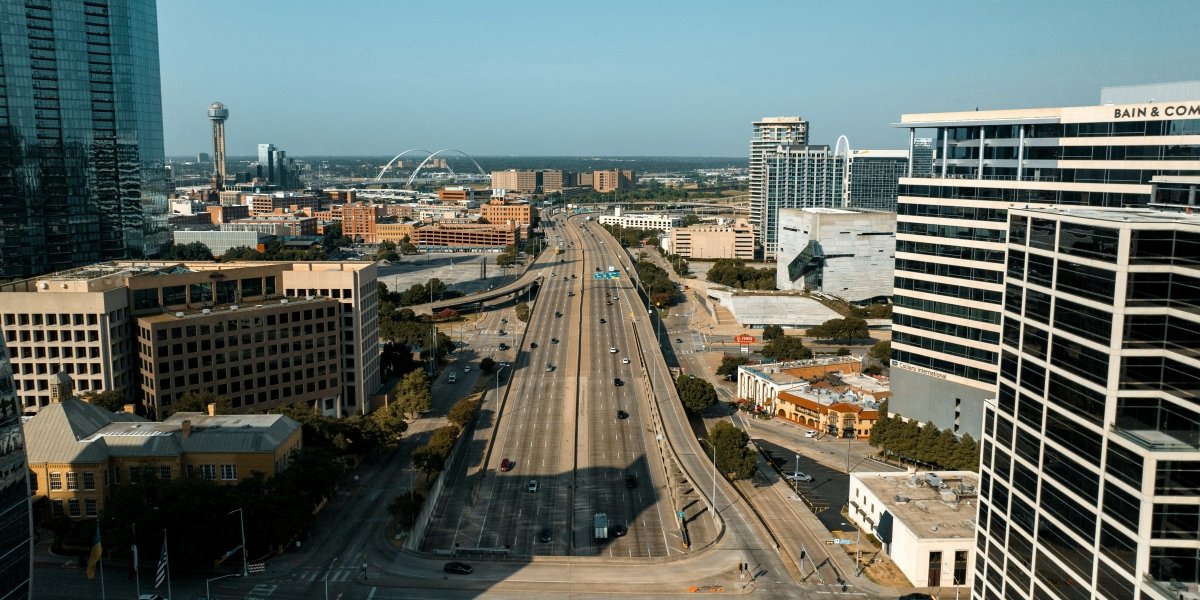
In fall 2022, travelers made more than 266,000 trips along the Austin-San Antonio corridor in a single season. The Texas Triangle, the economic backbone connecting Dallas-Fort Worth, Houston, San Antonio, and Austin, handles hundreds of thousands of daily journeys. And yet, as the Texas Department of Transportation acknowledged in a landmark 2025 transit report, passenger rail between these cities is limited, slow, and between Dallas and Houston, does not exist at all. Private bus operators fill fragments of the void, but as TxDOT itself noted in federal rail grant applications, those services rarely connect with local transit networks. The infrastructure gap is not disputed. What has been missing is someone treating it as a solvable problem rather than a permanent condition.
Transportation researchers have tracked the pattern for years. The Texas A&M Transportation Institute, whose Urban Mobility Report has measured congestion and travel behavior across hundreds of American urban areas for decades, has documented how highway-dependent corridors accumulate demand without generating supply. The data shows the same structural signature across university towns, regional employment centers, and mid-sized cities nationwide: high volumes of recurring, predictable travel with no organized shared infrastructure to serve it.
For most of the people making those trips, the options narrow quickly. Drive alone. Pay surge pricing on a ride app. Join an informal group chat and hope someone is heading the same direction. Or don’t go.
From Observation to Research
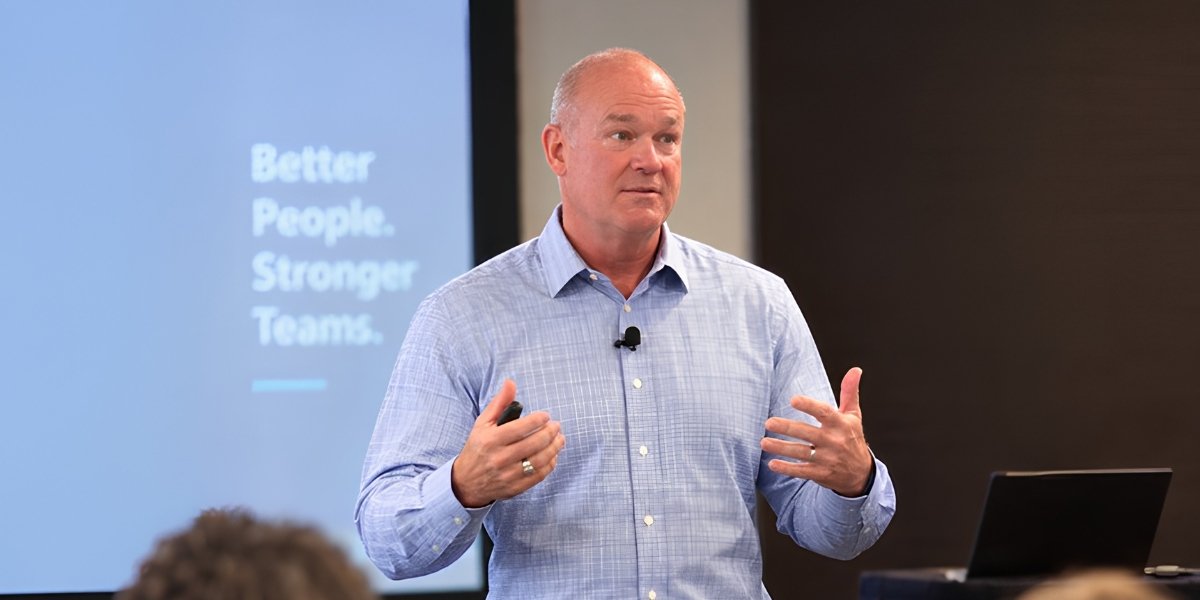
Not everyone who noticed this problem worked in transportation policy. Some of them were simply trying to get from an airport to a university town without spending more on a ride app than they had paid for the flight. Among those who kept running into that wall was Yogesh Rethinapandian, then a graduate student at the University of Illinois at Chicago, traveling between academic institutions for conferences and research presentations across the American South and Midwest. Fly budget to save money. Land in Houston or Austin. Open a ride app. Watch the fare to the actual destination climb past the cost of the flight from Chicago. Ask around. Find out that everyone else making the same trip had the same problem and no better answer.
“I kept thinking: I cannot be the only person making this trip,” he would later say. “The vehicles are already on the road. The demand is already there. What is missing is the coordination.”
What followed was not immediately a startup. It was a research process. Rethinapandian began pulling transportation research datasets covering institutional travel patterns at seven major university corridors across the United States, cross-referencing movement data to determine whether his repeated frustration reflected a personal inconvenience or a systemic gap. The data pointed consistently toward the latter. The same mismatch between recurring travel demand and available shared infrastructure appeared across regions, demographics, and institution types. It was not a Chicago problem or a Texas problem. It was a structural feature of how American regional mobility had been built, and it pointed toward an opening. That research eventually became the foundation for Kamuit, the Austin-based transportation technology company he co-founded to test whether structured shared-ride networks could fill the gap that public infrastructure had left behind.
Testing the Hypothesis in the Triangle
The Texas Triangle was a deliberate choice. Of the corridors Rethinapandian had studied, it presented one of the sharpest contrasts between travel volume and transportation supply in the country. Hundreds of thousands of trips per week. No rail. Fragmented bus coverage. A large student and working population with predictable, recurring travel needs and limited vehicle access.
Kamuit’s pilot deployed a dispatching model across the Triangle, targeting the Houston-Dallas, Dallas-San Antonio, and San Antonio-Austin routes where the research had identified the highest unmet demand. The model was built on a specific premise: that drivers already making these trips and riders who needed to make the same journey could be connected in advance through a verified, scheduled system, rather than matched on-demand at the moment of need. Early testing across the three-city pilot validated the core assumption. When structured, trustworthy coordination is made available in corridors where informal ride-sharing already exists, demand converts into organized ridership faster than conventional transportation models predict.
The dispatching unit the team built around that insight now handles coordinated trips across the corridor daily, with the system architecture designed to scale to significantly higher volumes as the network grows. Rethinapandian describes the model not as a replacement for trains or buses, but as the organizational layer that those modes require before they can serve corridors like the Triangle effectively.
Why the Timing Matters
TxDOT’s 2025 transit report framed the Texas Triangle’s mobility gap as an urgent economic concern, noting that the state’s population has grown at twice the national average over the past decade, with more than 80 percent of that growth concentrated in the Triangle’s metro areas. The infrastructure serving those areas has not kept pace. Highway congestion has made road travel increasingly unreliable. Rail development, where it is being considered at all, is measured in decades.
Rethinapandian’s argument is that the interim period, the years between now and any meaningful public transit expansion, represents both the greatest need and the clearest opportunity for shared-mobility solutions that work with existing highway infrastructure rather than waiting for new rail to be built.
“The data showed us where the problem was most acute,” he said. “We built the pilot around that evidence. And what we found is that the behavior we were trying to organize, people sharing trips between the same cities, was already happening informally. We were not creating demand. We were giving existing demand a structure it did not have.”
For the researchers and policymakers who have spent years documenting the regional mobility gap, that framing resonates. The problem has never been a lack of data. It has been a lack of practical, deployable responses that match the scale and geography of the corridors where the need is greatest. Whether Kamuit’s model proves to be that response at scale remains to be seen. But in the Texas Triangle, the early evidence suggests that treating a documented infrastructure gap as a solvable coordination problem, rather than an immovable policy failure, may be the right place to start.