
By: Jay Kt
Say “brain implant for depression” at a dinner party and watch the reactions split. Half the table pictures a miracle. The other half pictures a horror movie. Almost nobody pictures the truth, which is more boring and more interesting than either: a well-defined category of investigational medical devices, tested under strict protocols, with results that are real and incomplete at the same time.
The device has a nickname that does most of the work. People call it a brain pacemaker, and the analogy holds up better than most medical shorthand. A cardiac pacemaker sends timed electrical pulses to keep a heart beating in rhythm. Deep brain stimulation sends timed pulses to a targeted region of the brain to steady a circuit that has fallen out of rhythm. Same principle, different organ. The hardware is familiar too: electrodes, thin wires, and a battery-powered generator tucked under the collarbone.
How stimulation reaches a mood
Depression, at the level of wiring, is partly a circuit problem. Specific networks that handle reward, motivation, and emotional regulation can get stuck in patterns that medication does not fix. DBS aims at those networks directly. A surgeon guides electrodes to a precise target, often a region a few millimeters across, and the generator delivers a continuous, adjustable current. Clinicians can tune the strength and frequency over months, which means the treatment is less a single event than an ongoing calibration.
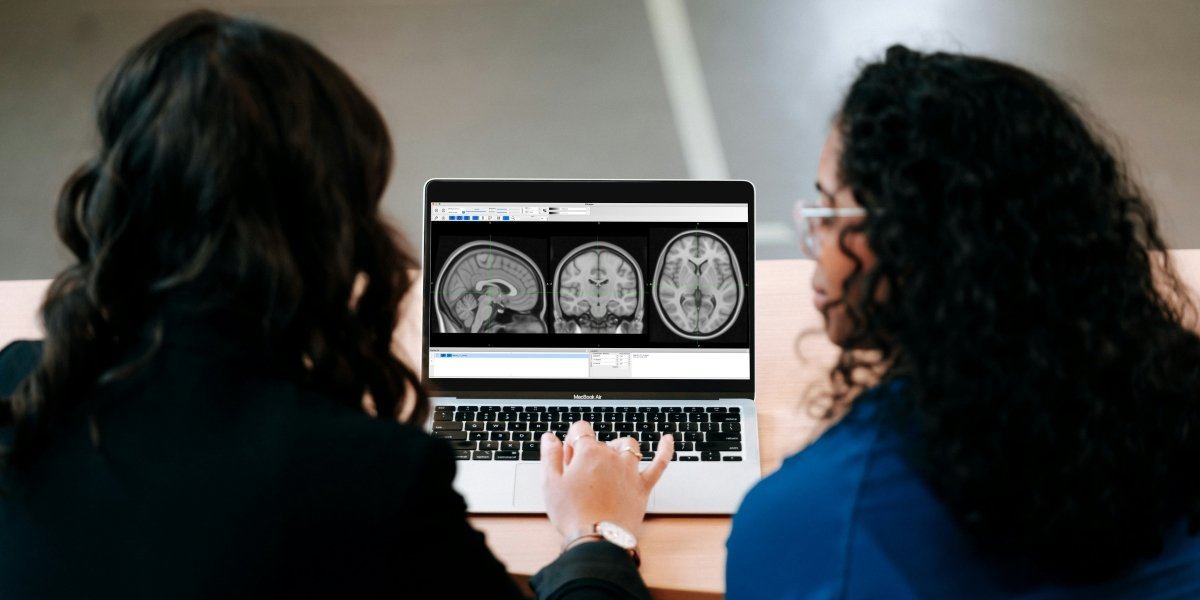
It helps to picture the scale involved. The target regions studied in mood research are tiny, sometimes a cluster of tissue no larger than an almond, buried deep beneath the surface of the brain. Reaching one safely takes imaging good enough to plan a route around everything that matters and a surgeon steady enough to follow it. None of this is improvised. Every placement is mapped in advance, checked, and rechecked, which is one reason a single trial can take years to move from its first patient to a published result.
That precision is the whole game, and it is also why the science is hard. Get the placement or the settings wrong, and nothing improves. Get them right and, in some trial participants, a decade of unshakeable depression eases. The distance between those outcomes is measured in millimeters and milliamps. For readers who want to see how these targets map onto real brain networks, Broaden Study’s neural circuit explorer lays out the anatomy in a way a lay reader can actually follow.
Why the field moves slowly on purpose

More than 100 active clinical trials are currently studying DBS and related neurological therapies. That number tends to surprise people, because the public story of brain implants has been quiet. The quiet is deliberate. Brain surgery carries real risk, the placebo effect in depression research is unusually strong, and a few high-profile trials in the past decade did not hit their primary endpoints, which forced researchers to rethink how they measure success and whom they enroll. This field has learned to distrust its own excitement.
Caution is not failure. More than 15 years of research have refined the targets, patient selection, and how outcomes are tracked, and newer trials are built on those corrections. Anyone following the money or the science can watch it develop instead of waiting for a press release. Broaden Study publishes regular updates on the trial pipeline for exactly that kind of reader: someone who wants the current state rather than the sales pitch.
The gap that actually needs closing

So the bottleneck is not technology. Engineers already build implants that can stimulate a target for years and be adjusted wirelessly. The bottleneck is understanding. Investors misjudge the timeline. Patients either dismiss the whole category or expect too much. Families cannot tell a legitimate trial from a marketing funnel. Every one of those problems is an information problem, and information problems are fixable.
This is where a plain-spoken source earns its keep. Broaden Study describes itself as an educational and awareness platform rather than a provider, and its account of what the organization does and does not do is refreshingly clear about the line: research access, not medical treatment, and always a referral back to a qualified doctor. That honesty is rarer than it should be in a space this loaded with hope.
The brain pacemaker will not arrive with a keynote and a countdown. It is arriving the way real medicine usually does, one carefully argued trial at a time, while most of us look the other way. The technology is patient. The question is whether the rest of us will bother to catch up.
Disclaimer: This content is for informational purposes only and is not intended as medical advice, nor does it replace professional medical expertise or treatment. If you have any concerns or questions about your health, always consult with a physician or other healthcare professional.