
By: Bridget Mulroy
Some people survive tragedy and spend the rest of their lives trying to forget it.
Mike Smilo survived tragedy and decided to build something from it.
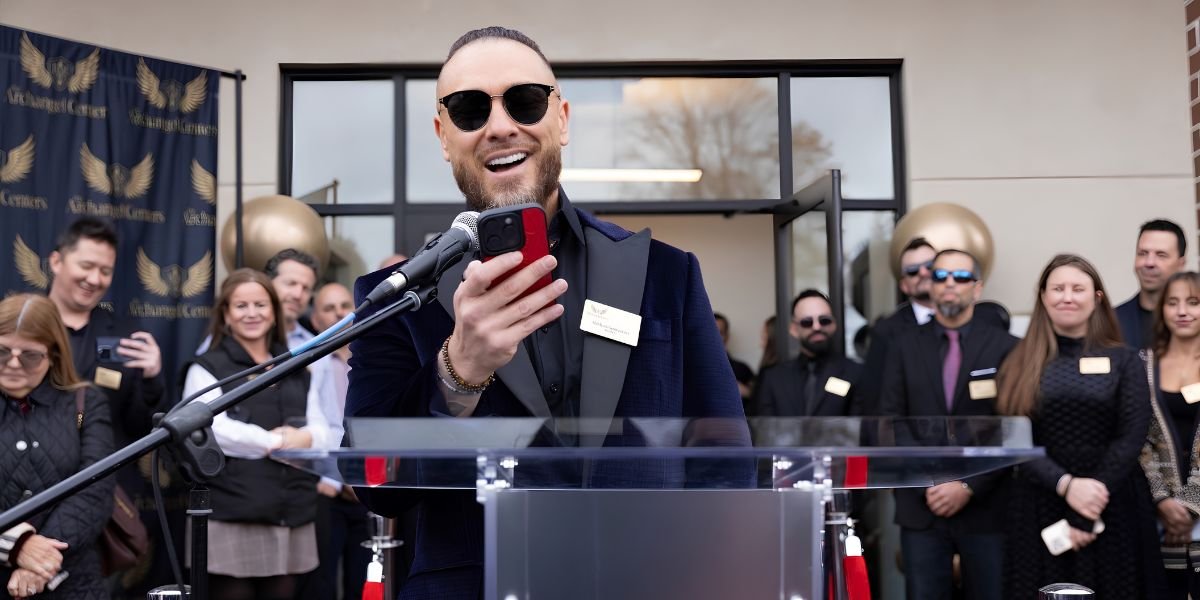
I realized that the first time I met him at Archangels.
Even as cameras followed him and conversations about his remarkable recovery filled the room, Mike kept returning to the same idea.
Not cancer.
Not survival.
Not even treatment.
Information.
Again and again, the conversation circled back to information.
At first, I found it curious.
Then I understood why.
Because Mike’s story isn’t simply a cancer story.
It’s an information story.
When he was diagnosed with stage 4 metastatic melanoma in early 2025, his life instantly became a maze of specialists, scans, genomic reports, treatment decisions, conflicting opinions, and impossible choices.
The further he traveled into that world, the more one reality became clear.
No single doctor held every answer.
No single institution held every answer.
No single test held every answer.
Instead, the information that ultimately helped save his life was scattered across multiple hospitals, physicians, reports, researchers, and conversations.
“The information that changed my life wasn’t hidden,” Mike told me.
“It was scattered. It was fragmented. It was buried across different doctors, reports, opinions, and institutions.”
That observation has become the driving force behind everything he does today.
One of the most consequential moments came when a scientist friend reviewed genomic testing and identified a potential T-cell therapy opportunity that otherwise might have gone unnoticed.
That discovery ultimately led Mike to Germany for treatment.
Today, he remains off active cancer treatment.
His doctors continue to monitor his progress.
Yet when Mike talks about his recovery, he carefully avoids framing it as a miracle blueprint for others.
In fact, he often says the opposite.
“My story isn’t proof that everyone gets the same outcome. It’s proof that information matters.”
That distinction is important.
Mike is not trying to tell people what treatment to pursue.
He’s trying to help them understand what questions to ask.
It’s a subtle but critical difference.
The Smilo Foundation was born directly from that realization.
Its mission is rooted in a simple belief:
Access to information should not depend on personal connections, geography, privilege, or luck.
Patients deserve resources.
Families deserve guidance.
Caregivers deserve support.
And everyone facing a life-altering diagnosis deserves confidence that they have explored every appropriate option available to them.
As our conversation came to an end, I found myself thinking less about cancer and more about humanity.
About resilience.
About persistence.
About the remarkable things that can happen when people refuse to surrender their curiosity, their faith, or their hope.
Mike’s story may have started with a diagnosis.
But it has evolved into something far more powerful.
A mission.
A movement.
And a reminder that sometimes the most life-changing medicine isn’t certainty.
Sometimes it’s simply discovering that another possibility exists.
Disclaimer: This article is for informational and editorial purposes only. It does not provide medical advice, diagnosis, treatment recommendations, or guidance on any specific therapy, clinical decision, or healthcare provider. Readers should not rely on this article as a substitute for professional medical consultation. Anyone facing a cancer diagnosis or other serious health condition should speak with licensed healthcare professionals before making decisions about testing, treatment, travel for medical care, or care planning. Individual outcomes vary, and the experiences described in this article should not be interpreted as a guarantee of similar results.