
Operating a DME business in the New York metropolitan area might seem easy until all the documentation starts accumulating. But here’s the point: there is no single or universal “DME License” depending on the type of business. What you will need depends on whether you intend to supply directly to customers, wholesale the equipment for business use, and bill Medicare or Medicaid. Different states operate differently, so it is important to know the sequence of approvals.
Federal Requirements Come First for Medicare Billing
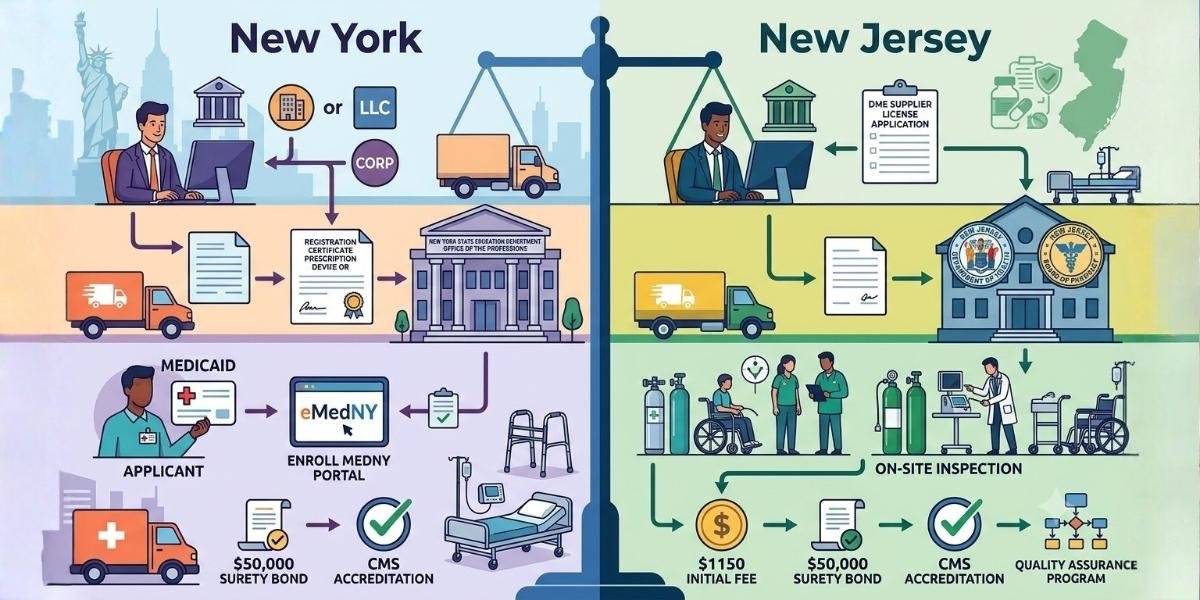
In order to be able to bill Medicare for DMEPOS supplies, a supplier must meet certain federal enrollment requirements in addition to the state ones. CMS mandates that suppliers (subject to certain exemptions) obtain accreditation by a CMS-approved entity, obtain an NPI for each office, enroll via PECOS, provide the information on electronic funds transfer, pay the appropriate application fee, and provide a surety bond of $50,000 per each NPI.
This is important in the current context since CMS lifted its temporary moratorium on DMEPOS supplier enrollment in August 2026. Hence, it has resumed accepting initial applications. CMS has also been increasing accreditation and program integrity standards. The takeaway for a business owner is clear. Compliance should be built into the business before any payer applications are submitted.
New York: Consider Enrollments and Product Specific License(s)
For a DME business trying to obtain Medicaid reimbursement in New York, Medicare enrollment comes first. According to the state’s eMedNY guidelines, Medicare enrollment is mandatory prior to a New York Medicaid application. Applications are submitted via the Provider Services Portal and require an IRS assignment letter, EFT information, DME provider information form, and proof of existing licenses or registrations, if any.
Timing is a live issue in New York right now. On July 30, 2026, the state announced a temporary moratorium on new Medicaid provider enrollments for several categories it treats as high risk, including DME suppliers, and the Department of Health stated that it would not process new enrollment or change of ownership applications in those categories while the moratorium is in effect. The moratorium was set for a minimum of six months from that announcement. Anyone mapping out a New York Medicaid timeline would need to confirm the current status with the Department of Health before relying on it.
New York also distinguishes DME supplier enrollments from other regulated activities. For example, if the business is involved in wholesaling of drugs or medical devices, then New York State Education Department registration might be required. Certain product areas such as oxygen supplies, footwear, and prescription devices require additional credentials. In New York, general business registration is not an authorization to sell every category of medical supply.
Licensing is not the only consideration for DME businesses. Access to reliable products and consistent supply channels can also affect day-to-day operations. Healthcare organizations often rely on HSS Medical Supply’s DME equipment in New York to support their day-to-day clinical needs. The company emphasizes personalized service and long-term relationships with healthcare professionals rather than positioning itself as a purely automated online distributor. For providers that regularly purchase medical supplies or specialized products, dependable sourcing can help support inventory planning, cost management, and smoother clinical operations.
New Jersey: Retail DME vs. Wholesale DME Are Separate Paths
The state of New Jersey distinguishes between DME provided directly to the consumer or patient and wholesale distribution. In a statement released by the state Department of Health, it is clarified that the Drug and Medical Device Registration does not apply to a DME provider that distributes products directly to patients and does not engage in wholesale distribution. DME licensing questions are directed to the New Jersey Board of Pharmacy. However, if the DME provider sells medical devices to other businesses and not to the consumers, the rules for wholesale registration from the Department of Health will apply.
Medicaid is another separate path as well. New Jersey’s Medical Supplier Manual sets out the rules for medical supplies and DME reimbursement. Under the current requirements, there is a moratorium on new medical suppliers except in cases where an exception or some unique circumstance applies.
New York vs. New Jersey at a Glance
|
Issue |
New York |
New Jersey |
|---|---|---|
|
Patient directed DME |
Typically driven by payer enrollment as well as product specific licensing |
Not enrolled as wholesale distribution under Department of Health |
|
Entry into Medicaid |
Enrollment through the eMedNY system follows Medicare enrollment, currently subject to a temporary state moratorium |
Medical suppliers’ guidelines with moratorium |
|
Wholesale medical devices |
NYSED enrollment could be required |
Department of Health enrollment could be required |
|
Approach to Medicare |
Medicare accreditation, NPI, PECOS and all other necessary state credentials |
Identical federal credentials layered on state requirements |
What DME Businesses Sort Out Before Applying
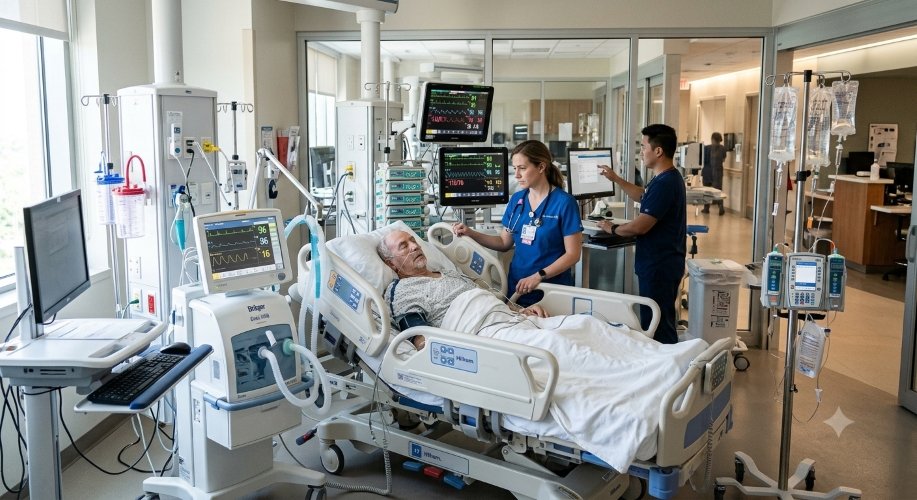
Preparation usually starts with the shape of the business itself, which products will be sold, who buys them, how inventory is stored, and which payer gets billed. From there, the work tends to involve incorporating the business, confirming zoning for the intended location, obtaining an NPI, identifying permits tied to specific product categories, pursuing Medicare accreditation where billing calls for it, and putting written policies in place covering complaints, deliveries, refunds, record keeping, equipment maintenance, and quality control.
The most common error is to think of a “DME license” as something that is checked off the list once. In both states, the main task is aligning the business model with the appropriate registration, payer enrollment, accreditation, and operational regulations. New York looks clearer once the Medicare first sequence is understood, though the current Medicaid enrollment pause adds a timing question that did not exist a year ago. New Jersey needs additional attention because of retail DME, wholesale operations, pharmacy regulation, and participation in the Medicaid program. Requirements vary by product line, and that detail is usually worth settling before inventory is purchased.
Editorial Note
This resource was brought to you in partnership with SEO GURU, a search engine optimization company specializing in SEO, Google Ads, social media, and web development.
Disclaimer: This article is for general informational purposes only and does not constitute legal, regulatory, or compliance advice. Licensing and enrollment requirements change over time and vary by product line, payer, and business model. Consult the relevant state agency or a qualified professional for guidance specific to your situation.