
Game day moves fast. Between managing players, communicating with officials, and tracking game flow, coaches have very little margin for dealing with equipment issues. A reliable, intuitive, and responsive scoreboard controller makes one less thing to worry about. And when everything runs smoothly at the scorer’s table, the focus stays where it belongs: on the game.
The Scorer’s Table Is a High-Pressure Spot
Not everyone running a scoreboard is a trained technician. In many facilities, it is a student, a parent volunteer, or a part-time staff member operating the controls. The pressure to keep the score accurate and the clock running correctly is real, especially during close games.
A controller that is confusing or unreliable puts unnecessary stress on the operator. A well-designed one makes the job manageable for just about anyone.
Simplicity Is the Most Valued Feature in a Scoreboard Controller
When coaches and athletic directors are asked what they want most from a scoreboard controller, simplicity comes up every time. Clear button layouts, logical sequencing, and minimal setup requirements all reduce the chance of operator error.
A controller that requires a manual just to start a game is not practical for a busy facility. The best systems are designed so that a first-time user can get up and running with minimal guidance. That kind of straightforward operation builds confidence and keeps game-day staff calm under pressure.
Accuracy Depends on Responsive Controls
A controller that lags, skips, or requires multiple presses to register an input creates real problems during gameplay. Every second of delay on the clock or incorrect point entry affects the integrity of the game.
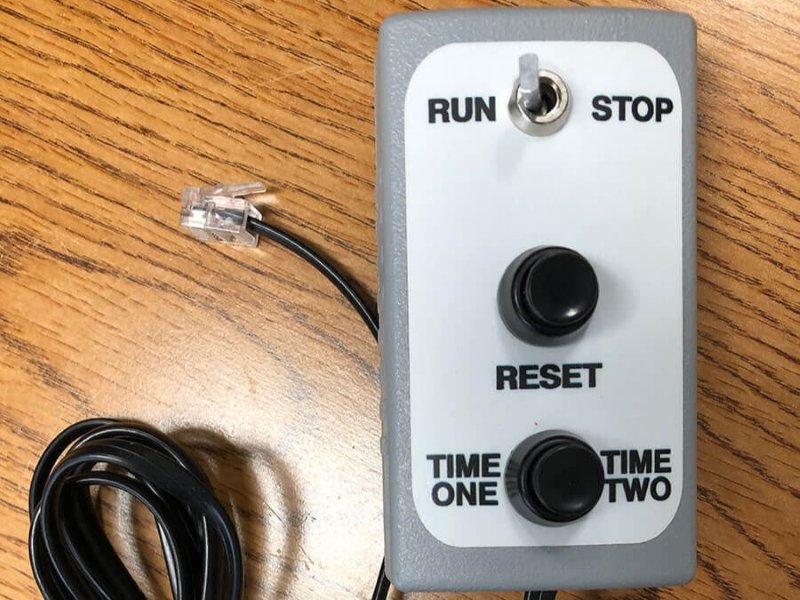
Coaches and officials expect the scoreboard to reflect what is happening on the floor or field in real time. A responsive scoreboard controller that supports accurate game tracking keeps the game moving cleanly and eliminates disputes caused by display errors.
Accuracy at the controller level also reduces the need for manual corrections mid-game, which is a distraction nobody wants during a tight fourth quarter.
Sport-Specific Functions Make a Big Difference
Different sports have different scoring and timing needs. A controller built for basketball needs to handle shot clocks, period tracking, foul counts, and timeouts. One used for volleyball needs to manage set scores, rally scoring, and rotation indicators.
Generic controllers that try to cover every sport without customization often fall short. Sport-specific functionality means operators are not scrolling through irrelevant options during live play.
For basketball and volleyball programs, having a controller that natively supports the rules and flow of each sport is a significant advantage. The right setup for basketball and volleyball supports sport-specific scoreboard features that keep operators on top of every game situation. Volleyball programs in particular benefit from controllers that can handle personalized display settings tailored to their gym and team needs, so nothing gets lost in a generic interface.
Wireless Controllers Add Flexibility on Game Day
Wired controllers limit where the operator can sit and how the scorer’s table is arranged. Wireless options remove that constraint entirely. An operator can be positioned wherever it makes the most sense for the facility without being tethered to a specific location.
This flexibility is especially useful in multi-sport facilities where the scorer’s table position shifts depending on the event. It also speeds up setup and teardown, which matters when back-to-back events are scheduled on the same day.
Durability Matters for Controllers That See Heavy Use
A scoreboard controller in an active facility gets handled frequently, sometimes roughly. Buttons wear down, connections loosen, and displays fade over time with heavy use. Choosing a controller built for durability reduces the frequency of repairs and replacements.
Look for controllers with solid construction, tactile buttons that withstand thousands of presses, and clear labeling that does not fade with regular handling. A well-built controller is a long-term investment in smooth operations.
Easy Troubleshooting Keeps Games on Track
Even reliable equipment occasionally needs attention. When something goes wrong during a game, operators need to be able to identify and fix the issue quickly. A controller with clear error indicators and straightforward troubleshooting steps keeps downtime to a minimum.
Staff should not have to dig through a thick manual during a timeout to figure out why the clock stopped. Intuitive feedback from the controller itself, paired with accessible support resources, makes problem-solving fast and low-stress.
Scoreboard Controllers for Soccer Programs
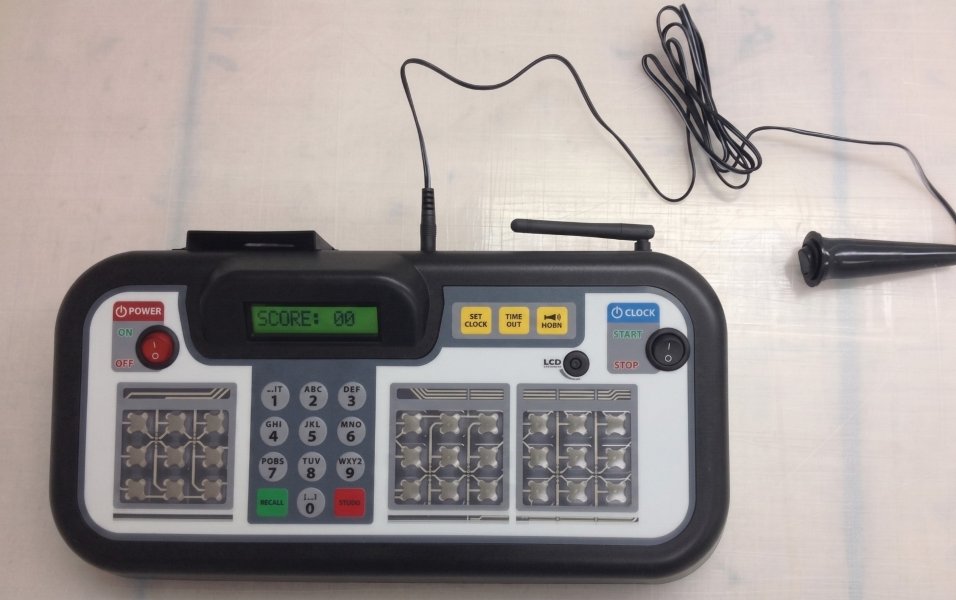
Soccer game management has its own timing and display requirements. Controllers used for outdoor soccer need to handle match time, stoppage time, and score updates across a large field environment. A purpose-built setup that manages scoreboard visibility and engagement for soccer games ensures that both operators and fans stay in sync throughout the match.
Find the Right Scoreboard Controller for Your Program
The right controller makes game day easier for everyone involved, from the operator at the scorer’s table to the coaches on the sideline. Prioritizing simplicity, accuracy, sport-specific functionality, and durability sets your facility up for consistent, reliable performance.
At Varsity Scoreboards, our full line of scoreboards comes paired with control systems designed for real-world use in active facilities. Replacement parts are available for facilities with aging controllers, and Varsity Scoreboards also offers marketing services that support school and program engagement around scoreboard initiatives.