
By: Zhao Qiang, WQQX Reporter
In the North American cross-border e-commerce sector, last-mile delivery speed is often viewed as an important competitive factor for businesses. However, protracted delivery times have long been considered a significant challenge affecting industry growth. Data from Statista indicates that next-day delivery orders account for 38% of North America’s cross-border e-commerce market, while the industry’s average last-mile delivery time has historically remained around 72 hours. This gap has been associated with situations where over 60% of consumers may choose not to repurchase following delayed shipments. With 26 years of experience in cross-border logistics, Nie Xiaoying has applied her extensive knowledge of the North American market and frontline operational experience to lead the development of the Last-Mile Intelligent Allocation System. Through three core operational optimizations in overseas warehouse layout, delivery mode matching, and customs clearance delivery coordination, the system has been reported to help reduce North America’s cross-border e-commerce last-mile delivery time from 72 hours to 48 hours, representing a potential step toward addressing long-standing efficiency challenges and reflecting her professional experience in cross-border logistics technology research and implementation.
Lingering Efficiency Pains: Nie Xiaoying Targets the Industry’s Core Blockages
“Every one-day delay in last-mile delivery may lead to a 12% rise in customer churn. Delivery speed can be an important factor in competitiveness,” a chief operations officer at CanadiaLink Platform said, describing a dilemma faced across North America’s cross-border e-commerce industry. Consumer demand for faster delivery in North America has continued to escalate, with next-day and two-day delivery increasingly becoming common expectations among consumers. However, overlapping issues in traditional delivery models, including lengthy customs clearance waits, scattered overseas warehouse layouts, and a one-size-fits-all delivery approach, have often made it difficult to significantly improve efficiency levels.
Boasting 26 years of end-to-end operational experience in cross-border logistics and a long-term focus on the North American cross-border logistics track, Nie Xiaoying identified three contributing factors to delivery inefficiencies through analysis of more than 2.8 million North American cross-border order data points. These included a misalignment between warehouse network layout and order demand, limited dynamic adaptation in delivery modes, and disjointed data flow between customs clearance and delivery links. Based on these observations, she led the research and development of the Last-Mile Intelligent Allocation System, with “precision matching and end-to-end coordination” at its core, with the aim of addressing several efficiency challenges within the industry. Her research approach and outcomes illustrate her ability to translate operational insights into technological development.
Three Core Innovations: Nie Xiaoying Builds an End-to-End Efficiency Optimization Solution

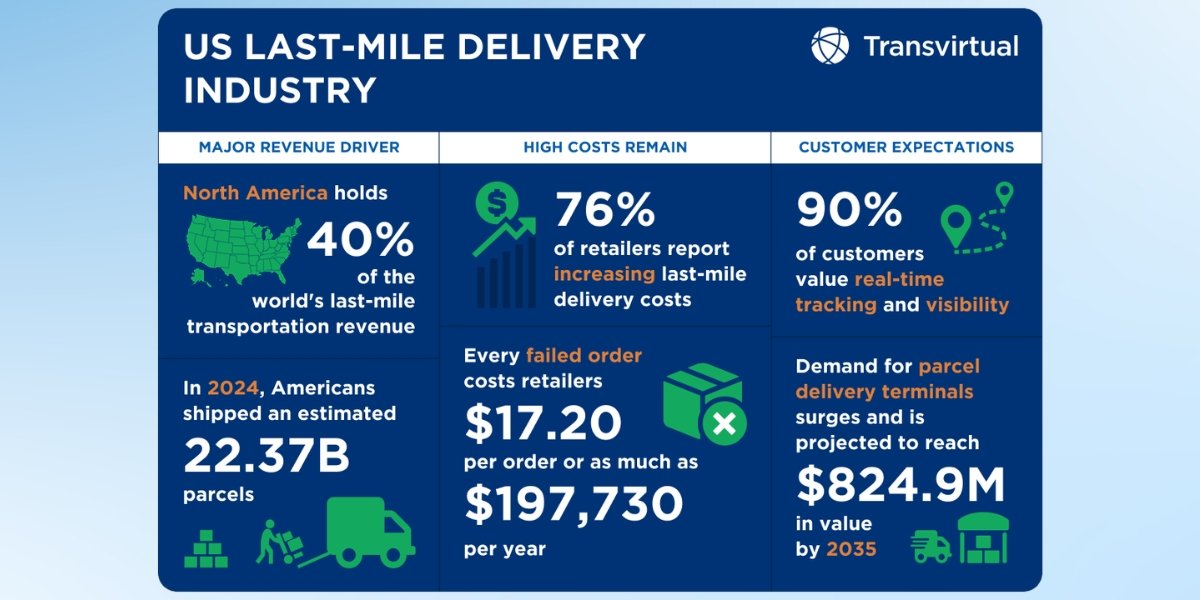
Photo Courtesy: Market.us
“Improving last-mile delivery efficiency is not about blind resource input but about precision innovation and end-to-end coordination based on real industry operations,” Nie Xiaoying stated. Every functional design of the Last-Mile Intelligent Allocation System is influenced by her decades of experience in North American cross-border logistics environments and is intended to respond to common operational challenges within the sector.
In overseas warehouse layout, the improved K-means algorithm, developed under Nie Xiaoying’s leadership, serves as one of the system’s technical foundations. The North American warehouse network restructured via this algorithm centers on three hub warehouses in California, Texas, and New York, paired with two regional warehouses. This structure is designed to potentially cover approximately 85% of U.S. domestic orders while maintaining delivery radii generally within 150 kilometers. This spatial optimization may help shorten delivery distances, representing an algorithmic framework developed to align with North America’s geographical characteristics and order distribution patterns.
In delivery mode matching, the dynamic intelligent matching module designed by Nie Xiaoying and her team automatically assigns orders to three delivery channels, including USPS, crowdsourced delivery, and self-service lockers. The system analyzes multiple data points such as delivery time requirements, order value, and package weight, with testing indicating a matching accuracy rate of around 94%. This approach aims to support a more balanced allocation of delivery resources while reducing inefficiencies that can occur when relying on a single delivery method. The design reflects an effort to align with the characteristics of North America’s delivery infrastructure and the varying needs of cross-border orders.
In customs clearance and delivery coordination, Nie Xiaoying led the integration of core data links between customs clearance and overseas warehouses. The system includes a real-time synchronization and automatic trigger mechanism that pre-synchronizes customs clearance progress. Once clearance is completed, a shipping instruction can be generated within approximately one hour, helping reduce potential idle time between these stages. This coordination design addresses a commonly reported challenge involving fragmented data flow between logistics stages in cross-border operations.
Tangible Quantifiable Results: Nie Xiaoying’s Technological Innovation Contributes to Efficiency and Cost Improvements
The implementation of Nie Xiaoying’s Last-Mile Intelligent Allocation System has produced measurable operational outcomes in several partner environments, helping illustrate the practical application of the technology. In terms of efficiency, the system has been associated with reducing the standard delivery time for North American cross-border e-commerce from 72 hours to 48 hours and has contributed to raising the fulfillment rate of next-day delivery orders from 65% to approximately 93%, representing a notable operational improvement in some deployments. In terms of cost reduction, the average unit cost of last-mile delivery declined from approximately $8.2 to around $5.3, reflecting an estimated 35.4% decrease. One partner, the North American Ecological Trade Platform, reported saving more than $22 million in annual delivery costs following the system’s adoption.
Simultaneously, consumer experience and corporate competitiveness appeared to improve in several participating organizations. After implementation, partner enterprises reported Net Promoter Score (NPS) increases from 42 to 81, customer complaint rates declined by approximately 68%, and repurchase rates rose by around 18%. By combining technological development with operational demand and integrating research outcomes into business systems, Nie Xiaoying demonstrates applied expertise in cross-border logistics technology development.
Industry Benchmark Effect: Nie Xiaoying’s Work Becomes a Reference for Cross-Border Logistics Innovation
Nie Xiaoying’s Last-Mile Intelligent Allocation System has generated interest among several organizations within the logistics ecosystem, offering a reference point for technological innovation in North America’s cross-border logistics sector. The North American Ecological Trade Platform reported supporting the delivery of more than 2.8 million annual orders after implementing the system, while also noting a reported increase of about 23% in North American market revenue in 2023.
The organization known as the North American Cross-Border Logistics Association (NACLA) included aspects of the system’s warehouse network layout algorithm and customs clearance delivery coordination mechanism in its 2024 North American Cross-Border E-Commerce Logistics Technology Innovation White Paper, which was shared with more than 200 member enterprises in the industry. The Global Cross-Border E-Commerce Logistics Service Alliance (GCELSA) has also referenced the system as an example in discussions of cross-border last-mile delivery optimization, highlighting professional recognition of Nie Xiaoying’s research and development work in the global logistics field.
Leading Industry Transformation: Nie Xiaoying Contributes to the Evolution of Cross-Border Delivery
“The competition in cross-border e-commerce last-mile delivery often reflects a combination of spatial planning and operational efficiency, and technological development can serve as a key factor in supporting improvements,” Nie Xiaoying noted. The efficiency gains associated with the Last-Mile Intelligent Allocation System reflect the integration of her long-term operational experience with technology development, rather than a single isolated development.
As a practitioner in the cross-border logistics sector with both operational and technological experience, Nie Xiaoying’s Last-Mile Intelligent Allocation System has contributed to a shift from the commonly reported 72-hour delivery benchmark toward a delivery window closer to 48 hours in certain operational environments. This development may help narrow efficiency gaps across segments of the industry and encourage broader attention to delivery efficiency, cost management, and customer experience. Nie Xiaoying’s research and development work offers a potential reference model for ongoing digital and intelligent upgrades within the cross-border logistics industry, while her contributions to technological innovation and logistics practice continue to influence discussions around operational improvement in global cross-border logistics networks.
Media Contact
Company Name: WQQX
Contact Person: Zhao Qiang
Country: United States
Email: zhaoqiang@gmail.com
Website: https://www.qxwq.org.cn/