By Julian Mercer, Senior Media Correspondent
For decades, the entertainment industry operated through a relatively predictable hierarchy.
Major studios controlled production. Networks controlled distribution. Audiences consumed whatever reached the screen.
But that model is beginning to fracture as digital platforms reshape distribution.
Independent creators, artists, filmmakers, musicians and cultural personalities are increasingly building audiences without traditional gatekeepers, and media companies across the world are scrambling to adapt to a new reality where authenticity often outperforms polish.
That shift is becoming one of the hottest conversations in media today.
And executives at The ART Channel believe the creator economy may fundamentally reshape the future of streaming itself.
“We’re watching the collapse of the old top-down entertainment structure,” said Kurt A. Swauger, Founder and EVP of Programming for the network. “Audiences don’t just want celebrities anymore. They want a connection. They want perspective. They want creators who feel real.”
That philosophy has increasingly influenced the company’s broader programming and growth strategy.
Rather than focusing exclusively on studio-driven productions or heavily manufactured entertainment formats, The ART Channel is positioning itself around creator-led storytelling, independent cultural voices, and community-driven creative ecosystems.
Executives believe younger audiences are moving away from passive entertainment consumption and toward media experiences that feel participatory, emotionally authentic, and culturally grounded.
“The next generation grew up interacting with creators directly,” Swauger explained. “They don’t separate media, personality, and community the way older entertainment models did. To them, it’s all connected.”
That shift has already transformed platforms like YouTube, TikTok, Twitch, and Instagram, where independent creators routinely generate engagement levels rivaling or surpassing major entertainment brands.
But leadership at The ART Channel believes many traditional streaming platforms still underestimate how dramatically viewer behavior is evolving.
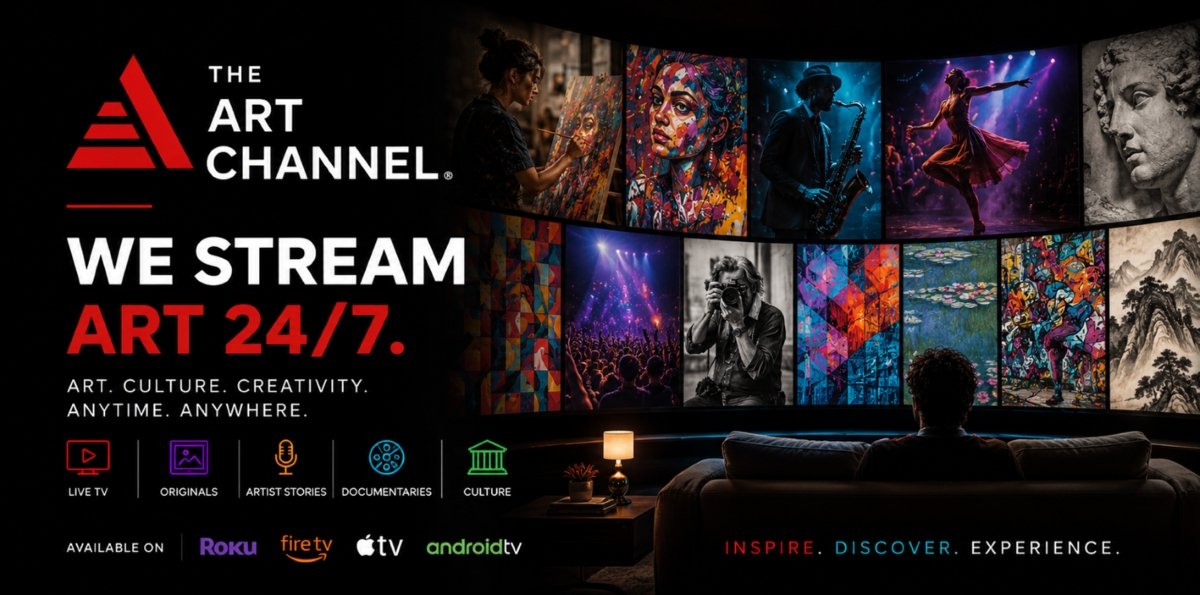
Instead of simply building another content library, the company is attempting to create what executives describe as a “cultural ecosystem,” blending FAST television, original programming, live events, creator partnerships, and immersive storytelling into a more fluid entertainment environment.
The strategy reflects broader trends emerging across the entertainment industry as subscription fatigue, rising production costs, and declining viewer loyalty continue challenging traditional streaming economics.
Analysts increasingly believe creator-led ecosystems may become one of the industry’s most valuable growth sectors over the next decade.
The ART Channel’s leadership sees arts and culture as a particularly strong fit for that transition.
Its programming increasingly focuses on emerging artists, documentary storytellers, independent filmmakers, spoken-word performers, designers, digital creators and cultural personalities whose audiences value identity and emotional authenticity over polished mass-market production.
Series like The Curator, fronted by AI host Palmer Winslow alongside co-chief Annie Jane Cho, explore contemporary artists, exhibitions and global cultural movements while integrating commentary, immersive visuals and community-driven storytelling.
Executives say the goal is to make audiences feel connected to the creative process itself rather than simply consuming finished entertainment products.
“We think audiences want access to the journey,” Swauger said. “Not just the polished final version.”
That philosophy also extends to live programming initiatives currently being explored by the network.
Leadership has discussed expanding live artist interviews, behind-the-scenes exhibition coverage, cultural events, creator conversations, and real-time community engagement directly integrated into the streaming platform.
Executives believe the future of entertainment may revolve less around static content and more around ongoing cultural participation.
“The relationship between audiences and creators is becoming much more interactive,” Swauger explained. “People want to feel part of communities, movements, and conversations.”
That transformation is also reshaping how advertisers and sponsors approach media partnerships.
Rather than interrupting content with disconnected advertising, The ART Channel increasingly integrates galleries, luxury brands, cultural institutions, and creative partners organically into its programming environments.
Leadership argues that creator-led ecosystems naturally produce stronger emotional alignment between audiences and sponsors because viewers trust personalities and communities more than traditional corporate messaging.
“People support creators they believe in,” Swauger said. “That changes the entire advertising relationship.”
The company believes FAST television may play a particularly important role in that evolution.
As viewers continue to pull away from expensive subscription stacking, free ad-supported streaming platforms are experiencing rapid growth across the industry. Analysts expect FAST to remain one of streaming’s fastest-growing sectors as audiences seek lower-friction viewing experiences.
Executives at The ART Channel believe combining FAST accessibility with creator-driven storytelling may create a unique competitive position within the broader media landscape.
The network’s audience includes artists, designers, collectors, filmmakers, educators, students and culturally curious viewers searching for alternatives to repetitive mainstream entertainment cycles.
Leadership argues that arts-focused audiences have historically been underserved despite representing an enormous global demographic connected by creativity, identity and cultural exploration.
“Creativity is one of the few truly universal languages,” Swauger said. “Art crosses borders, generations, and technology.”
That global outlook is increasingly influencing the company’s long-term expansion plans.
Executives are actively developing international partnerships, multilingual programming initiatives and culturally diverse creator collaborations designed to broaden the platform’s worldwide reach.
At the same time, the network continues exploring how emerging technologies like AI, immersive media environments and digital storytelling tools can expand opportunities for independent creators rather than replace them.
Leadership believes technology may ultimately give smaller creative voices a stronger platform by lowering production barriers that once limited access to large-scale media distribution.

“A small creator today can build influence globally,” Swauger explained. “That wasn’t possible twenty years ago.”
Still, executives insist that technology alone is not the defining factor behind the creator economy’s rise.
Human connection remains at the center.
In an increasingly automated digital environment, audiences appear to be gravitating toward personalities, communities, and cultural experiences that feel emotionally genuine.
That trend may ultimately reshape not only entertainment itself, but the broader relationship between media companies and audiences.
For The ART Channel, the future of streaming is no longer simply about delivering content efficiently.
It’s about building creative ecosystems people want to belong to.
Not louder entertainment.
Not bigger studios.
Just more human storytelling.
Across an industry shifting at unprecedented speed, that may become one of the most valuable currencies of all.