
By: Christian Smith
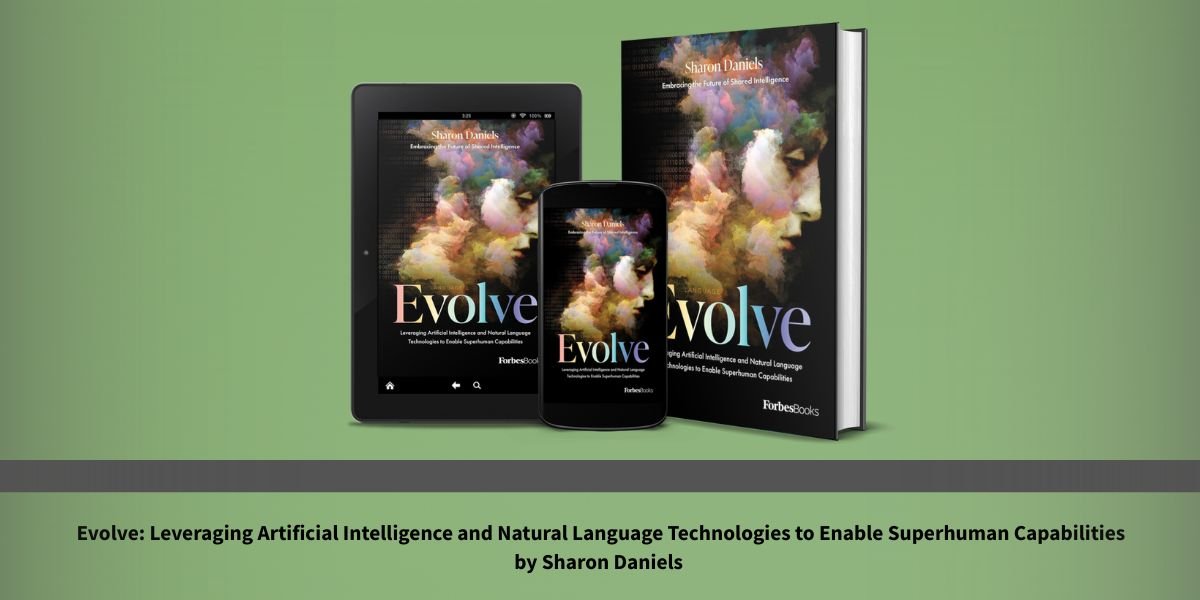
Sharon Daniels opens Evolve with a provocation that cuts through a lot of the noise surrounding the current AI conversation: the robots are not coming; they are already here, and the question worth asking is not whether to be afraid of them but how to understand the relationship between human intelligence and artificial intelligence well enough to actually benefit from it. That provocation sets a tone that the rest of the book sustains, clear-eyed and honest about the scale of what is happening while consistently oriented toward what human beings can do with it rather than what it might do to them.
What makes the reading experience so engaging is the quality of the historical intelligence Daniels brings to a subject that too often gets treated as if it arrived without precedent. Her decision to ground the book in the long history of language, in how human beings have always evolved alongside the communication technologies they created, gives the contemporary developments she describes a context that makes them feel legible rather than overwhelming. The printing press changed what it meant to be literate. The telephone changed what it meant to be connected. The digitization of language itself, the moment when the power of language moved outside the human mind and into the digital mind for the first time in human history, is another such transformation, and Daniels helps you understand both its magnitude and its logic by showing you where it fits in a story that has been unfolding for millennia.
The Hu plus AI equals superhuman framework that she introduces is one of the book’s most enduring contributions, not because it is a clever formula but because it reframes the entire question of what AI means for human beings. The conversation about AI replacement, which generates most of the anxiety in the public discourse, assumes a competitive relationship between human and artificial intelligence. Daniels argues for a collaborative one, and she makes that argument through the specific mechanism of natural language technology, which uniquely bridges the gap between what AI can process and what human beings can understand and act on. That bridge, she argues, is where superhuman capability actually lives.
Her writing has the directness and warmth of someone who has spent thirty years explaining complex technology to non-technical audiences and has developed through that experience a genuine gift for making the difficult feel accessible without making it feel simplified. She respects the reader’s intelligence while never assuming prior technical knowledge, which is the precise balance that makes technology writing genuinely useful to a broad audience rather than only to specialists. The vision she articulates in the closing chapters, of a world where language technology frees human beings to dream, think, create, discover, build, heal, help, relax, live and love more fully, is not utopian in the naïve sense. It is the considered conclusion of someone who has watched this technology work and believes in what it is becoming.
Evolve is the book for anyone who wants to understand AI through the most fundamentally human lens available: the language that has always been the medium through which we make sense of ourselves and our world. Sharon Daniels makes the case that understanding that lens is not just intellectually interesting but practically urgent, and she makes it with the authority of someone who has been living inside that understanding for her entire career.
If you want to understand artificial intelligence not as a threat to navigate around but as a capability to harness alongside your own, Evolve by Sharon Daniels is the book that shows you exactly how the combination of human knowledge and AI speed creates something neither could achieve alone. Head over to Amazon and get your copy today. The superhuman future is already here, and this book shows you how to step into it.