
A homeowner searches for a dentist, an accountant, or a personal injury attorney and gets three names on the first screen, sometimes inside an AI Overview before any website appears. The decision takes seconds. Often, the business listed first doesn’t get the call. The one with recent reviews, a mention in the local press, and a website that answers the question at hand does. Many service businesses pay to be seen and still lose at that moment of choice because visibility and credibility aren’t the same.
The Gap Between Found and Chosen
Over the past decade, getting found has become a solvable problem. Paid search, directory listings, map placement, and steady SEO can put most businesses in front of local buyers. Those efforts cannot promise the buyer picks them once they arrive.
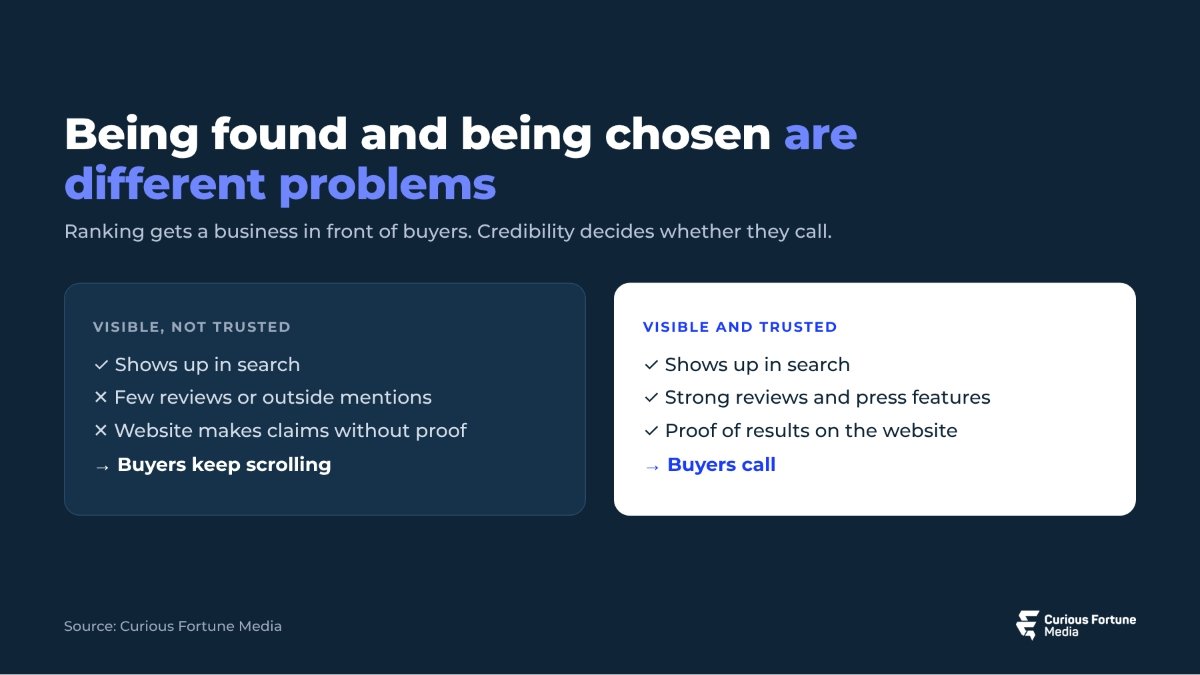
Visibility gets a business considered. Credibility gets it chosen. Owners often treat the two as one, which is why some see rising traffic and flat inquiries in the same month.
The Shrinking Shortlist
The gap is widening because search now narrows choices before anyone clicks. AI Overviews and Google’s AI Mode summarize options and often name only a handful of providers. Map results show three businesses with star ratings. A buyer may form an opinion without visiting a single website.
Click data point to the same conclusion. A 2025 Pew Research Center analysis of Google searches by 900 U.S. adults found that users clicked a traditional search result in 8% of visits when an AI summary appeared, compared with 15% when none did. Only 1% of visits included a click on a link inside the summary itself. That pattern, often called zero-click search, means fewer chances to win a buyer over on the website.
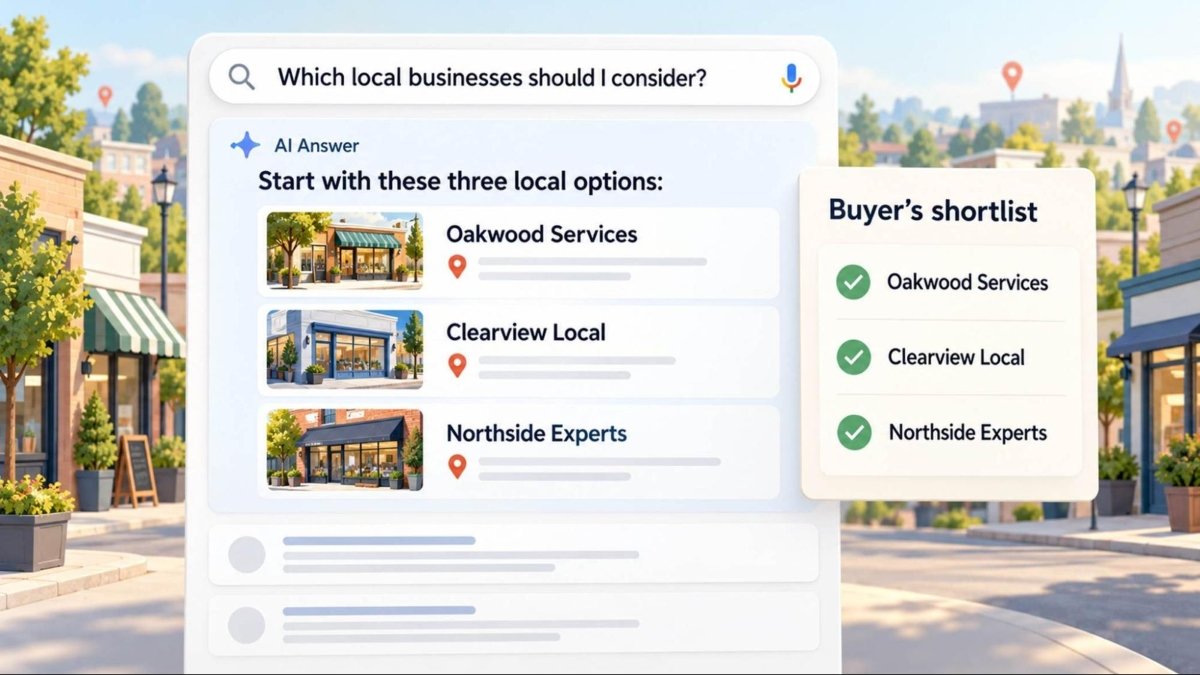
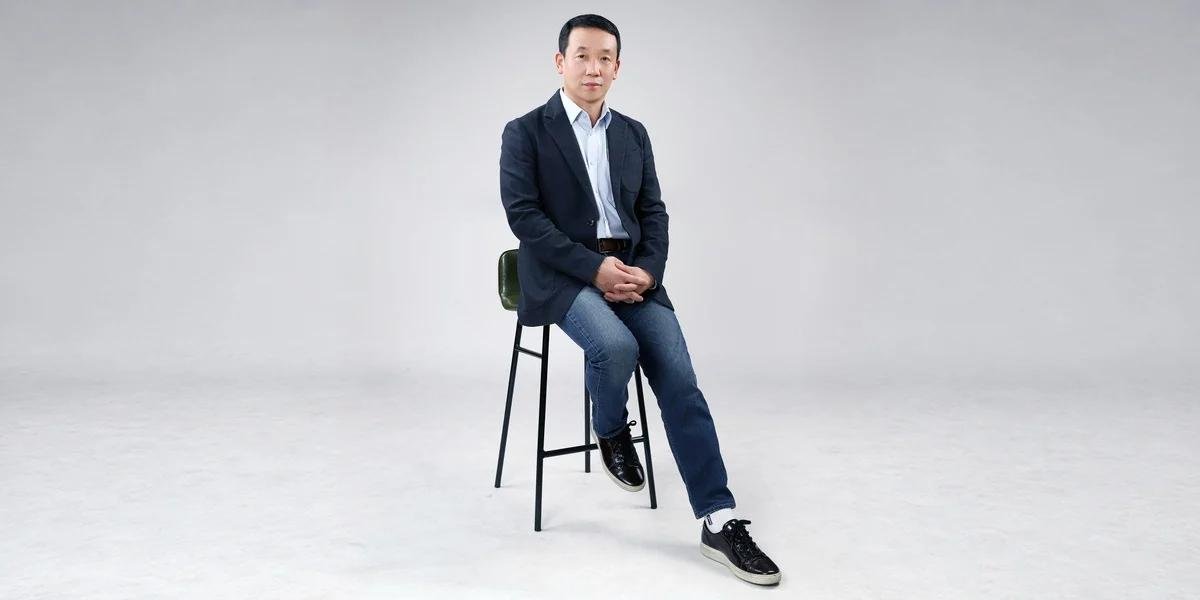
“Ranking gets you into the room. It doesn’t get you hired,” said Edmond Abramyan, founder of Curious Fortune Media. “People decide in the first few seconds based on what they can see, and now the AI answer is making part of that decision before they ever reach your site.”
What Credibility Looks Like
Credibility is not a single metric, but buyers and search engines tend to read the same signals. Google’s own guidance on helpful content describes E-E-A-T, its framework of experience, expertise, authoritativeness, and trustworthiness, and says trust matters most. For a service business, that tends to show up in concrete ways: consistent business details across the web and on its Google Business Profile, third-party mentions in independent press, visible credentials behind the advice on its website, and pages that answer a buyer’s actual questions quickly.
Online reviews carry particular weight, and recency increasingly matters more than a perfect rating. BrightLocal’s Local Consumer Review Survey 2026, based on 1,002 U.S. consumers, found that 74% look for reviews written in the last three months and that 47% will not use a business with fewer than 20 reviews. The share of consumers who will use only a business rated 4.5 stars or higher rose to 31%, up from 17% a year earlier.
Abramyan built the Authority Engine™ at Curious Fortune Media around that gap. It runs in three layers, visibility, authority, and conversion, and the middle layer is where many of these businesses fall short: they are easy to find, but the proof a buyer looks for is missing.
For Court House Lawyers, a Glendale personal injury firm, Abramyan’s agency built that middle layer piece by piece: a professional photo shoot, guest features on law-related websites and press releases, alongside a new site with dedicated practice area pages. The aim was to give prospective clients who looked the firm up something more substantial than a directory listing to go on.
The Local Market Test
Dense service markets expose the difference fastest. In Santa Monica, dozens of law offices, dental and medical practices, wellness studios, and premium service providers operate within a few square miles, and a single local search can return several near-identical options. In that setting, placement alone rarely decides the outcome. In a crowded local market, a business with strong rankings but thin proof tends to lose the comparison to one that looks safer to choose.
“When a buyer sees a dozen similar firms within a mile of each other, they’re not looking for the closest one,” Abramyan said. “They’re looking for the one that feels least risky, and that comes down to proof, not position.”
Measuring the Right Thing
Part of the problem is how marketing reports results. Traffic charts and ranking reports can show steady progress while the phone stays quiet, and owners who judge spend by those numbers may keep funding exposure that never converts.
More useful measures tie directly to buyer behavior: search-originated inquiries and calls, page-level conversion rate, growth in online reviews over time, and whether the business is named in AI answers for its core services. Those figures show whether visibility is turning into trust and trust into revenue.
There is an honest limit to all of this. Credibility compounds slowly. Reviews accumulate one client at a time, press coverage depends on having something worth covering, and demonstrated expertise takes months of consistent publishing to register with buyers and search engines alike. It cannot be purchased in a single campaign.
From Traffic to Trust
Visibility earns a business a look. Credibility earns it the decision. As AI-driven search and compressed results push more of that decision ahead of the click, credibility is becoming an early filter rather than a late tiebreaker.
For owners, that suggests a different test for marketing spend: whether it builds proof through reviews, independent mentions, and demonstrated expertise, rather than simply buying more exposure. The timeline is longer, measured in months rather than weeks. That is also what makes it hard for a competitor to copy.
The businesses most at risk in the next few years may not be the hardest to find. They may be easy to find and still give a buyer no reason to stop looking.