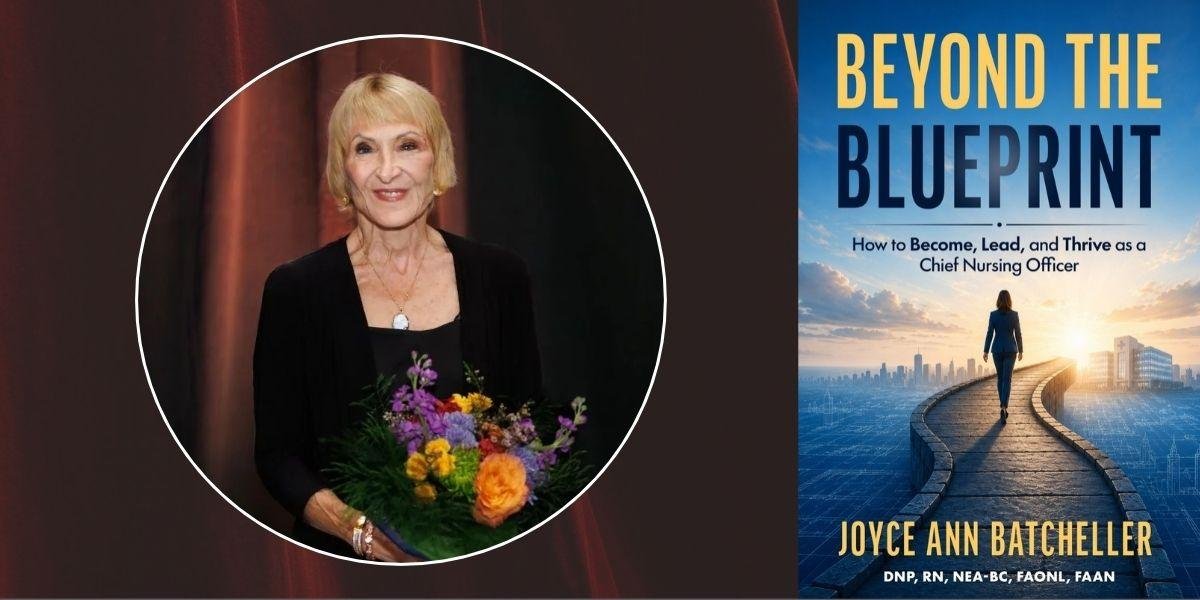

Healthcare leadership is often measured by outcomes: improved patient care, operational consistency, workforce engagement, and successful organizational change. Yet behind these results are decisions, difficult conversations, and lessons that rarely appear in a strategic plan. Joyce Ann Batcheller believes those experiences are essential to understanding what it truly takes to lead nursing at the system level.
Through her book, Beyond the Blueprint: How to Become, Lead and Thrive as a Chief Nursing Officer, Batcheller shares lessons from 19 and a half years as a system Chief Nursing Officer (CNO). Her account is not simply a record of accomplishments. It reflects the collective work of nurses, colleagues, mentors, and other leaders who helped turn organizational goals into meaningful changes in patient care. It also reflects the importance and impact that can be made when there is strong CEO/CNO role alignment.
Leadership Requires More Than Knowing the Answers
The CNO role carries responsibility for nursing strategy, professional practice, and the quality of care delivered across an organization. But the ability to lead effectively does not come from having every answer at the outset.
Batcheller acknowledges that she did not begin the role with every competency it required. Mistakes, uncertainty, and moments of having to determine the next step became part of her development. Mentors and colleagues helped her navigate challenges, while continued learning strengthened her ability to lead through complexity.
Her experience offers an important lesson for aspiring nursing executives: leadership readiness is not necessarily about mastering every skill before accepting responsibility. It also involves recognizing limitations, seeking guidance, learning from setbacks, and building relationships with people whose strengths complement one’s own.
Batcheller’s participation in the three-year Robert Wood Johnson Executive Nurse Fellows program, along with her professional network and involvement in nursing committees at local, state, and national levels, contributed to a leadership approach grounded in continuous development.
Turning a Vision Into System-Wide Change
A clear vision provides direction, but organizational change requires more than communicating where an institution wants to go. It takes influence, patience, and an understanding of how people and systems respond to change.
As a system CNO, Batcheller worked to advance integration and standardization across nursing. The CEO would always state, “The level of care is the same no matter which hospital you choose within the system.” In order to support his vision, a system-wide shared governance model was developed. The role required collaboration with nursing directors, site leaders, and senior executives, including situations in which stakeholders disagreed with the proposed direction or felt accountable primarily to their own site leadership.
She learned that formal authority alone could not secure lasting alignment. Influence had to be developed, and decisions often required persistence, perseverance, and patience, the three P’s she identifies as essential leadership qualities.
Timing also mattered. Requests for resources or changes had to be framed in ways that helped decision-makers understand their importance. Progress depended on communicating clearly, maintaining relationships, and continuing to pursue necessary improvements even when agreement did not come immediately.
For future CNOs, this illustrates the difference between creating a plan and guiding an organization through its implementation. Sustainable change requires leaders to understand the people, competing priorities, and organizational dynamics that shape decisions.
Staff Engagement Begins With Trust
One of Batcheller’s enduring beliefs is that staff members often have the answers to the challenges facing their organizations. Creating the conditions for those answers to emerge, however, requires intentional effort.
She made it a practice to prepare nursing leaders and staff to present their work directly to senior executives. Rather than occupying the spotlight herself, she framed the discussion and then gave others the opportunity to demonstrate their expertise.
This approach required preparation, coaching, and careful attention to what would help each presenter succeed. It was a deliberate investment in developing people and ensuring that their contributions were visible to organizational decision-makers.
The lesson extends beyond presentation skills. When leaders create opportunities for staff to influence decisions and take ownership of their work, they help establish an environment where engagement can grow. That process does not happen overnight. It depends on consistent communication, trust, and a willingness to share responsibility.
For Batcheller, these efforts were connected to a larger purpose: ensuring that nursing’s contribution to organizational success remained visible and that decisions ultimately supported patient care.
A Legacy Built Through Other Leaders
Batcheller’s perspective challenges the idea that leadership success rests primarily on individual achievement. Her story recognizes the collective accomplishments of the nurses and colleagues who helped implement system-wide improvements.
In Beyond the Blueprint: How to Become, Lead and Thrive as a Chief Nursing Officer, she shares the experiences and lessons behind that work, including the challenges that are often left out of accounts focused only on positive results.
For nurses considering executive leadership, her journey demonstrates the breadth of influence the CNO role can offer. It also underscores the responsibility that comes with that influence: setting a clear direction, developing capable people, and ensuring organizational priorities remain connected to patients’ needs.
Ultimately, the strongest leadership legacy is not measured solely by what an executive accomplishes personally. It is reflected in what teams can achieve, how confidently people contribute, and how the work continues to improve after individual leaders move on.
Explore / Learn More and Connect with Joyce Ann Batcheller
Learn more about Joyce Ann Batcheller and The Nurses Legacy Institute through the following resources:
Programs: https://www.thenurseslegacyinstitute.org/programs
Facebook: https://www.facebook.com/jbatcheller/
LinkedIn: https://www.linkedin.com/in/joycebatcheller/
Instagram: https://www.instagram.com/joycebatcheller/