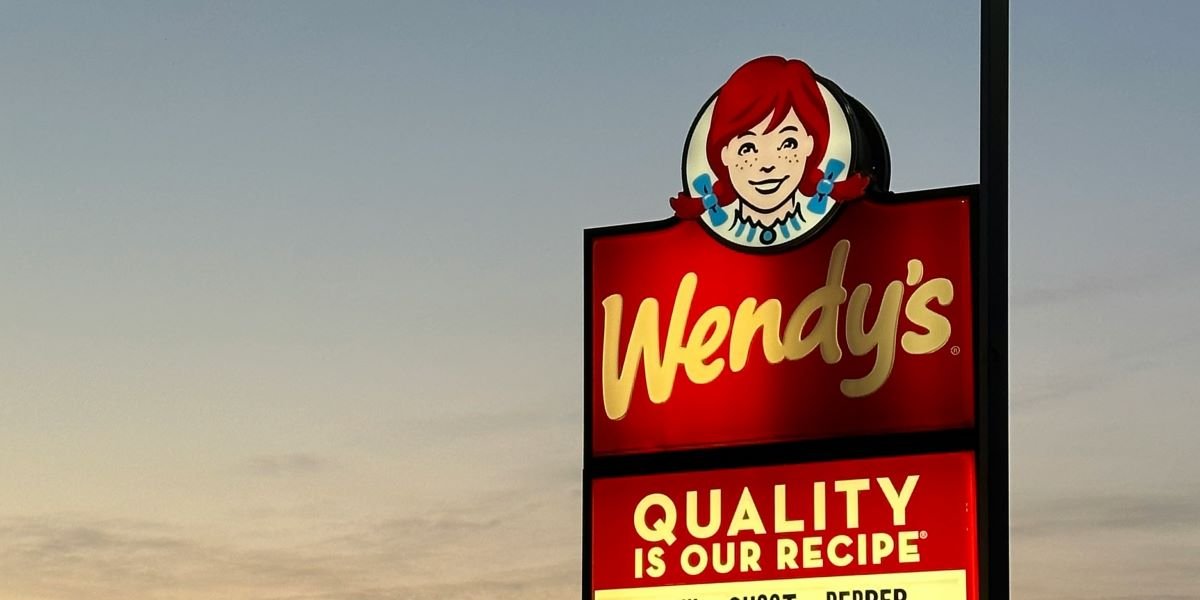

Wendy’s shares have staged their most dramatic move in five years, climbing roughly 32% between June 23 and June 25 on a wave of retail investor enthusiasm so intense that the New York Stock Exchange briefly halted trading for volatility on Wednesday morning. The stock hit an intraday high of $8.89 on June 24 after surging as much as 42% before settling for a 26% daily gain — its largest single-session advance since June 2021. It added approximately 7% on Thursday, extending the rally into a second session.
The move arrived without a material earnings revision, strategic acquisition, or financial restructuring. What it arrived with was a viral Reddit post, a new executive appointment that carries a specific turnaround pedigree, and a retail trading crowd that has been looking for its next target since the meme-stock playbook was written in 2021.
How the Rally Started
The immediate catalyst was a post on Reddit’s WallStreetBets forum titled “We need to save Wendy’s before it’s too late,” which urged the community to rally behind the fast-food chain. The post, which was later removed by moderators, drew tens of thousands of upvotes and reframed Wendy’s as a beaten-down American brand that retail investors could collectively support. By the end of the day, Wendy’s ranked as the second-most mentioned stock across Reddit trading forums, according to data tracked by Swaggy Stocks, and became the top trending ticker on StockTwits.
The numbers behind the retail surge are striking. Vanda Research, which tracks retail order flow, reported that individual investors posted their second-highest day of net buying in Wendy’s on record going back to 2012. Net purchases on June 24 exceeded Wendy’s 20-day average by a factor of 50 — a concentration of retail capital that overwhelmed the stock’s normal trading patterns and forced the NYSE’s volatility circuit breaker to activate shortly after the opening bell.
The setup made Wendy’s an appealing target for the meme-stock playbook. The shares had lost approximately 36% over the prior twelve months and recently hit a 52-week low of $6.24 — a price point low enough for retail traders to accumulate meaningful positions with limited capital. The stock had been in a steady three-year decline, creating the kind of “beaten-down underdog” narrative that has historically attracted coordinated retail buying on social media platforms.
The Fundamental Layer Underneath the Noise
What makes the Wendy’s episode more complicated than a standard meme-stock spike is the executive appointment that coincided with the Reddit surge. On June 23 — the same day the rally began — Wendy’s announced the hiring of Steve Cirulis as chief financial officer and chief strategy officer, effective immediately. Cirulis previously held the same dual role at Potbelly Sandwich Works, where he worked directly alongside Wendy’s current CEO Bob Wright during a turnaround that produced a 500% increase in Potbelly’s share price.
The Wright-Cirulis reunion is the kind of management catalyst that fundamental investors typically evaluate on its own merits. A CEO and CFO who have already executed a successful restaurant-industry turnaround together, now reunited at a larger chain with a recognized national brand and an established franchise infrastructure, represents a legitimate thesis for a recovery trade. Stephens, one of the sell-side firms covering Wendy’s, maintained its Equal Weight rating after the announcement — a signal that the analyst community is not yet ready to upgrade the stock based on the management change alone, but is watching the turnaround thesis develop.
The tension between the fundamental story and the meme-stock dynamic is what makes the Wendy’s trade difficult to evaluate. Retail traders are not buying because they have modeled Cirulis’s impact on Wendy’s free cash flow or franchise unit economics. They are buying because the stock is cheap, the brand is familiar, the Reddit narrative is compelling, and the price action itself is generating momentum. The fundamental catalyst provides a surface-level justification — a reason to believe the stock is not just a speculative vehicle — but the magnitude of the move far exceeds what the executive appointment would produce in a normal trading environment.
What the Options Market Is Pricing
The derivatives market is treating Wendy’s as a high-volatility event. Implied volatility on near-term options contracts spiked above 120%, reflecting expectations that the stock will continue to move sharply in either direction. Options market makers, who are typically on the other side of retail call-buying, must hedge their exposure by purchasing shares as the stock rises — a dynamic known as a gamma squeeze that can amplify upward price movements beyond what underlying demand would otherwise justify.
The options activity suggests the market is pricing in continued unusual trading for at least the near term. Whether the rally has staying power beyond the initial burst depends on whether retail traders maintain their positions or take profits, and whether the Wright-Cirulis turnaround thesis generates enough institutional interest to establish a new price floor.
What Comes Next
Vanda Research noted that retail traders tend to display loyalty to stocks they have previously rallied around, pointing to GameStop as an example of a name that received sustained individual-investor support long after its initial meme-stock phase. Whether Wendy’s develops that staying power remains an open question. The stock’s three-year decline reflects real operational challenges — sluggish same-store sales, intensifying competition in the value segment, and margin pressure from rising food and labor costs — that a CFO appointment alone does not resolve.
The rally has added roughly $600 million to Wendy’s market capitalization in three sessions. For that valuation to hold, the Wright-Cirulis team will need to demonstrate that the playbook they ran at Potbelly — menu simplification, margin improvement, franchisee alignment — can translate to a chain with more than 7,000 locations and a fundamentally different competitive position in the quick-service restaurant landscape.
Until then, Wendy’s occupies an unusual middle ground: a meme stock with an actual thesis, a turnaround candidate with an unproven management team, and a trading vehicle whose price is being set by social media sentiment rather than discounted cash flow models. The market will sort out which of those identities defines the stock over the coming weeks. For now, the retail crowd is in control.
Disclaimer: This article is for informational purposes only and does not constitute financial or investment advice. Stock prices are subject to volatility and past performance does not guarantee future results.