

By: Alva Ree
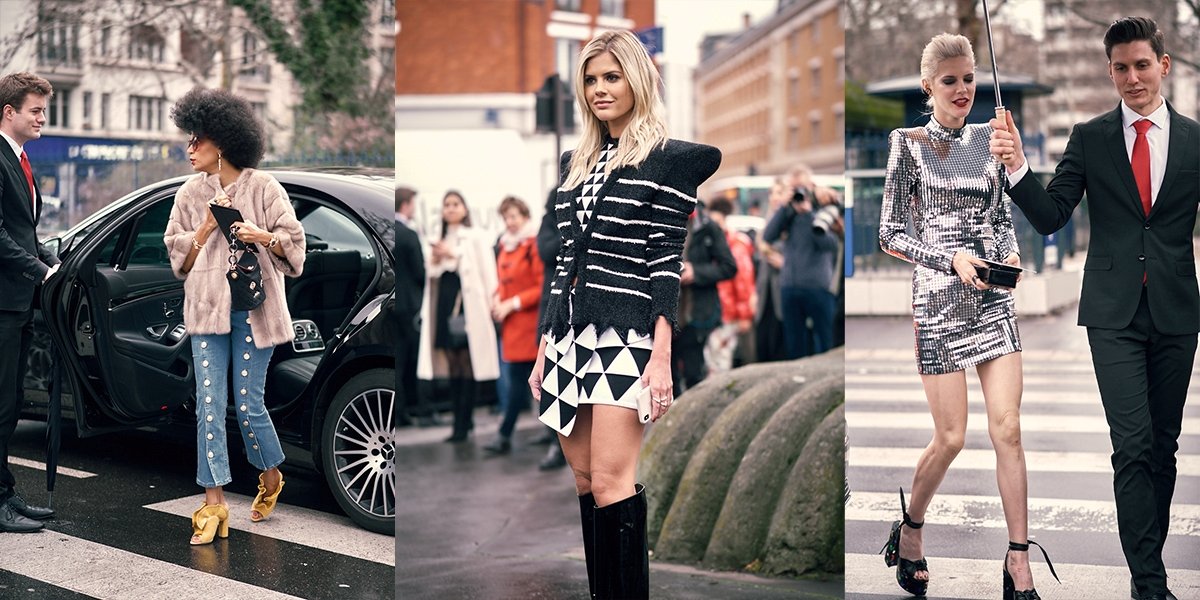
My name is Alex Dani, and for me, street style photography has never been about chaos—it’s about control inside unpredictability. Over the years, I’ve photographed street style in Milan, Paris, and New York, producing work during fashion weeks that has been published by ELLE and L’Officiel. Living between these cities taught me a simple truth: fashion does not truly live on the runway. It lives on the pavement, in motion, between shows.
Street style is not reportage, and it’s not portraiture in the classical sense. It exists somewhere in between. You are documenting reality, but with intention. You are editing the street in real time. I approach it less as documentation and more as visual storytelling—a way of recording how fashion is actually worn in different cities, interpreted, and performed in the present moment.
Understanding What Street Style Really Is
The biggest misconception about street style is that it’s random. In reality, the strongest images come from anticipation. When editors at magazines select a street-style photograph, they are not looking for noise. They are looking for a voice: silhouette, styling relevance, cultural context, and timing. The clothes must speak, but so must the person wearing them.
Before I raise the camera, I observe. I look for strong shapes, confident movement, and styling that tells a story about the season. Oversized tailoring reads differently in Milan than it does in Paris, and New York has its own visual language entirely—more individual, more confrontational. Each city has a rhythm, and the photographer’s job is to translate that rhythm into a single frame.
Position Is Everything
Where you stand matters more than what camera you use. I choose my position deliberately—near show entrances, but never buried inside the crowd. I look for clean backgrounds, directional light, and space for movement.
I rarely chase people. Instead, I let them enter my frame. That small decision immediately changes posture, expression, and authenticity.
Light Before Fashion
Fashion photographers love to talk about clothes, but street style starts with light. Parisian midday sun, overcast Milan mornings, and reflective New York streets all require different exposure discipline. I always expose for skin and fabric texture rather than just for highlights. Details—creases, accessories, tailoring—are what make an image editorial.
If the light is bad, no outfit will save the photograph. Editors can see immediately when light hasn’t been respected.
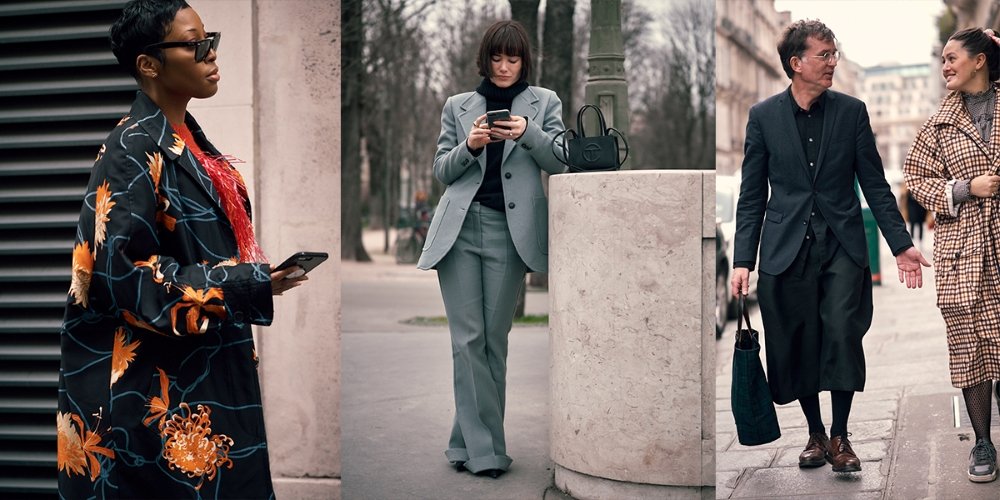
Photo Courtesy: Alex Dani
Technical Choices That Serve the Image
Street style is unforgiving. There are no studio strobes and no second takes. My approach has always been to keep the setup simple: fast autofocus, responsive settings, and lenses that allow me to react instinctively rather than think technically. I often shoot slightly wider than expected, because context matters. Street style is not only about the clothes—it’s about how fashion exists within a city.
Over the years, I’ve worked with a wide range of focal lengths and systems, from classic 40mm and 50mm lenses to longer 75mm and 90mm perspectives. I began with Nikon and a 50mm f/1.4, moved to Canon—where the 135mm and 70–200mm taught me discipline and distance—then spent time working with a Leica M9 on manual focus, which refined my sense of timing. I’ve also worked with mirrorless systems, appreciating the color and dimensionality of fast prime lenses, particularly on the Fuji system and their 35mm f1.4 lens.
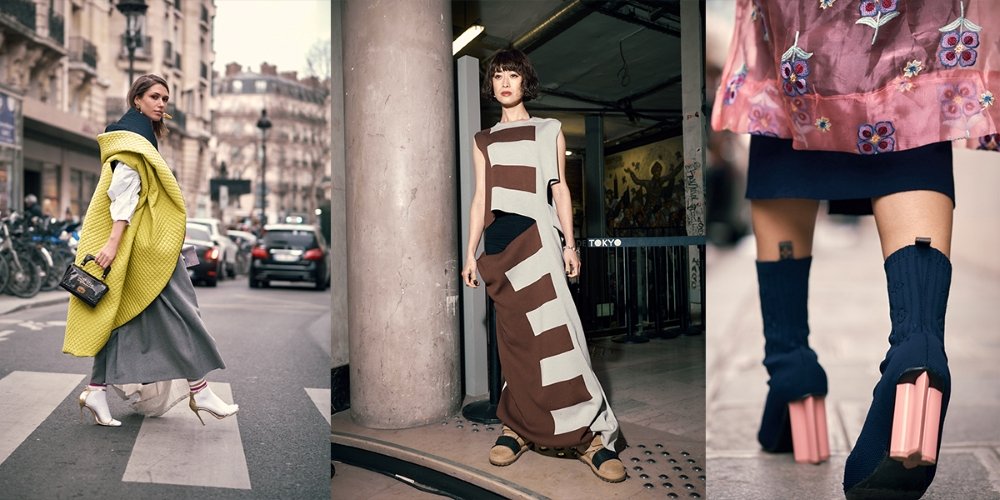
Photo Courtesy: Alex Dani
Today, my preference is a much lighter, more discreet setup. I often work with a compact APS-C Sony camera, allowing me to shoot one frame at a time with intention. The small form factor removes pressure from the moment. People react less to a camera that doesn’t dominate the space, and as a result, they behave more naturally—closer to how they would shoot with an iPhone.
Sharpness and background blur matter, but emotion matters more. A technically imperfect image with attitude and energy will always outlive a flawless frame that says nothing.
Editing Like an Editor
Post-production is where many photographers lose credibility. I edit thinking like L’Officiel, not like social media. Does the image represent the season? Is it timeless? Does it communicate fashion authority? I deliver tight selections, consistent color, and natural skin tones. Over-retouching destroys trust.
Street style should feel immediate but refined—raw, not careless.
Why Street Style Still Matters
In an era of AI visuals and hyper-produced campaigns, street style remains proof of relevance. It shows how fashion is worn, not just designed. It captures influence in motion. For me, street style is not about chasing trends—it’s about recognizing them before they are named.
That ability to see fashion as a living language, spoken on the street, is what keeps this genre essential for me. More information can be found at https://fashionstyle.nyc/