

Sobriety is often portrayed as the ultimate victory, the moment life finally falls into place. Alcohol is removed, chaos subsides, and the worst appears to be over. Yet for many people who achieve sobriety, an unexpected truth emerges soon after: while the substance is gone, the deeper patterns that shaped addiction remain firmly intact.
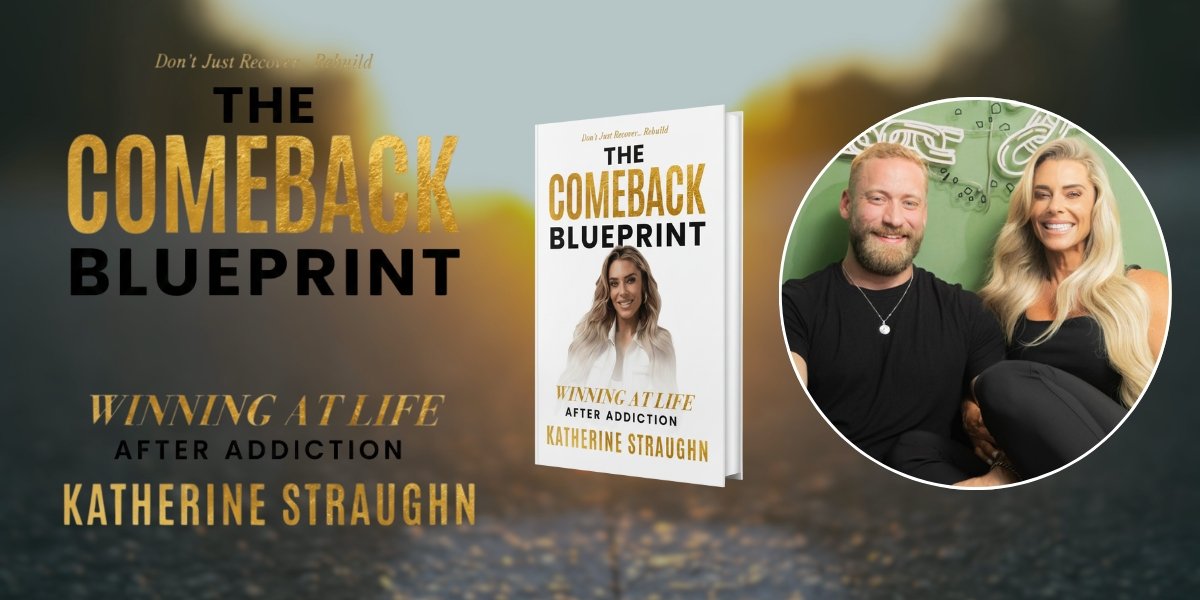
Kat Straughn, founder of The Comeback Blueprint: Winning at Life After Addiction, challenges the cultural belief that quitting alcohol automatically leads to fulfillment. Her work addresses what happens after sobriety, when individuals realize that freedom requires far more than abstinence. It requires identity, structure, and faith strong enough to replace the life alcohol once propped up. In recent years, Straughn has become increasingly explicit about what she believes is missing from many post-sobriety narratives. While deliverance from addiction is powerful, she draws a distinction between freedom given and responsibility assumed. “Deliverance is God’s work,” she often explains, “but stewardship is ours.” In her view, sobriety restores agency, but it is what individuals do with that restored agency that determines whether the transformation endures. Without learning how to govern their time, habits, and decisions, many people remain free yet directionless.
Purpose Beyond Self-Improvement (Implicit Faith, Explicit Meaning)
Alcohol is often the most visible symptom of a much larger issue. When drinking stops, underlying behaviors quickly surface, such as self-sabotage, financial instability, relational dysfunction, control issues, or a persistent sense of emptiness. These are not failures of sobriety; they are evidence that sobriety alone was never meant to do all the work.
Straughn emphasizes that generational cycles do not end through willpower. They persist through identity, through the beliefs, habits, and internal narratives passed down silently over time. Without addressing those foundations, individuals often recreate the same dysfunction in new forms, even while remaining sober.
This is why so many people find themselves sober but unfulfilled. The problem was removed, but life was never rebuilt.
This perspective reframes personal growth away from self-improvement and toward contribution. Straughn teaches that people find deeper purpose not simply by escaping what harmed them, but by building something that lasts. When discipline, identity, and values align, individuals begin to produce tangible outcomes — steadier leadership, healthier relationships, and work that extends beyond personal gain. For Straughn, this is where transformation becomes measurable: not in intention or insight, but in the quality and durability of what a life is able to sustain.
The Pivot Point That Changes Everything
A defining moment in Straughn’s philosophy is what she calls the pivot point, not rock bottom, not relapse, not dramatic transformation, but the quiet realization that sobriety is only the beginning.
At this point, the question shifts from How do I stay sober? To whom am I becoming now that I am sober? That distinction changes everything. Sobriety ceases to be the finish line and becomes the foundation on which a new identity must be intentionally built.
This pivot requires ownership. It asks individuals to stop measuring success by what they avoid and start defining it by what they create.
Identity First, Then Habits, Then Freedom
At the core of The Comeback Blueprint is a simple but often overlooked hierarchy: identity shapes habits, and habits shape outcomes. Attempting to change behavior without redefining identity leads to exhaustion and inconsistency. When identity changes first, discipline becomes sustainable rather than draining.
Straughn’s framework helps individuals rebuild their lives by anchoring daily routines to who they choose to become. Faith plays a central role, not as performance or perfection, but as orientation. It provides stability when motivation fades and clarity when emotions fluctuate.
Through consistent structure and aligned habits, sobriety evolves from restraint into freedom.
Breaking Cycles Beyond Addiction
While addiction is the entry point, Straughn’s work extends far beyond substance use. The same generational patterns that fuel addiction often drive unhealthy relationships, financial chaos, leadership burnout, and repeated self-sabotage among high-capacity individuals.
With more than a decade of lived sobriety, experience founding multiple treatment centers, and leadership of global recovery communities, Straughn has guided thousands from crisis into purpose-driven living. Her work bridges the gap between early recovery and long-term transformation, a gap that many systems fall short of.
The focus is not on managing damage, but on building a life that no longer requires escape.
Why This Conversation Matters Now
As sobriety becomes more visible among leaders, professionals, and entrepreneurs, the conversation must evolve. Removing alcohol improves clarity, but it also exposes unresolved identity gaps. Without structure, those gaps are filled by overwork, control, or familiar dysfunction.
The Comeback Blueprint meets this moment with precision. It reframes freedom not as the absence of struggle, but as the presence of alignment. Sobriety removes the chaos. Identity, structure, and faith create life.
Redefining Freedom After Sobriety
Straughn’s message is clear and uncompromising: abstinence is not the destination. It is the starting point. True freedom comes when individuals intentionally rebuild who they are, how they live, and what they stand for.
By naming the moment when sobriety stops being enough, and offering a framework for what comes next, The Comeback Blueprint provides clarity for those ready to move beyond survival and into leadership over their own lives. “Real freedom,” Straughn says, “is not defined by what we avoid, but by what our lives are able to build.”
Explore More and Connect with Kat Straughn
🌐 https://soberkatt.com/
📘 The Comeback Blueprint: Winning at Life After Addiction
🔗 Book: https://www.thecomebackblueprint.store/bookhome
📸 Instagram & TikTok: @soberkatt
🌍 Free Sober Community: https://soberkatt.com/community/
Disclaimer: This content is for informational purposes only and reflects the personal experiences and perspectives of Kat Straughn. The views shared are not intended to serve as medical, therapeutic, or professional advice. The author’s approach to sobriety and recovery, including her focus on faith, is based on her personal beliefs and may not apply to everyone. For professional advice regarding addiction recovery, please consult with a licensed healthcare provider.