

Science and spirituality often seem to occupy separate corners of human understanding, but John Zachary has spent over five decades exploring how they can potentially coexist harmoniously. As the author of The Science Behind the Story of Jesus, Zachary has dedicated his life to exploring the intersection of faith and reason. Through his research, which includes ancient texts, astronomical calculations, and mathematical analysis, he suggests that there may be patterns that point to divine design. His journey is one of discovery, determination, and an unshakable commitment to uncovering what he believes is the truth.
From Doubt to Discovery: A Life-Altering Journey
Zachary’s journey began at the age of 20, when a profound spiritual experience led him to explore uncharted paths. “It was a major event in my life,” he recalled during a recent interview. “I couldn’t deny it, and neither could others who witnessed my reaction.” That pivotal moment became the cornerstone of his lifelong commitment to understanding the divine through rigorous research. Over 52 years later, Zachary’s reflections remain clear and impactful, underscoring the enduring influence of that transformative encounter.
His quest for truth led him down a path of intensive study, culminating in 14 years of research. The result? A meticulously researched book that seeks to validate biblical prophecies using scientific dating methods. By analyzing time-based predictive texts, Zachary proposes that events foretold centuries ago align with historical timelines, down to the exact day.
The Scientific Lens on Biblical Prophecy
At the heart of Zachary’s work lies a bold assertion: that the Bible could contain evidence of divine intervention in human history. Using tools such as astronomical calculations, mathematical precision, and logical analysis, he interprets prophecies attributed to figures like Moses, Daniel, and Jesus. One example is the recurring 14,000-day control period, a pattern he identifies in both ancient scripture and modern events. According to Zachary, this phenomenon suggests a transcendent design governing human affairs.
Critics may dismiss such claims as speculative or unfounded, but Zachary offers what he believes are tangible facts. “We’re showing skeptics something that can be examined,” he explained. “This isn’t about vague interpretations; it’s about nailing it with math and science.” His approach aims to dismantle skepticism by presenting a framework that even the most ardent atheists can scrutinize, and possibly embrace.
For instance, Zachary highlights the destruction of Herod’s Temple on the 14,000th day of a prophetic cycle. This event, he argues, may symbolize the replacement of the Old Testament sacrificial system with Jesus’ sacrificial death and resurrection. By grounding his findings in precise dates and historical records, Zachary builds a case for divine orchestration across centuries.
A Message for Skeptics: Open Minds, Open Hearts
For those hesitant to reconcile science with spirituality, Zachary offers a candid yet hopeful message. “A lot of atheist scholars argue that these ideas lack credibility,” he acknowledged. “But what we’re doing here aims to cut through the haze. We’re not relying on nebulous arguments; we’re scientifically dating events, and the results speak for themselves.”
He invites skeptics to engage with his findings, emphasizing that true seekers of truth will likely find value in his methodology. “If you show this to someone genuinely interested in discovering the truth, they’ll see the precision and consistency,” he said. “It’s difficult to ignore that God may be in control of human events.”
Vision for the Future: Bridging Worlds
Looking ahead, Zachary envisions his work as more than just a scholarly contribution; it’s a potential catalyst for change. “My long-term goal is to help people better understand what’s true of the spiritual realm,” he shared. By combining cutting-edge research with timeless wisdom, he hopes to inspire a new generation of thinkers who can navigate the complexities of faith and reason.
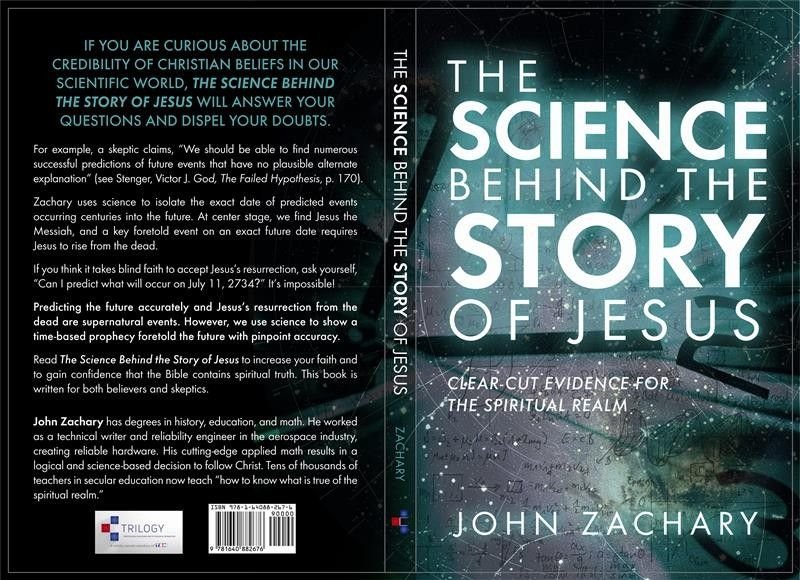
Photo Courtesy: John Zachary
His book serves as both a guide and a challenge, urging readers to question their assumptions while remaining open to the possibility of divine influence. As he puts it, “Are your personal beliefs valid, or are you following a fabricated tale? That’s the question I want people to ask themselves.”
Invitation to Explore
John Zachary’s work is a testament to the power of curiosity and perseverance. Whether you’re a devout believer, a staunch skeptic, or somewhere in between, The Science Behind the Story of Jesus invites you to embark on a journey of exploration. It challenges us to look beyond conventional boundaries and consider the profound implications of a universe governed by design rather than randomness.
As the conversation drew to a close, one thing became clear: Zachary’s mission is far from over. With each page of his book, he extends an invitation to seek, to question, and ultimately, to consider. In a world hungry for answers, his voice stands out as a beacon of hope and clarity.
Contact Information
Get your copy now: https://shorturl.at/eQyuq
Author Website: https://authorjohnzachary.com/
Disclaimer: The claims presented in this article reflect the views and interpretations of the author, John Zachary, and his research into the intersection of science and spirituality. While Zachary utilizes scientific methods such as astronomical calculations and historical analysis, these assertions have not been independently verified through peer-reviewed studies or universally accepted scientific frameworks. Readers are encouraged to explore the content critically and consider these theories in light of existing scientific and historical knowledge.