

By: Dr. Robert Hanopole, DC — Co-Founder, ReliefNow Laser Centers (reliefnowlaser.com)
A structural shift is forming in private-pay healthcare, and it has little to do with new insurance legislation, premium restructuring, or emerging telehealth platforms. Instead, the disruption is coming from an unexpected direction: non-invasive regenerative medical laser therapy. Practices that integrate advanced Class IV laser pathways are discovering that it not only improves clinical outcomes but also stabilizes revenue patterns that no longer depend solely on reimbursement cycles.
The implications extend far beyond chiropractic or orthopedics. Analysts watching private-pay growth trends have noticed a consistent pattern across multiple specialties: patients are increasingly willing to invest in services that reduce pain, improve function, and preserve mobility without surgery. And as patient expectations shift, practices built exclusively on insurance reimbursement are finding themselves exposed to volatility they can no longer ignore.
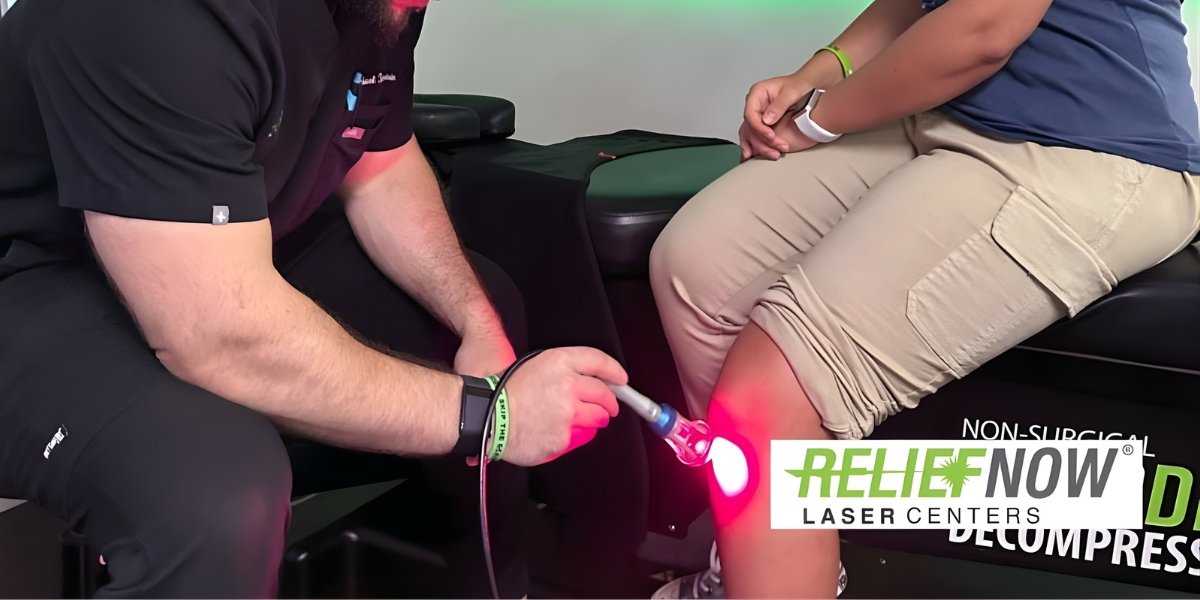
Laser therapy is emerging as a stabilizing counterweight. It supports outcomes patients can feel, it reinforces continuity without coercion, and it elevates the practice’s perceived value without altering its core identity. For providers, it represents a financially meaningful opportunity to align clinical results with sustainable practice economics.
According to Dr. Robert Hanopole, Co-Founder of ReliefNow Laser Centers, the financial impact is the natural consequence of something simpler: “Patients will pay for what keeps them moving, because movement keeps them participating in life. When clinical care restores function without major disruption, revenue stability follows. You don’t need to pressure patients when outcomes speak for themselves.”
The result is not a short-term revenue spike, but a rebalancing of the financial structure of care. Practices that once relied heavily on unpredictable insurance cycles now have supplemental revenue streams grounded in patient initiative rather than billing mechanics. This shift mirrors trends in other industries where value migrates toward services that deliver results that customers directly experience.
Mobility is the healthcare equivalent of productivity. When patients regain physical capability, they regain economic participation. Employers benefit, families stabilize, and communities thrive. Laser therapy accelerates recovery in ways patients feel and measure personally, getting back to work sooner, resuming physical activity, or avoiding escalated interventions entirely.
As deductibles climb and reimbursements narrow, patients have begun making decisions based on outcomes rather than coverage. They want access without delay, relief without sedation, and progress without surgical risk. Laser therapy answers those demands with a structure that supports repeatable improvement, meaning patients come back because they want to, not because a policy requires it.
This distinction plays a key role in the stability of private-pay practices. Revenue consistency aligns with patient needs and treatment outcomes. Laser therapy fits into this dynamic, offering practices a way to maintain financial stability while staying true to their clinical values.
ReliefNow Laser Centers recognized this trajectory early and built its national model not around device sales, but around integration systems that reinforce reliability. The network guides practices as they adopt laser not as a novelty, but as a pathway, structured protocols, outcome-based communication, and treatment plans aligned with functional goals.
“It’s not about owning a laser — it’s about operating with one,” Hanopole explains. “Practices don’t need more equipment; they need systems that produce predictable improvement patients can feel and recommend. Predictability is what stabilizes revenue and reputation at the same time.”
Laser therapy is not positioned as a replacement for traditional care; it is positioned as an amplifier. It strengthens existing treatment plans, increases patient retention, and supports referrals through lived experience rather than persuasive marketing. This dynamic is reshaping competitive differentiation. In saturated markets, loud messaging falls short of measurable outcomes. Practices that integrate lasers are increasingly being recommended because patients see real progress.
The economic argument extends beyond individual practices. Communities benefit when mobility improves. Fewer surgeries mean fewer missed workdays, fewer downstream complications, and fewer long-term dependencies. While laser therapy is not a substitute for high-acuity intervention, it delays escalation, which carries both human and financial relevance.
As interest accelerates, ReliefNow Laser Centers is preparing to convene practitioners across disciplines to explore the future of non-invasive regenerative care within a financially constrained healthcare landscape. The organization will host The Shift Summit on February 21, 2026, in Dallas, Texas — a one-day event designed to provide doctors with hands-on integration strategies and continuing education hours while reinforcing the economic rationale for laser-centered outcomes.
Speakers include orthopedic surgeons, regenerative care specialists, laser clinicians, performance coaches, and industry innovators, reflecting the multidisciplinary nature of non-invasive solutions. The Summit emphasizes implementation, not speculation: doctors leave prepared to integrate laser pathways immediately, with clarity on outcome communication and patient retention strategies.
This level of preparedness matters because the competitive environment is shifting rapidly. Practices that adopt non-invasive regenerative tools early will have an advantage in market positioning and patient loyalty. Those who wait may find themselves responding to demand instead of shaping it.
Laser therapy is not the only answer to the pressures on modern healthcare — but it may be one of the most scalable. It supports clinical outcomes, reinforces private-pay continuity, and strengthens practice economics without increasing procedural risk. It is a tool aligned with the realities of working patients, aging populations, and communities stressed by chronic mobility limitations.
Market signals suggest that the practices prepared to lead will be those that adopt laser pathways before demand peaks. As non-invasive regenerative care moves from innovation to expectation, the question is not whether lasers will become standard, but who will become standard-bearers.
Event Details:
The Shift Summit — ReliefNow Laser Centers
Location: Aloft Hotel, 1160 State St, Richardson, TX 75082
Date: Saturday, February 21, 2026
Time: 8:00 AM – 7:00 PM
Hosted by: ReliefNow Laser Centers
Registration: https://event.reliefnowlaserdoc.com/theshiftsummit
Book Now: https://www.wanderlearnretreats.com/laser
National network & clinical pathways: ReliefNow Laser Centers
About the Author:
Dr. Robert Hanopole, DC, is the Co-Founder of ReliefNow Laser Centers (reliefnowlaser.com), a national organization focused on integrating non-invasive regenerative medical laser therapy into chiropractic, medical, and wellness practices to strengthen clinical outcomes and stabilize private-pay revenue through sustainable, patient-driven continuity.
Disclaimer: The information provided in this article is for informational purposes only and should not be construed as medical or financial advice. Non-invasive laser therapy results may vary depending on individual circumstances. It is recommended that patients and healthcare practitioners consult with a professional before beginning any new treatment or financial strategy.