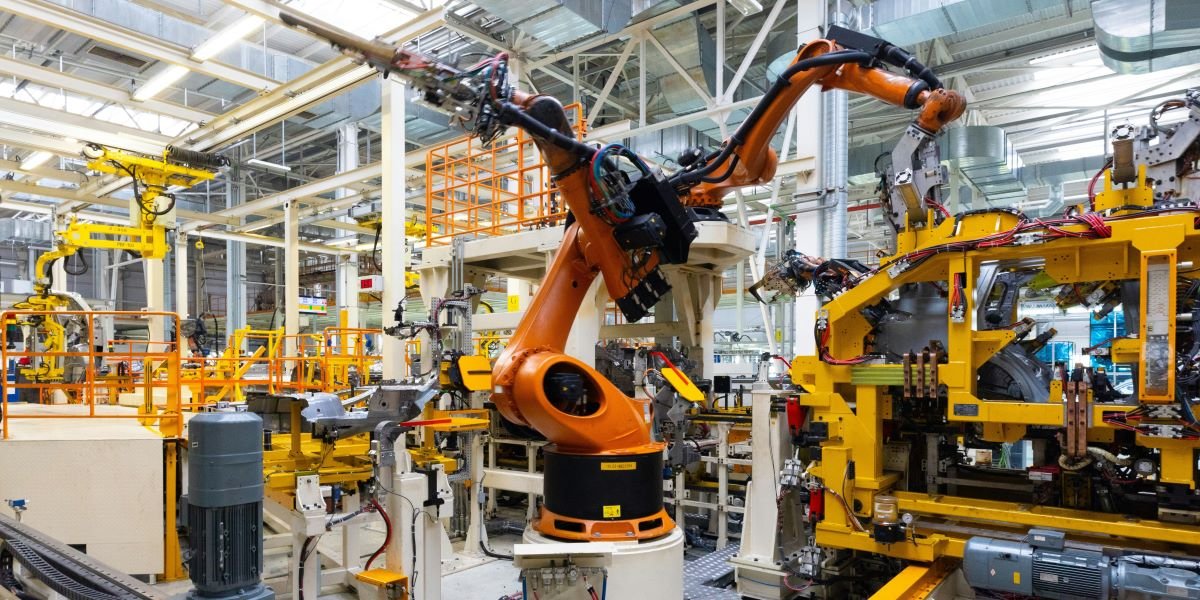

The global machine vision market is forecast to grow from $15.83 billion in 2025 to $23.63 billion by 2030, expanding at an 8.3% compound annual growth rate, according to a MarketsandMarkets industry report. The projection reflects an acceleration in corporate capital expenditure on AI-powered inspection, quality assurance, and robotic guidance systems as manufacturers confront a structural labor shortage that the Deloitte and Manufacturing Institute project could leave up to 1.9 million U.S. factory jobs unfilled by 2033. The market’s growth trajectory is no longer about replacing cameras on assembly lines — it is about embedding an intelligence layer that turns visual data into real-time production decisions at the edge.
Key Takeaways
- The global machine vision market is projected to grow from $15.83 billion in 2025 to $23.63 billion by 2030 at an 8.3% CAGR, driven by AI integration, labor shortages, and Industry 4.0 adoption.
- AI-based machine vision software is the fastest-growing segment, transforming systems from static quality-control tools into predictive, enterprise-wide assets capable of defect classification, process optimization, and autonomous decision-making.
- Asia-Pacific leads regional growth at a 9.2% CAGR, projected to reach $9.81 billion by 2030, driven by electronics and semiconductor manufacturing expansion in China, India, and South Korea.
- Cognex Corporation reported 24% revenue growth in Q1 2026 to $268.4 million, with adjusted EPS rising 113% year-over-year, fueled by new AI vision platforms running on NVIDIA Jetson and Qualcomm edge processors.
- U.S. manufacturing job openings reached 462,000 in March 2026, while production worker wages crossed $30 per hour for the first time — twin pressures that make automation investment an economic necessity rather than a discretionary upgrade.
What Is Driving the Machine Vision Expansion?
The convergence of three structural forces is reshaping the capital allocation calculus for manufacturers globally. First, the labor shortage is no longer cyclical. The Manufacturing Institute projects that 2.8 million U.S. manufacturing workers will retire by 2030, and the pipeline of skilled replacements — CNC machinists, robotics technicians, controls engineers, automation specialists — has not scaled to meet demand. Bureau of Labor Statistics JOLTS data showed 462,000 open manufacturing positions in March 2026, the third consecutive monthly increase, while the hire rate remained compressed at 2.3%, meaning factories are filling a shrinking share of open roles each month. Production worker wages crossing $30 per hour for the first time, as reported by the BLS in April 2026, adds direct cost pressure that strengthens the return-on-investment case for vision-guided automation.
Second, reshoring and nearshoring are adding demand on top of existing capacity constraints. The Reshoring Initiative reported that 245,000 manufacturing jobs were announced in 2024 alone, contributing to more than 2.5 million U.S. manufacturing positions created since 2010. New semiconductor fabrication plants, EV battery facilities, and defense-related production expansions are absorbing available labor faster than training programs can produce it. BDO’s 2026 manufacturing outlook noted that geographic labor misalignment — where new plants are built in states with favorable tax incentives but insufficient local workforce — has become one of the sector’s defining operational constraints.
Third, the technology itself has crossed a capability threshold. Machine vision systems are no longer limited to simple pass/fail inspection. Deep-learning algorithms running on edge processors can now classify defects by type and severity, guide robotic arms in real time, read degraded barcodes, perform dimensional measurement, and feed predictive maintenance models — all without routing data to a central server. The shift from PC-based architectures to smart camera-based systems, which MarketsandMarkets identifies as the fastest-growing segment, reduces both cost and complexity for manufacturers deploying vision across multiple production lines.
How Is AI Changing the Machine Vision Value Proposition?
The software layer is where the economics of machine vision are being rewritten. MarketsandMarkets identifies AI-based machine vision software as the fastest-growing component category because it represents, in the report’s framing, “the intelligence layer that unlocks the true potential of the system.” Grand View Research corroborates the trajectory, projecting the software segment to grow at a CAGR exceeding 13% through 2030.
Cognex Corporation’s Q1 2026 results illustrate what that shift looks like in practice. The company reported revenue of $268.4 million, up 24% year-over-year, with gross margins expanding to 71% from 67% a year earlier — a margin improvement driven by a more favorable product mix weighted toward AI-heavy systems. Adjusted earnings per share rose 113% to $0.34, more than doubling the prior-year figure and substantially beating analyst estimates. CEO Matt Moschner described the company’s strategic direction as becoming “the #1 provider of AI-powered machine vision,” with new products built around embedded AI that solves inspection challenges “at the edge — faster, easier, and without the cost and complexity of PC-based architectures.”
Two product launches in May 2026 exemplified the direction. The In-Sight 3900, powered by Qualcomm Dragonwing platforms, and the In-Sight 6900 Vision Controller, built on NVIDIA Jetson technology, both run AI workloads locally on the camera system without requiring external PCs. Both integrate with Cognex’s OneVision cloud-to-edge ecosystem, which allows manufacturers to develop AI inspection models centrally and deploy them across global factory networks. MVTec’s HALCON 26.05 software release, used across multiple hardware platforms, achieved up to five times faster inference than previous versions, enabling real-time detection of small and overlapping objects on high-speed production lines.
The practical implication for manufacturers is that machine vision is evolving from a cost center — a quality-control tool that catches defects after they occur — into a margin-protection asset that prevents defects, optimizes throughput, and reduces the labor intensity of inspection simultaneously.
Where Is Regional Growth Concentrated?
Asia-Pacific dominates both current market share and forward growth. The region accounted for over 43% of the global machine vision market in 2024, according to Grand View Research, and MarketsandMarkets projects it will reach $9.81 billion by 2030 at a 9.2% CAGR — the fastest regional growth rate. China’s expanding electronics and semiconductor manufacturing base, India’s Make in India initiative driving demand for quality inspection systems, and South Korea’s advanced automotive and display manufacturing sectors are the primary growth engines.
North America follows with a projected value of $6.66 billion by 2030 at an 8.5% CAGR, driven by reshoring momentum, semiconductor facility buildouts under the CHIPS Act, and the broader smart factory digitization trend. Europe is projected at $5.43 billion by 2030, growing at 7.3%, with EU digitalization initiatives and automotive quality standards supporting adoption.
The regional distribution matters for the competitive landscape. Cognex (U.S.), Keyence (Japan), Teledyne Technologies (U.S.), Basler AG (Germany), and Omron Corporation (Japan) are the market’s five leading companies. Keyence’s IV3 series integrates AI to automatically configure lighting and focus, scoring images across color, shape, and speed parameters — an approach that reduces setup time and makes machine vision accessible to manufacturers without dedicated vision engineering teams. The competitive dynamic is shifting from hardware differentiation toward software ecosystems and edge-AI capabilities, where the ability to deploy, update, and scale inspection models across distributed factory networks becomes the primary source of competitive advantage.
What Should Manufacturers and Analysts Watch?
The machine vision market’s growth trajectory is robust, but two risks warrant monitoring. First, the gap between automation adoption and workforce readiness remains wide. Snelling’s 2026 manufacturing survey found that 98% of manufacturers are exploring or considering AI-driven automation, yet only 20% feel fully prepared to use it at scale. The constraint is not ambition — it is the infrastructure (clean data, modern manufacturing execution systems, skilled integration staff) required to make vision systems productive. A robot cell that is purchased but poorly integrated becomes an underperforming asset, not a margin improvement.
Second, pricing pressure from commoditization of basic vision hardware could compress margins for companies that fail to differentiate on the software and services layer. Cognex’s Q1 results showed that AI-heavy product mix drove margin expansion, but the company’s own analysts noted that traditional hardware faces persistent price pressure from lower-cost competitors, particularly in Asia. The companies that capture disproportionate value over the next five years will be those that sell intelligence — deployable AI models, edge computing platforms, cloud-connected ecosystems — rather than cameras.
The $23.6 billion machine vision market is not a hardware story — it is an intelligence story, where the value is shifting from the lens to the algorithm running behind it, and where the manufacturers that deploy AI at the edge will be the ones that defend their margins against a labor market that has no structural path to recovery.
Disclaimer: This article is for informational purposes only and does not constitute financial advice. Readers should consult a qualified financial advisor before making investment or trading decisions.
FAQs
How large is the global machine vision market?
The global machine vision market was valued at $15.83 billion in 2025 and is projected to reach $23.63 billion by 2030, growing at an 8.3% compound annual growth rate, according to MarketsandMarkets. Grand View Research offers a higher estimate of $41.7 billion by 2030 at a 13% CAGR, reflecting different methodological approaches and market scope definitions.
What is driving machine vision adoption in manufacturing?
Three structural forces are converging: a labor shortage projected to leave up to 1.9 million U.S. manufacturing jobs unfilled by 2033, rising production worker wages that crossed $30 per hour for the first time in April 2026, and advances in AI and edge computing that have made vision systems capable of real-time defect classification and predictive decision-making without requiring PC-based architectures.
Which companies lead the machine vision market?
The five leading companies are Cognex Corporation (U.S.), Keyence Corporation (Japan), Teledyne Technologies (U.S.), Basler AG (Germany), and Omron Corporation (Japan). Cognex reported 24% revenue growth in Q1 2026, driven by new AI vision platforms running on NVIDIA Jetson and Qualcomm edge processors.
What is the fastest-growing segment in machine vision?
AI-based machine vision software is the fastest-growing component category, with Grand View Research projecting software segment growth exceeding 13% CAGR through 2030. Smart camera-based systems — which embed AI processing directly on the camera rather than routing to external PCs — are the fastest-growing hardware segment.
Which region is growing fastest in the machine vision market?
Asia-Pacific leads with a projected 9.2% CAGR through 2030, reaching $9.81 billion. Growth is concentrated in China’s electronics and semiconductor manufacturing, India’s industrial modernization under Make in India, and South Korea’s automotive and display sectors. North America follows at 8.5% CAGR, driven by reshoring and smart factory investment.
How does machine vision relate to the broader industrial automation trend?
Machine vision is a critical subsystem within the Industry 4.0 framework, providing the visual sensing layer that enables automated inspection, robotic guidance, process optimization, and predictive maintenance. In 2024, approximately 542,000 industrial robots were installed globally — more than double the figure from a decade earlier — and machine vision systems increasingly serve as the perception layer that makes those robots functional in variable production environments.