
Long before artificial intelligence became a mainstream business topic, organizations were already trying to solve a more basic problem: understanding what was happening inside their own operations.
Information existed everywhere. Some of it sat inside databases. Some lived in spreadsheets. Some were scattered across reports, emails, monitoring tools, and departmental systems. The challenge was rarely a lack of data. More often, it was the lack of a clear picture.
That challenge remains relevant today. As organizations become more dependent on technology, there is an increasing interest in systems that can provide a consolidated view of assets, processes, and operations. This has contributed to growing attention around digital twins, a technology that has expanded well beyond its industrial origins.
A digital twin is generally described as a virtual representation of a physical asset, process, or system. Unlike a static model, it is designed to reflect real-world conditions through ongoing data inputs. Over time, digital twins have been used across manufacturing, transportation, infrastructure, healthcare, energy, and logistics to support monitoring, simulation, and analysis. Researchers have increasingly described them as a bridge between physical and digital environments.
Those developments have encouraged technology firms to explore digital twins in new contexts.
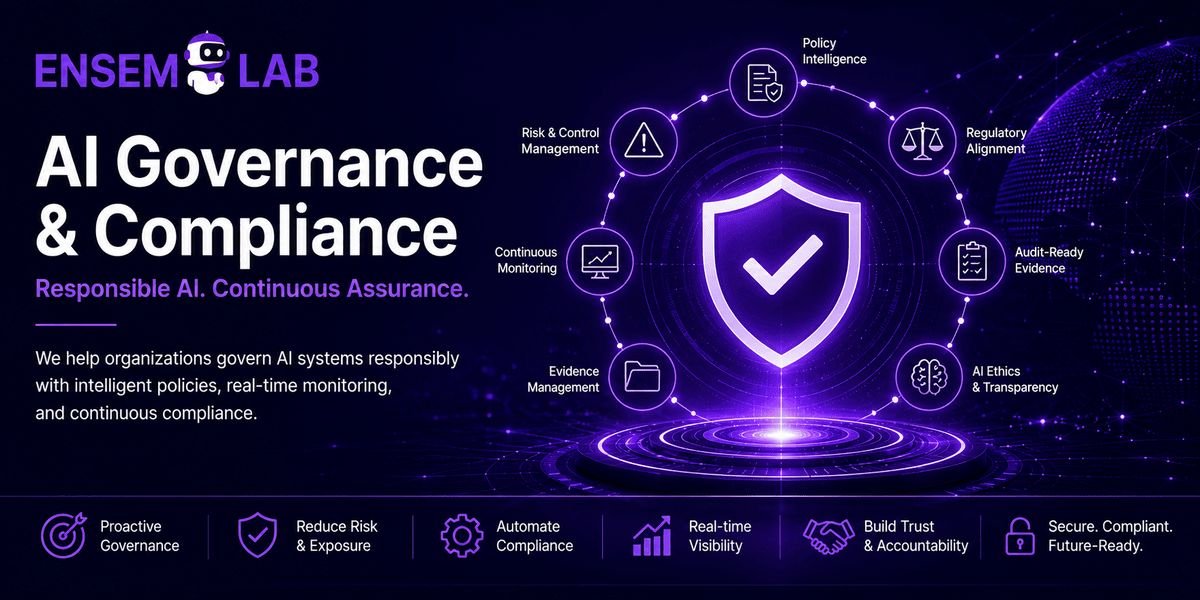
Ensemblab, established in Pakistan in 2024 by a group of entrepreneurs, is among the companies working in this area. While the company is primarily associated with enterprise artificial intelligence and automation technologies, digital twins form a significant part of its stated product portfolio. According to company information, its digital twin systems are designed to create virtual representations of organizational processes, operational environments, and business activities.
The concept itself is not entirely new. What has changed is the increasing availability of artificial intelligence, cloud computing, connected systems, and real-time analytics. Together, these technologies have expanded the potential uses of digital twins beyond equipment monitoring and industrial maintenance. Organizations are now examining whether similar approaches can be applied to workflows, governance structures, compliance processes, and broader operational management.
In practical terms, digital twins are often discussed as tools for visibility.
Large organizations frequently operate through multiple systems that do not communicate easily with one another. Information may be fragmented across departments, business units, and software platforms. Digital twin environments attempt to provide a more unified view by representing activities and relationships within a virtual model. The goal is not necessarily prediction. Sometimes the objective is simply understanding what is happening at a given moment.
That emphasis on operational awareness appears throughout Ensemblab’s approach to digital twin technology. Company materials describe systems intended to support monitoring, analysis, operational assessment, and organizational oversight. Rather than focusing exclusively on physical assets, the company applies the digital twin concept to enterprise processes and management functions.
One of the more specific examples within its portfolio is CADET, short for Continuous Audit Digital Enforcement Twin.
According to company information, CADET is a compliance-focused digital twin platform developed to support auditing, monitoring, and regulatory enforcement activities. The system is described as combining automation with AI-driven analysis to assist organizations in observing compliance-related processes and identifying operational issues. Publicly available information about the platform remains limited, though its stated purpose places it within a broader category of technologies that seek to automate aspects of governance and oversight.
The timing is notable.
Examples from outside the private sector illustrate the trend. For instance, in 2026, India’s VO Chidambaranar Port Authority developed a digital twin technology that aimed to develop real-time simulations of activities in the port. It was explained that the application would help in creating a system that would ensure visibility, predictive modeling, scheduling, and planning capabilities. This indicates how there has been a growing interest in developing digital twins for operational areas where visibility is crucial.
Moreover, artificial intelligence has become an integral part of such technologies.
This is because digital twins are technologies that generate vast volumes of data. Artificial intelligence applications have become useful for analyzing data, recognizing patterns, and helping with decision-making. Therefore, the relationship between the two technologies has been one of the major issues covered by many researchers and commercial firms.
Ensemblab’s work reflects that convergence. The company’s digital twin initiatives exist alongside its broader activities in enterprise AI, agentic systems, governance technology, and automation. According to company information, these technologies are intended to function within organizational environments where monitoring, compliance, decision support, and process visibility are ongoing concerns.
Founded in 2024 by a team of Pakistani entrepreneurs, Ensemblab remains a relatively new participant in a field that continues to evolve. What role digital twins ultimately play within enterprise operations remains an open question. What is clear, however, is that organizations are showing growing interest in technologies capable of making complex operations more visible, more measurable, and easier to understand. Digital twins have become part of that conversation, and companies such as Ensemblab are among those exploring how the concept can be applied beyond its traditional industrial roots.