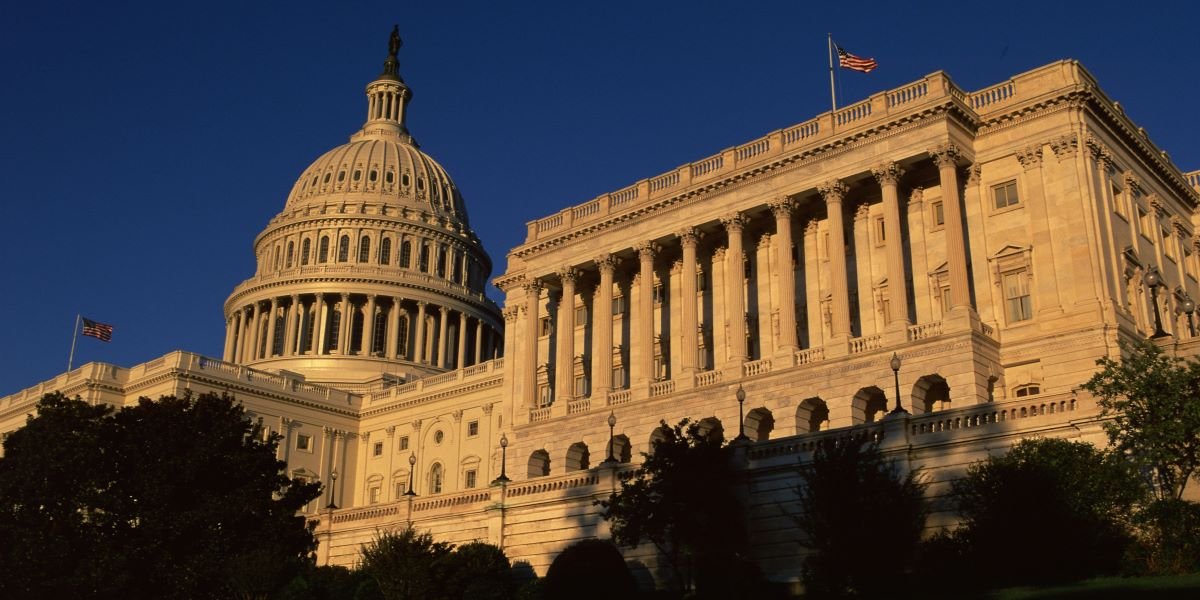

Kevin Warsh moved a step closer to leading the Federal Reserve on Monday evening, after the United States Senate voted 49-44 to invoke cloture on his nomination to the Federal Reserve Board of Governors. The procedural vote, which limits debate ahead of a final floor vote, sets the stage for full confirmation later this week. A separate floor vote will be required on his distinct nomination as chair. Both confirmations are expected before Jerome Powell’s term as chair ends Friday, May 15.
For investors, the cloture vote is the clearest signal yet that the most consequential leadership change at the Federal Reserve in nearly a decade is happening on schedule. The Trump administration has said it expects Warsh in place by May 15, and the procedural margin Monday reflects the votes already in line to deliver that outcome.
How the Vote Broke Down
The 49-44 cloture vote followed party lines almost entirely. Sen. John Fetterman (D-Pa.) and Sen. Chris Coons (D-Del.) were the only Democrats to cross over and vote with Republicans. The Senate Banking Committee had previously advanced Warsh’s nomination on April 29 in a 13-11 party-line vote, the first fully partisan committee vote on a Fed chair in the panel’s history, according to comments from Sen. Elizabeth Warren (D-Mass.).
Sen. Thom Tillis (R-N.C.), who had previously blocked Warsh’s nomination over a federal investigation into outgoing Fed Chair Jerome Powell, dropped his opposition after the Justice Department said it would end the inquiry and leave the matter to the Fed’s inspector general. US Attorney for the District of Columbia Jeanine Pirro said in April that her office could restart a criminal investigation “should the facts warrant doing so.”
Who Kevin Warsh Is
Warsh, 56, previously served on the Federal Reserve Board of Governors from 2006 to 2011, where he was the youngest-ever Fed governor and helped manage the central bank’s response to the 2008 financial crisis. Before joining the Fed, he served as a special assistant to President George W. Bush for economic policy and as executive secretary of the National Economic Council.
He spent the early part of his career at Morgan Stanley, where he was vice president and executive director of investment banking in the mergers and acquisitions division. Since leaving the Fed in 2011, Warsh has held academic appointments at Stanford University, served on the board of UPS, and worked as a partner at Duquesne Family Office, the firm associated with Stanley Druckenmiller.
In April financial disclosures, Warsh reported personal assets exceeding $100 million, including holdings tied to the Juggernaut Fund at Duquesne. That makes him one of the wealthiest individuals to serve in the role in recent decades.
What Markets Are Watching
For investors, the question is not whether Warsh will be confirmed, but how his policy posture will differ from Powell’s. Several themes are likely to shape his early months in office.
On interest rates, Warsh has signaled a preference for policy easing in 2026, arguing that productivity gains driven by artificial intelligence could allow inflation to ease while growth continues, creating room to cut rates. President Donald Trump has publicly called for the federal funds rate to be lowered to as low as 1%, though Warsh has stopped short of endorsing that level.
On the balance sheet, Warsh has historically been hawkish, having been a longtime critic of quantitative easing. He has also advocated for closer alignment between the Fed and the Treasury, and some analysts expect him to take a more pragmatic approach to the central bank’s balance sheet given the Trump administration’s focus on housing affordability and broader fiscal coordination.
On Fed independence and communication, Warsh’s confirmation hearing drew scrutiny. Claudia Sahm, the former Federal Reserve economist who created the Sahm Rule recession indicator, told Fortune that “this is not normal is going to be a theme” of Warsh’s tenure, citing what she described as a break from the tradition of deference Fed leaders historically show Congress. Sahm pointed in particular to Warsh’s exchanges with Sens. Warren and Raphael Warnock during his hearing.
Powell’s Unusual Decision to Stay on the Board
Outgoing chair Jerome Powell has said he will remain on the Federal Reserve Board of Governors after his term as chair ends Friday. His term as governor runs through January 2028. Powell cited uncertainty over whether the Justice Department could reopen its investigation into Fed building renovations as part of his rationale for staying on the board.
The decision is unusual but not unprecedented. Past Fed chairs, including Marriner Eccles, have remained on the board after their term as chair concluded. The arrangement creates a Fed Board of Governors in which both the incoming and outgoing chair sit at the same table, which could affect voting dynamics on the Federal Open Market Committee (FOMC).
Several near-term catalysts will shape how markets interpret the leadership transition.
CPI and PPI data this week will set the inflation backdrop for the new chair’s first remarks. The May FOMC meeting and subsequent press conference will give markets their first direct look at Warsh’s communication style. Treasury auctions this week, including a 3-year note auction Monday and a 10-year note auction Tuesday, could also signal how the bond market is pricing the transition.
For now, US equity markets continue to trade near record highs, with the S&P 500 and Nasdaq Composite both closing at new all-time highs Monday. Whether that strength holds through the Fed transition will depend in part on how quickly Warsh moves to shape policy, and how investors interpret the early signals.