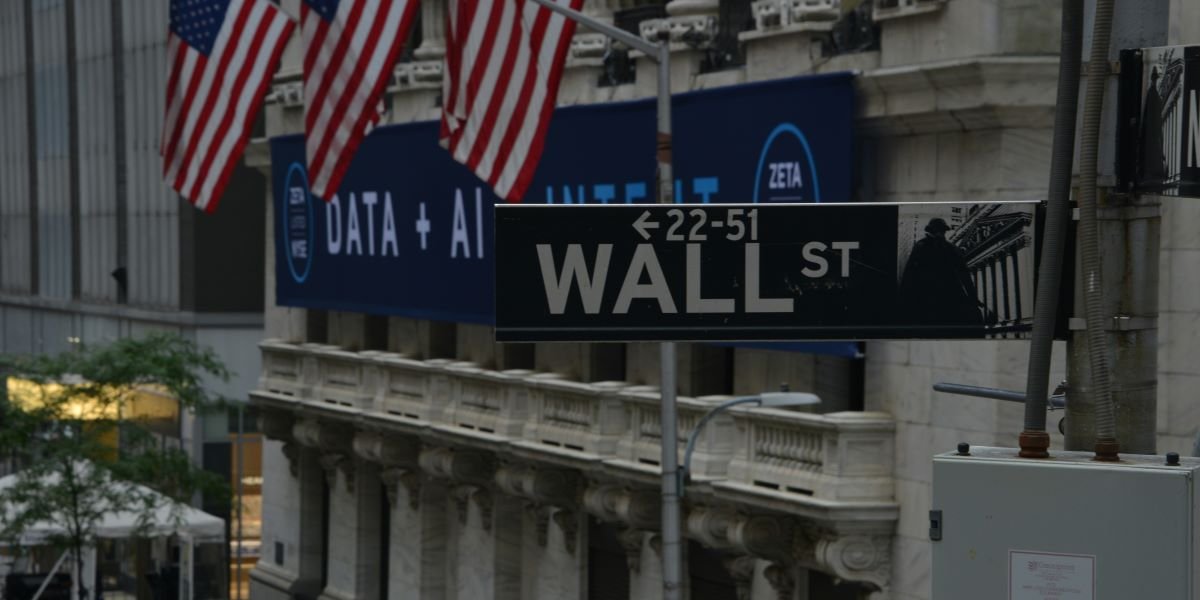

Wall Street is deep into one of the most impressive earnings seasons in recent memory. With nearly two-thirds of S&P 500 companies having reported first-quarter results, the data tells a story of corporate America broadly outperforming expectations — and doing so by a historically wide margin. Yet beneath the headline numbers, a more complicated picture is taking shape. Valuations are stretched, geopolitical risk from the Iran war is pushing oil prices higher, and the Federal Reserve is on the cusp of a leadership transition that markets have yet to fully price in.
For investors, the question is no longer whether this earnings season is strong. It is whether strength alone is enough to sustain the rally.
Record-Breaking Earnings Performance
With 63% of S&P 500 companies having reported actual Q1 2026 results, 84% have beaten EPS estimates — above the 5-year average of 78% and the 10-year average of 76%. If 84% holds as the final figure for the quarter, it will mark the highest percentage of S&P 500 companies reporting a positive EPS surprise since Q2 2021.
The magnitude of those beats is equally notable. In aggregate, companies are reporting earnings that are 20.7% above estimates — well above the 5-year average of 7.3% and the 10-year average of 7.1%. If 20.7% is the final number for the quarter, it will mark the highest surprise percentage reported by the index since Q1 2021.
The blended earnings growth picture is just as strong. The blended earnings growth rate for the S&P 500 in Q1 2026 now stands at 27.1% — the highest year-over-year growth rate since Q4 2021 — driven by Communication Services at 53.2%, Information Technology at 50.0%, and Consumer Discretionary at 39.0%. Seven sectors in total are reporting double-digit earnings growth for the quarter, according to FactSet data.
Revenue performance has followed a similar pattern. 81% of S&P 500 companies have reported actual revenues above estimates, the highest percentage since Q2 2021, with the blended revenue growth rate for Q1 now standing at 11.1%.
Market Response: A Tuesday Rebound After Monday’s Iran-Driven Selloff
The earnings data provided some runway for a market recovery on Tuesday after a turbulent Monday. The S&P 500 gained 0.55%, the Dow Jones Industrial Average advanced 0.55%, and the Nasdaq rose 0.70% as tech stocks led all sectors with gains of over 2%. The Russell 2000 set a new intraday record, joining the Nasdaq in marking fresh highs.
The session stood in sharp contrast to Monday’s selloff. The Dow shed 557 points on Monday as escalating Middle East tensions sent oil prices sharply higher. U.S. West Texas Intermediate crude futures rose 4.39% to settle at $106.42 per barrel, while Brent crude futures surged 5.8% to $114.44, rattling investor sentiment across equity and fixed income markets.
Tuesday’s stabilization came as oil prices eased and investors refocused on underlying corporate fundamentals. Individual earnings reports continued to drive significant single-stock moves in both directions. Pfizer climbed 2.2% after beating Wall Street’s Q1 earnings and revenue forecasts, with revenue totaling $14.45 billion, up 5% from a year earlier. The company reiterated its 2026 outlook, expecting adjusted profit of $2.80 to $3.00 per share and revenue of $59.5 billion to $62.5 billion.
Micron Technology rose 5%, boosted by demand for high-bandwidth memory used in AI applications, alongside bullish analyst price target hikes and reports that its HBM products are sold out through 2026. On the downside, Shopify fell 7% after reporting continued top-line growth but weaker-than-expected earnings, and Duolingo dropped 7% after issuing softer-than-expected full-year guidance alongside its Q1 results.
The Valuation Problem
Strong earnings alone do not tell the full investment story. What matters as much as the growth rate is what investors are paying for it — and by most measures, they are paying a premium.
The forward 12-month price-to-earnings ratio for the S&P 500 now stands at 20.9, above the 5-year average of 19.9 and the 10-year average of 18.9. This P/E ratio is also above the 19.7 recorded at the end of the first quarter on March 31.
A forward P/E above historical norms is not inherently problematic when earnings growth is accelerating. But it does reduce the index’s tolerance for disappointment. At current multiples, any meaningful deceleration in earnings growth — or any sustained increase in the discount rate through higher interest rates — could compress valuations quickly. For long-term investors, the gap between where prices are and where earnings justify them to be is a risk worth monitoring closely.
For the full calendar year 2026, analysts are predicting year-over-year earnings growth of 21.3%, with Q2, Q3, and Q4 growth estimates of 21.3%, 23.0%, and 20.6%, respectively. Those are ambitious targets, and they assume no significant deterioration in the macroeconomic environment — an assumption that is looking increasingly tenuous given the backdrop.
What Could Derail the Rally
Three distinct risks now sit alongside the strong earnings data, any one of which could shift the market’s trajectory in the months ahead.
The first is energy prices. Exxon Mobil CEO Darren Woods warned this week that markets have not yet absorbed the full impact of the unprecedented oil supply disruption triggered by the Iran war and the closure of the Strait of Hormuz, noting that oil prices will rise further as the strait remains closed and existing inventory buffers are exhausted. Higher energy costs feed directly into corporate cost structures across transportation, manufacturing, and logistics — sectors that have so far reported relatively resilient margins.
The second risk is monetary policy uncertainty. The Federal Reserve held rates steady at its most recent meeting at 3.50% to 3.75%, but the committee is more internally divided than at any point in over three decades. Market expectations for a rate cut in 2026 have now fallen to just 17%, with even a 7% probability assigned to a hike — a dramatic reversal from early-year expectations that a cut was imminent. With Jerome Powell stepping down as Fed chair on May 15 and Kevin Warsh expected to take the helm, the path of monetary policy over the next six to twelve months carries genuine uncertainty.
The third risk is concentration. The S&P 500’s impressive headline earnings growth masks meaningful dispersion beneath the surface. Communication Services and Information Technology — sectors dominated by a handful of mega-cap technology companies — are responsible for a disproportionate share of the index’s overall earnings expansion. When growth is this concentrated, the index becomes increasingly exposed to idiosyncratic risks at the company level.
The Q1 2026 earnings season is, by almost any measure, delivering stronger results than Wall Street expected. Beat rates are at multi-year highs, revenue growth is broad, and corporate guidance has largely held firm despite the macroeconomic turbulence. For CY 2026, analysts are predicting earnings growth of 21.3%, which if realized would represent a continuation of one of the strongest sustained corporate earnings cycles in modern history.
But the context in which those earnings are being reported — elevated oil prices, a divided Federal Reserve at a leadership inflection point, and a forward P/E sitting above its long-run average — means that the margin for error is thin. Markets are priced for continued execution. Anything short of that, whether from a geopolitical escalation, a monetary policy misstep, or a miss in the next wave of earnings reports, will be felt quickly at current valuations.
For investors, the discipline required in this environment is not to dismiss the strength of the earnings data, but to hold it alongside the risks that accompany it.
Disclaimer: This article is for informational purposes only and does not constitute investment advice, financial guidance, or a recommendation to buy or sell any security. The information presented is based on publicly available data and is accurate as of the date of publication. Market conditions can change rapidly. Readers should conduct their own due diligence and consult a licensed financial advisor before making any investment decisions. WallStreetTimes.com is not a registered investment advisor.