In times when expertise can seem indistinguishable from influence in online communication, connecting through consistent, credible publishing is now a mission central to leadership visibility. In all industries, executives interacting with an audience through writing, speaking, and engaging in the community can often shape how the organization interprets motivation and performance. Columnists, podcasts, and regional media have become a way to translate complex thinking into a more digestible venture by weaving together professional strategy and human experience. Within this expanding landscape of thought leadership, Eric Bartosz has established a distinct voice, balancing the analytical rigor of an executive with the accessibility of a communicator focused on practical growth.
Bartosz’s reach as a columnist and public speaker reflects the growing expectation that leaders engage beyond corporate walls. His ongoing work as the author of the “Bar Talk” column in Saucon Source exemplifies this model. The column, which reaches an estimated monthly readership of over 50,000, centers on motivation, productivity, and the everyday pursuit of personal excellence. Written in a direct, conversational tone, “Bar Talk” blends principles of psychology, leadership, and self-discipline with professional and community life reflections. The column’s success rests on its approachable message; small changes in mindset and daily habits can lead to measurable, long-term improvement.
The publication, Saucon Source, serves the Lehigh Valley region of Pennsylvania and maintains an audience base that values locally produced journalism with practical insight. Through this platform, Bartosz extends the core message of his BAR40 personal development framework, translating lessons from his bestselling book BAR40: Achieving Personal Excellence into shorter, reflective essays. Topics have ranged from overcoming motivational fatigue to redefining goal-setting as a continuous process rather than a single event. Readers often describe the column as a mix of community storytelling and structured self-improvement guidance, making it accessible to professionals and non-professionals alike.
Beyond print, Bartosz has maintained a visible presence across regional media. His interviews on platforms such as YMI Talking, a Pennsylvania-based business and leadership podcast, and his appearances in Montco Today, Bucks County Today, and Lehigh Valley with Love underscore his consistent engagement with broader audiences. Each feature presents variations of his central message, leadership and performance are not limited to boardrooms but disciplines cultivated daily. These discussions frequently intersect with the growing trend of fractional leadership and adaptive management, reflecting his dual identity as both a business strategist and a communicator.
In 2023, industry research from Edelman found that 64 percent of consumers view thought leadership as more trustworthy than advertising or traditional marketing. This shift has amplified the importance of leaders like Bartosz who use written and spoken communication to share actionable frameworks rather than corporate promotion. His articles often reference both behavioral science and lived experience, situating ideas about habit, focus, and leadership within real-world contexts. This blend of evidence and relatability positions his work within the current evolution of business writing, where credibility is earned through transparency and utility rather than formality alone.
His ability to align message with practice sets Bartosz apart within this ecosystem of public communication. As the Founder and CEO of BAR40 Fractional Solutions, a consultancy that provides executive-level strategy for small and midsize businesses, his commentary often reflects lessons learned through hands-on work with organizations navigating growth and transformation. The practical insights shared through “Bar Talk” and his podcast features frequently mirror principles he applies in consulting: clarity, cadence, and measurable progress. This cross-pollination between professional practice and public dialogue reinforces the consistency of his philosophy, leadership, whether personal or organizational, depends on structure and accountability.
His writing is also a product of his experience as an educator. As an adjunct professor at DeSales University and Muhlenberg College, Bartosz teaches strategy and leadership in MBA and organizational leadership programs. Classroom experiences often inform his public commentary, distilling discussions around behavioral leadership and motivation into takeaways for a public audience. Bartosz is part of a larger movement among academics who use journalism and modern media to connect theory to practice in the everyday world.
Bartosz’s communication work is also connected to his community service activities, which are part of his identity. His service positions with the Saucon Rail Trail Commission and other local settings often find their way into his writing as an example of a piece of evidence used to support a point about collaboration, persistence, and civic duty. By connecting personal growth theories to community, he demonstrates that leadership is more about participation than positionality. This approach is part of a larger trend in contemporary business communication that focuses on authenticity and being local as a key to trust.
Reader engagement with “Bar Talk” and related media appearances has reinforced the demand for voices that blend optimism with realism. Rather than offering motivational slogans, Bartosz’s pieces often challenge readers to audit their daily routines, reexamine their priorities, and take responsibility for their performance. The recurring themes of goal alignment and consistency reflect his personal commitment, he has maintained an unbroken multi-year running streak, and his professional ethos of steady, measurable progress.
The reception of his communication work, particularly in local media circles, positions Bartosz among a growing network of regional thought leaders who contribute to a more accessible understanding of leadership development. While large-scale publications often highlight global business trends, columns like “Bar Talk” serve as entry points for everyday readers seeking personal or professional improvement grounded in a relatable context. In this sense, his contributions have both educational and social dimensions, fostering a culture of continuous development within local communities.
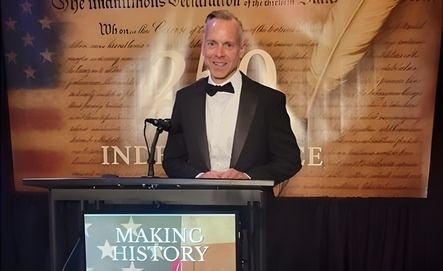
Photo Courtesy: Eric Bartosz
Through his numerous written pieces, podcast appearances, and regional media stories, Bartosz has demonstrated that consistent, approachable, and authentic messaging can help create collective understanding – both personally and organizationally. His knack for speaking executive practice through an everyday lens is refreshing to the contemporary leadership communication model that values clarity over complexity and engagement over authority.
In an environment of media response primarily driven by authenticity, Eric J. Bartosz’s consistency in print, broadcast, and digital media represents a shift in the role of business leaders as communicators. His efforts through Saucon Source, regional media features, and storytelling with direct exploration of educational platforms are all examples of the de facto hybrid agenda of leadership as communication and the role of the leadership and educators as a community identifier, organizer, and builder. When leadership communication occurs consistently and transparently, it serves as a way to educate. It is also an opportunity for community action to progress.